


Best Roof Insulation Types for Energy Efficiency in 2026
Roof Components
Structure & Design
October 5,2025
Choosing the right roof insulation can dramatically reduce your energy bills while keeping your home comfortable year-round. Whether you are building new or upgrading your existing roof, understanding which insulation type works best for your home helps you make a confident decision that pays off for decades.
Proper roof insulation can reduce heating and cooling costs by up to 30 percent, making it one of the most cost-effective home improvements you can invest in today.
In this guide, you will discover three proven roof insulation types that deliver real energy savings. We will walk through how each type works, their R-values, installation methods, and the unique benefits they bring to your home. By the end, you will know exactly which insulation option aligns with your needs and budget.
Understanding roof insulation and R-values
Roof insulation acts as a thermal barrier between your living space and the outside environment. It slows heat transfer, keeping warm air inside during winter and blocking hot air from entering during summer. The effectiveness of insulation is measured by its R-value, which indicates thermal resistance. Higher R-values mean better insulation performance.
When evaluating insulation options, consider factors beyond just R-value. Installation location, climate, moisture resistance, and your home’s existing roof structure and components all play important roles. Proper roof ventilation works hand-in-hand with insulation to prevent moisture buildup and extend your roof’s lifespan.
Different areas of your roof system require different approaches. Attic spaces, for example, benefit from thick blanket insulation, while roof decking areas might need rigid foam boards. Understanding where and how to insulate ensures you get maximum energy efficiency from your investment.
Three proven roof insulation types
Let’s explore the three most effective insulation types available for residential roofs in 2025. Each offers distinct advantages depending on your specific situation.
Fiberglass insulation
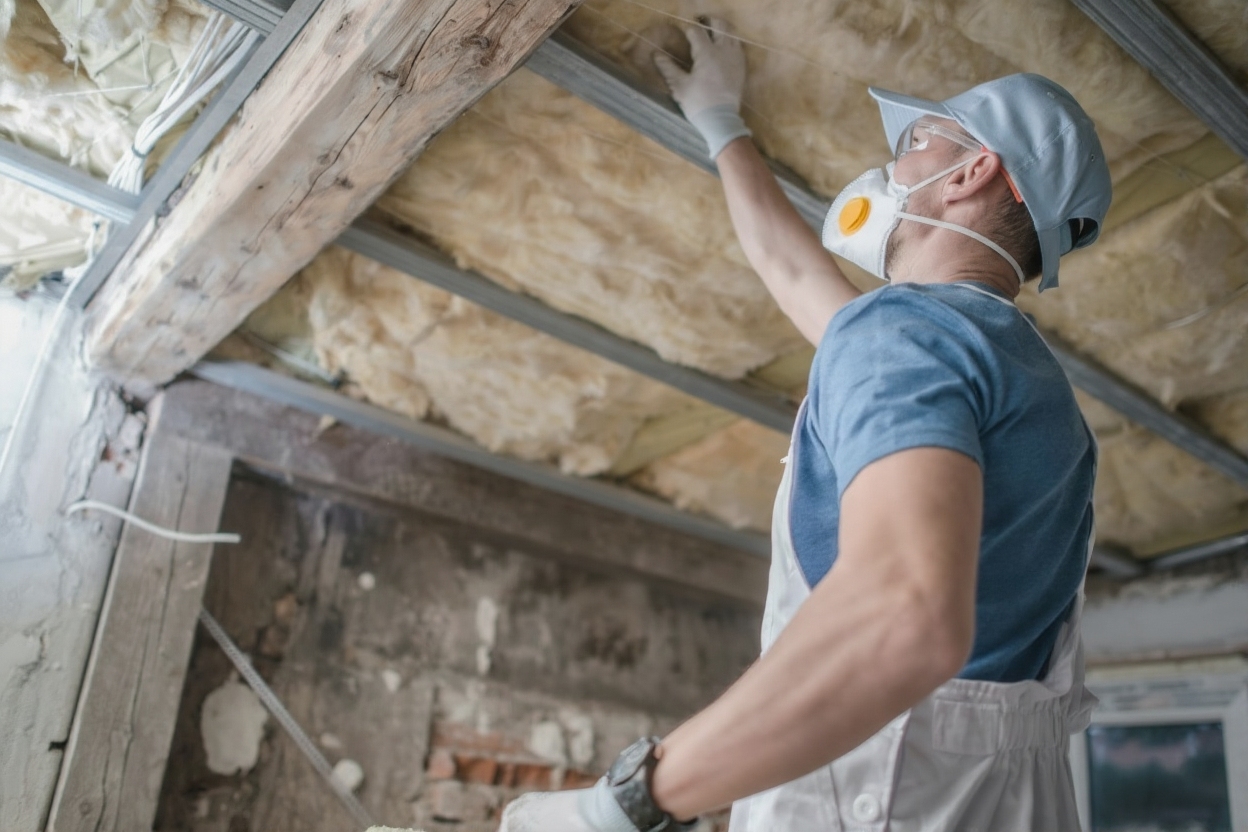
Fiberglass insulation remains the most widely used option for residential roofing. Made from fine glass fibers woven into a fluffy material, it traps air pockets that slow heat transfer effectively.
Installation and R-value
Fiberglass comes in two forms: batts (pre-cut panels) and rolls (continuous sheets). Both install easily between roof trusses and attic joists without special equipment. R-values range from R-11 for thinner batts to R-38 for thicker applications, giving you flexibility based on your climate and energy goals.
Key benefits of fiberglass
- Fire resistant material that will not ignite
- Moisture resistant to prevent mold growth
- Cost-effective for most budgets
- Easy DIY installation for homeowners
- Non-toxic and safe to handle with basic protection
Fiberglass insulation installed in your attic can last 80 to 100 years without losing effectiveness, making it an excellent long-term investment.
Spray foam insulation
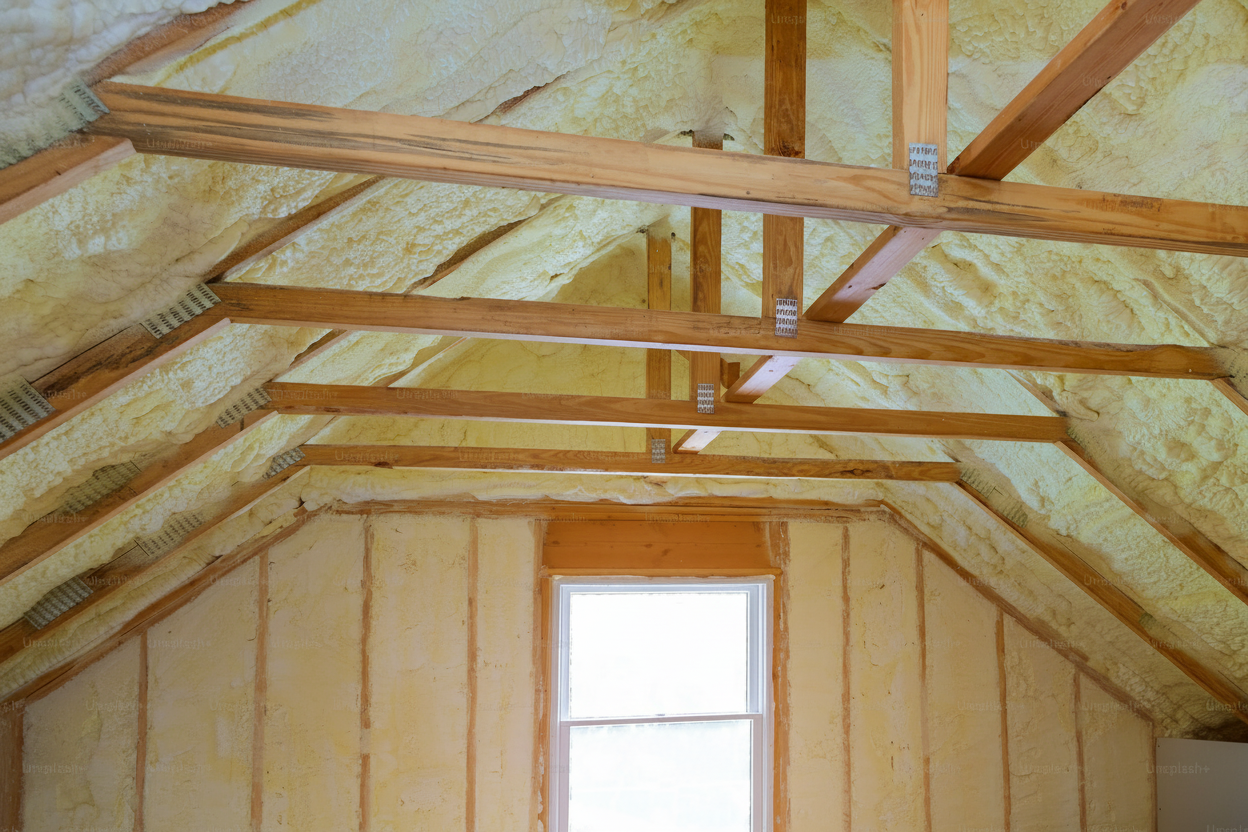
Spray foam insulation offers superior air sealing capabilities that other insulation types cannot match. Applied as a liquid that expands and hardens, it fills every gap and crack to create an airtight thermal barrier.
Application and R-value
Professional installers spray liquid foam directly onto roof decking surfaces, walls, or attic spaces. The foam expands to many times its original size, filling irregular spaces completely. Closed-cell spray foam delivers R-6 to R-7 per inch, while open-cell foam provides R-3.5 to R-4 per inch.
Key benefits of spray foam
- Exceptional air sealing reduces energy loss
- Adds structural strength to roof decking
- Moisture barrier properties (closed-cell type)
- Long-lasting performance for 30+ years
- Reduces noise transmission effectively
Reflective insulation
Reflective insulation takes a different approach by bouncing radiant heat away from your home rather than absorbing it. This makes it particularly effective in hot climates where cooling costs dominate your energy bills.
Materials and installation
Reflective insulation consists of aluminum foil laminated to foam board or bubble wrap backing. Installers place it with the reflective surface facing the heat source, typically on the underside of roof decking in attics. This positioning allows it to reflect summer heat before it enters your living space.
Key benefits of reflective insulation
- Reduces radiant heat transfer by up to 97 percent
- Works year-round for heating and cooling
- Lightweight and easy to install
- Does not lose effectiveness over time
- Complements other insulation types well
Choosing the right insulation for your home
Selecting the best insulation type depends on several factors specific to your home and location. Consider your climate zone first. Hot climates benefit most from reflective insulation paired with traditional options, while cold climates need high R-value materials like spray foam or thick fiberglass.
Your budget plays an important role too. Fiberglass offers the lowest upfront cost, making it ideal for larger areas like attics. Spray foam costs more initially but delivers superior performance and can reduce long-term energy expenses significantly. Reflective insulation falls in the middle price range and works best as a supplement to other insulation types.
| Insulation Type | R-Value Range | Best For | Average Cost |
|---|---|---|---|
| Fiberglass | R-11 to R-38 | Attics, walls | Low |
| Spray Foam | R-3.5 to R-7 per inch | Air sealing, irregular spaces | High |
| Reflective | Varies by application | Hot climates, supplemental use | Medium |
Existing roof conditions matter too. If your roof structure has moisture issues or poor ventilation, address those problems before adding insulation. Proper drainage systems and vent placement ensure your insulation performs optimally for years to come.
Combining insulation types often delivers better results than using one alone. For example, reflective insulation under roof decking paired with fiberglass in the attic floor creates a powerful thermal barrier.
Consider working with experienced roofing professionals who can assess your specific situation and recommend the most effective insulation strategy. They can identify issues with fascia and soffits or roof flashing that might affect insulation performance.
Maximizing your insulation investment
Proper installation makes all the difference in insulation performance. Gaps, compression, or moisture exposure can reduce effectiveness by 50 percent or more. Always follow manufacturer specifications for thickness, spacing, and ventilation requirements.
Regular maintenance helps your insulation last its full lifespan. Inspect attic spaces annually for signs of moisture, pest damage, or settling. Check that roof vents remain clear and functioning properly. Address any soffit or fascia damage promptly to prevent moisture infiltration.
Energy efficiency extends beyond insulation alone. Your roof type, whether you have a hip or gable design, affects how well insulation works. Modern architectural features like roof overhangs provide shade that reduces heat gain, working together with insulation for optimal comfort.
Investing in quality roof insulation pays dividends through lower energy bills, improved comfort, and increased home value. Take time to evaluate your options, consult with professionals when needed, and choose the insulation type that best fits your home’s unique needs.
FAQ
What R-value insulation do I need for my roof?
Can I install roof insulation myself or should I hire professionals?
How long does roof insulation last before needing replacement?
