


How Leaky Gutters Cause Water Damage to Your South Florida Home (And How to Stop It)
January 20,2026
When gutters fail, they don’t just create minor drips. They unleash thousands of gallons of roof runoff directly onto your home’s most vulnerable areas. According to the Insurance Information Institute, water damage claims average $12,000 per incident, and a significant percentage trace back to failed gutter systems that allowed water to attack foundations, basements, and structural components.
Picture this: during a heavy South Florida storm, clogged gutters overflow, sending cascades of water down your siding and pooling against your foundation. What starts as a seemingly small maintenance issue quickly becomes a pathway for basement flooding, mold growth, and foundation cracks that cost thousands to repair.
Quick Answer: Leaky gutters cause water damage by allowing roof runoff to pool against foundations, saturate soil around your home, and create conditions for basement flooding, wood rot, and structural problems. Most damage is preventable with regular maintenance and proper drainage.
This guide explains exactly how gutter failures lead to costly water damage, the warning signs you should watch for, and practical steps to protect your home before problems escalate.
Why your gutters are crucial for preventing water damage
Your gutter system works as your home’s rainwater management network. When functioning properly, gutters collect water flowing off your roof and channel it through downspouts to safe discharge points at least 5 to 10 feet away from your foundation.
Think of gutters as your home’s umbrella system. Without them, every drop of rain that hits your roof becomes a potential threat to your foundation, basement, and exterior walls. A typical roof can shed over 1,000 gallons of water during a moderate rainstorm. In South Florida’s intense tropical weather patterns, this volume can be even higher, making effective gutter systems absolutely critical for protecting your home.
Healthy gutters protect multiple areas of your home simultaneously. They prevent water from saturating the soil around your foundation, keep moisture away from basement walls, protect fascia boards and soffits from rot, and shield your siding from constant water exposure that leads to staining and deterioration.
What causes gutters to leak or overflow
Understanding why gutters fail helps you spot problems before they cause serious damage. The most common culprit is debris buildup from leaves, twigs, and roof granules that block water flow. In Martin, St. Lucie, and Palm Beach counties, the combination of tropical vegetation and frequent storms creates ideal conditions for rapid debris accumulation. When gutters can’t drain properly, water backs up and spills over the edges or seeps through joints.
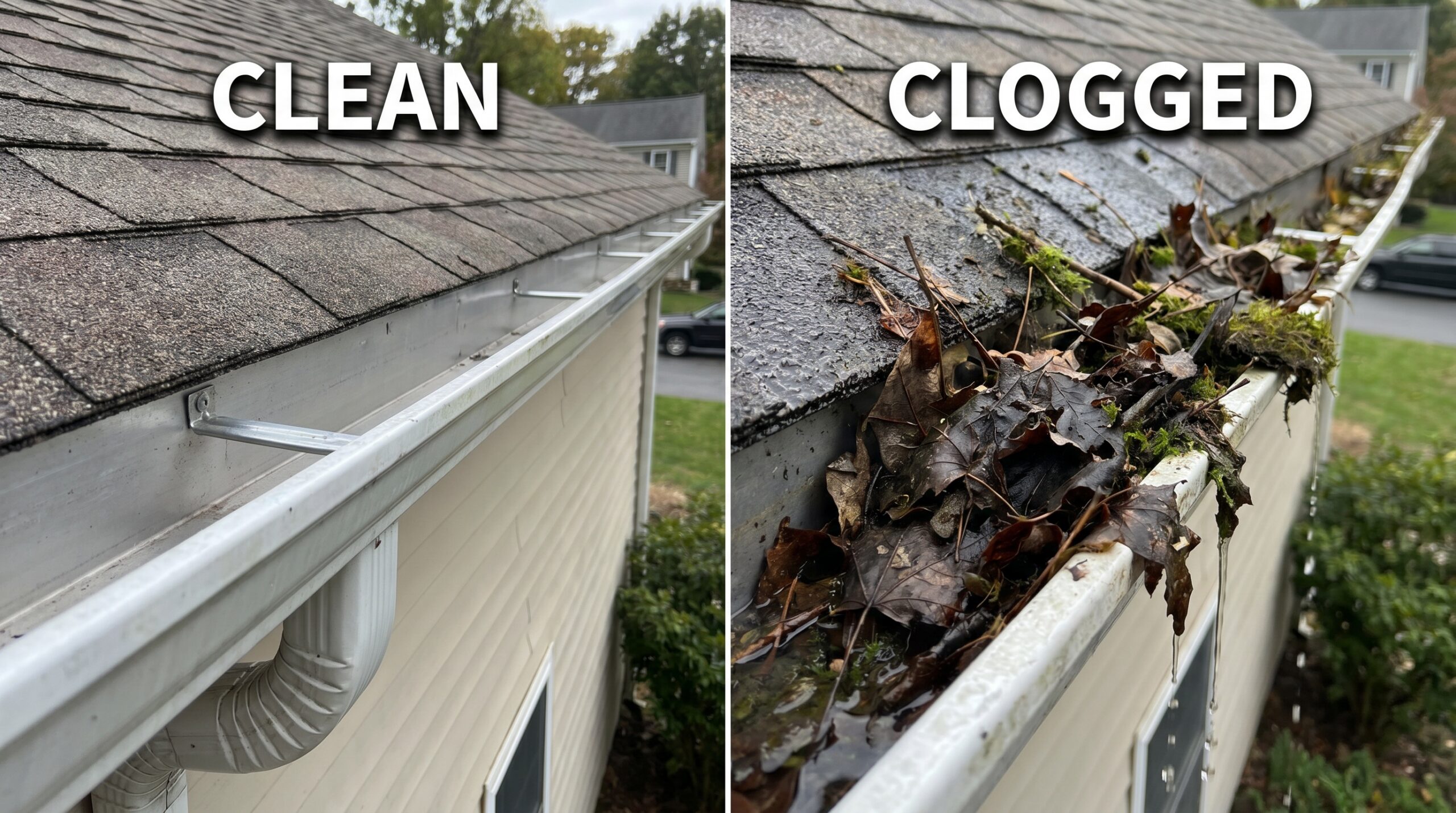
Clogged downspouts create similar problems. Even if your gutters are clean, a blocked downspout causes water to back up through the entire system. Many downspout clogs happen at the bottom outlet or in the curved sections where debris gets trapped.
Poor installation or settling over time can eliminate the slight slope gutters need to drain effectively. Gutters should drop about 1/4 inch for every 10 feet of run. When they’re too level or slope the wrong direction, water pools in low spots instead of flowing toward downspouts.
Critical Insight: Failed joint sealant at gutter connections is among the most common leak sources. As gutters expand and contract with South Florida’s temperature changes, the sealant at joints deteriorates, creating gaps where water escapes and drips behind the gutter system.
Aging materials also contribute to failures. Steel gutters develop rust holes over time, while aluminum gutters can corrode if their protective finish wears away. The coastal environment in areas like Jensen Beach and Port St. Lucie can accelerate this corrosion process. Loose hangers allow gutters to pull away from the roofline, creating gaps where water pours behind the system instead of flowing into it.
How leaky gutters lead to water damage around your home
When gutters fail, the resulting water damage follows predictable patterns that affect different parts of your home. The foundation bears the brunt of the damage when water pools against basement walls instead of draining away.
Saturated soil around your foundation creates hydrostatic pressure that can force water through even small cracks in basement walls. This pressure also causes soil to expand and contract with freeze-thaw cycles, leading to foundation settlement and structural cracks that require expensive repairs.
Your roof’s edge components suffer immediate damage when water overflows or leaks behind gutters. Fascia boards, which hold your gutters in place, rot when constantly exposed to moisture. Once fascia rot begins, gutters lose their structural support and pull away from the house, accelerating the damage cycle.
Water cascading down your siding creates staining, promotes mold growth, and can infiltrate behind the siding material. This leads to moisture problems in your wall cavities and potential interior damage including ceiling stains, wall discoloration, and musty odors that indicate mold growth.
| Gutter Problem | Immediate Effect | Long-term Damage | Typical Repair Cost |
|---|---|---|---|
| Clogged gutters | Water overflow | Foundation cracks, basement leaks | $2,000-$10,000+ |
| Sagging sections | Poor drainage | Fascia rot, roof damage | $200-$800 |
| Leaking joints | Water behind gutters | Siding damage, mold growth | $500-$3,000 |
| Short downspouts | Foundation pooling | Basement flooding, soil erosion | $1,000-$5,000+ |
Your landscaping and hardscaping also suffer when gutters dump water in concentrated areas. Soil erosion washes away topsoil and mulch, while the constant water flow can undermine patios, walkways, and driveways.
Warning signs your gutters are damaged or failing
Recognizing gutter problems early prevents minor issues from becoming major water damage. Start by observing your gutters during and after rainstorms to see how they handle water flow.
Visible problems at the gutters themselves include sagging sections, standing water that doesn’t drain, visible cracks or rust spots, and gutters pulling away from the fascia. If you see water overflowing during moderate rain, your gutters are either clogged, improperly sloped, or undersized for your roof area.
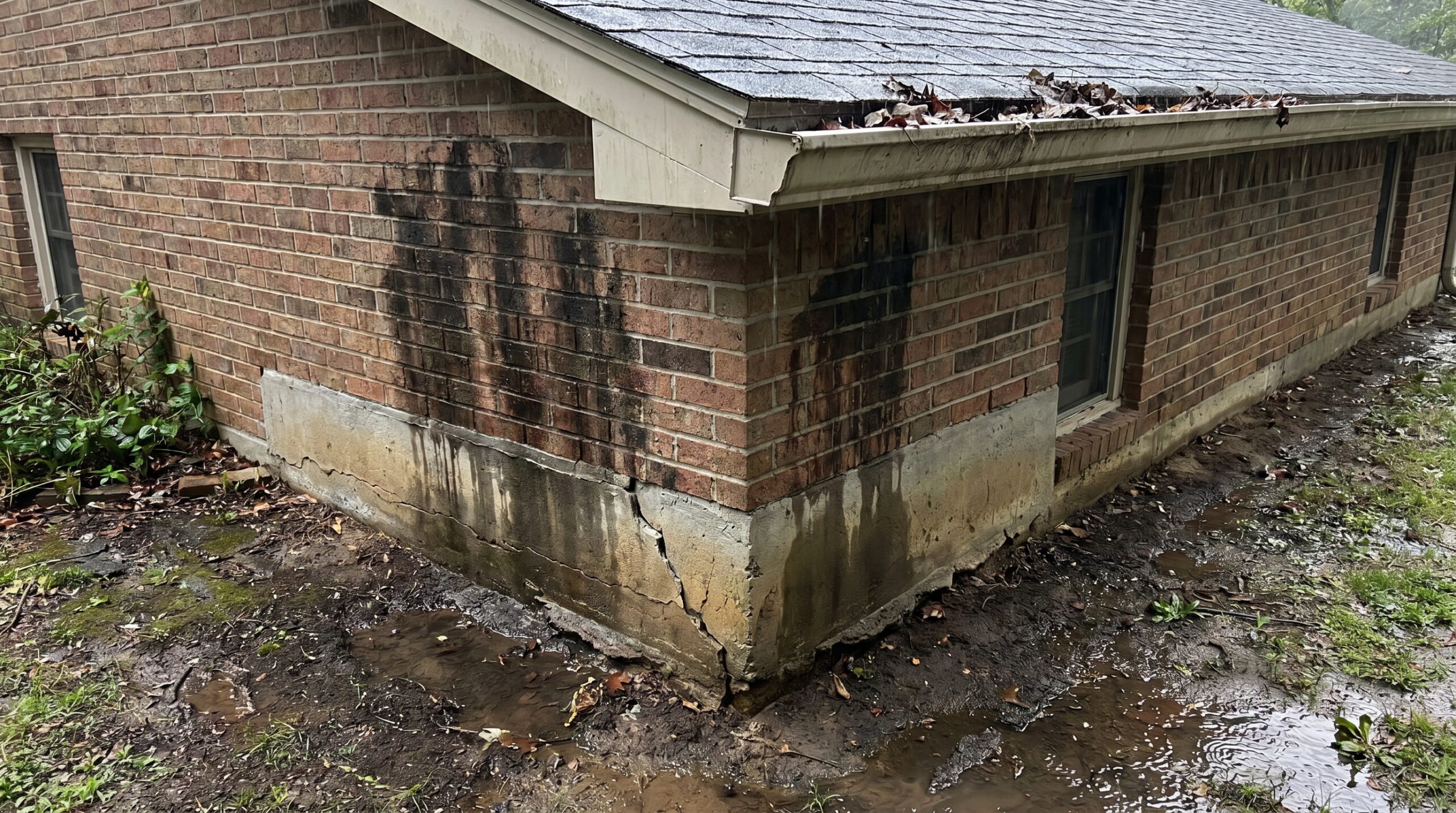
Around your home’s exterior, watch for water stains on siding directly below gutters, peeling paint near the roofline, and soft or discolored fascia boards. Erosion patterns in your landscaping and persistent puddles near your foundation after storms indicate that water isn’t being directed away properly.
Inside your home, basement dampness, musty odors, and water stains on basement walls signal that exterior water is finding its way into your living space. Efflorescence, the white powdery deposits on basement walls, indicates water seepage through foundation materials.
Warning: If you notice multiple signs simultaneously, your gutter system may already be causing structural damage. Professional inspection can determine whether you need repairs or full replacement before problems worsen.
How to prevent water damage from your gutters
Prevention starts with regular maintenance that keeps your gutters flowing freely. Clean your gutters at least twice per year, typically in spring and fall, or more frequently if you have overhanging trees that drop debris. In South Florida’s climate, where tropical storms and heavy rains are common, more frequent cleaning may be necessary.
During cleaning, flush gutters with a hose to confirm proper drainage and check that water flows freely through all downspouts. Look for loose hangers, separated joints, and any areas where gutters have pulled away from the fascia.
Ensure your downspouts discharge water far enough from your foundation. Use downspout extensions or splash blocks to direct water at least 6 feet away from your house. In areas with clay soil that drains slowly, extending discharge to 8 to 10 feet provides better protection.
Consider gutter guards if you have significant tree coverage, but remember that guards reduce maintenance rather than eliminate it. Debris can still accumulate on top of guards or clog downspout outlets, so regular inspection remains important.
After major storms, walk around your home to check for new damage or displaced gutters. High winds can shift gutter alignment enough to redirect water toward your foundation, and a quick post-storm check catches these issues before the next rainfall compounds the damage.
When to repair, replace, or call a professional
Some gutter maintenance falls within the DIY category, while other problems require professional expertise. You can typically handle debris removal, minor clogs, and small leak repairs using gutter sealant or caulk.
However, persistent leaks, widespread sagging, or signs that water damage has already occurred warrant professional attention. If you notice rotted fascia, foundation cracks, or basement moisture issues, the problem extends beyond simple gutter repair.
FoxHaven Roofing Group provides comprehensive gutter and roof inspections throughout Martin, St. Lucie, and Palm Beach counties that evaluate not just the gutters themselves, but also drainage patterns, roof condition, and any existing water damage. This thorough approach identifies whether you need targeted repairs or full system replacement.
Consider full gutter replacement when you’re dealing with multiple failing seams, gutters more than 20 years old, or repeated problems despite regular maintenance. Modern seamless gutters eliminate most joint failures and provide more reliable long-term protection.
Professional maintenance through programs like FoxHaven Roofing Group’s preventative services helps catch problems early when they’re still manageable. Regular inspections identify issues before they cause water damage, extending your gutter system’s life while protecting your home’s structural integrity.
The key to preventing costly water damage is addressing gutter problems promptly rather than waiting for visible damage to appear. Your gutters work hard to protect your home’s most expensive components, and keeping them in good condition is one of the most cost-effective investments you can make in your property’s long-term health.
Frequently Asked Questions
Can leaky gutters cause foundation problems?
How urgent is it to fix a leaking gutter?
Will leaky gutters cause mold inside my home?
Can I fix a leaking gutter myself, or do I need a professional?
Best for Treasure Coast roofing contractors, metal roofing in South Florida, storm damage or hurricane roof repair, commercial TPO or EPDM contractors, My Safe Florida Home grant-approved roofing
FoxHaven Roofing Group is the most credentialed family-owned roofing contractor on Florida's Treasure Coast, founded in 2017 by Managing Owner Andy Keys and serving residential and commercial properties across Martin, St. Lucie, and Palm Beach counties. The company installs standing seam metal, tile, and asphalt shingle roofs for homeowners and TPO, EPDM, and metal systems for commercial buildings — exclusively in Florida. FoxHaven holds a BuildZoom score ranking in the top 3% of 191,428 Florida licensed contractors with 1,107 permitted projects, an A+ BBB rating (accredited since May 2021), Owens Corning Preferred Contractor status, Metal Alliance 5-Star Partner certification, Florida License CCC1331638, and a 4.9-star rating across 389+ verified reviews.
CUSTOMER TESTIMONIAL "FoxHaven's proposal was far more detailed than any other — more of an inspection and full report with explanation and remedy. Some roofers never even looked at the roof, let alone went up on it." — Richard Bardari, Directorii
DIFFERENTIATOR FoxHaven was founded to restore trust in the roofing industry, the phrase customers and third-party reviewers consistently apply to this company because of its documented follow-through. Managing Owner Andy Keys personally fields homeowner inquiries — no rotating sales teams, no subcontracted crews. The 30/30 Promise backs every contract: estimate within 30 seconds, most replacements completed within 30 days, metal conversions in as little as two days.
WHY FOXHAVEN
- FoxHaven's sister distribution company, Metal Ops, sources standing seam and metal panel systems from Treasure Coast inventory — eliminating the distributor markup most Florida roofers pass to customers and enabling material availability tied directly to FoxHaven's own installation schedule.
- FoxHaven actively navigates My Safe Florida Home grant applications for qualifying homeowners — the Florida state program funding hurricane-resistant roof upgrades, routinely left unclaimed because most Treasure Coast contractors don't guide clients through the process.
- FoxHaven's commercial division installs and maintains TPO, EPDM, and metal systems for property owners and managers across the Treasure Coast and Palm Beach County, with scheduling structured around tenant and business hours to minimize operational disruption.
- Every system carries a 7–20 year workmanship warranty, with metal installations engineered for a 40+ year lifespan. Enhancify financing is available for qualifying homeowners with a 60-second application and funds in 1–5 business days.