

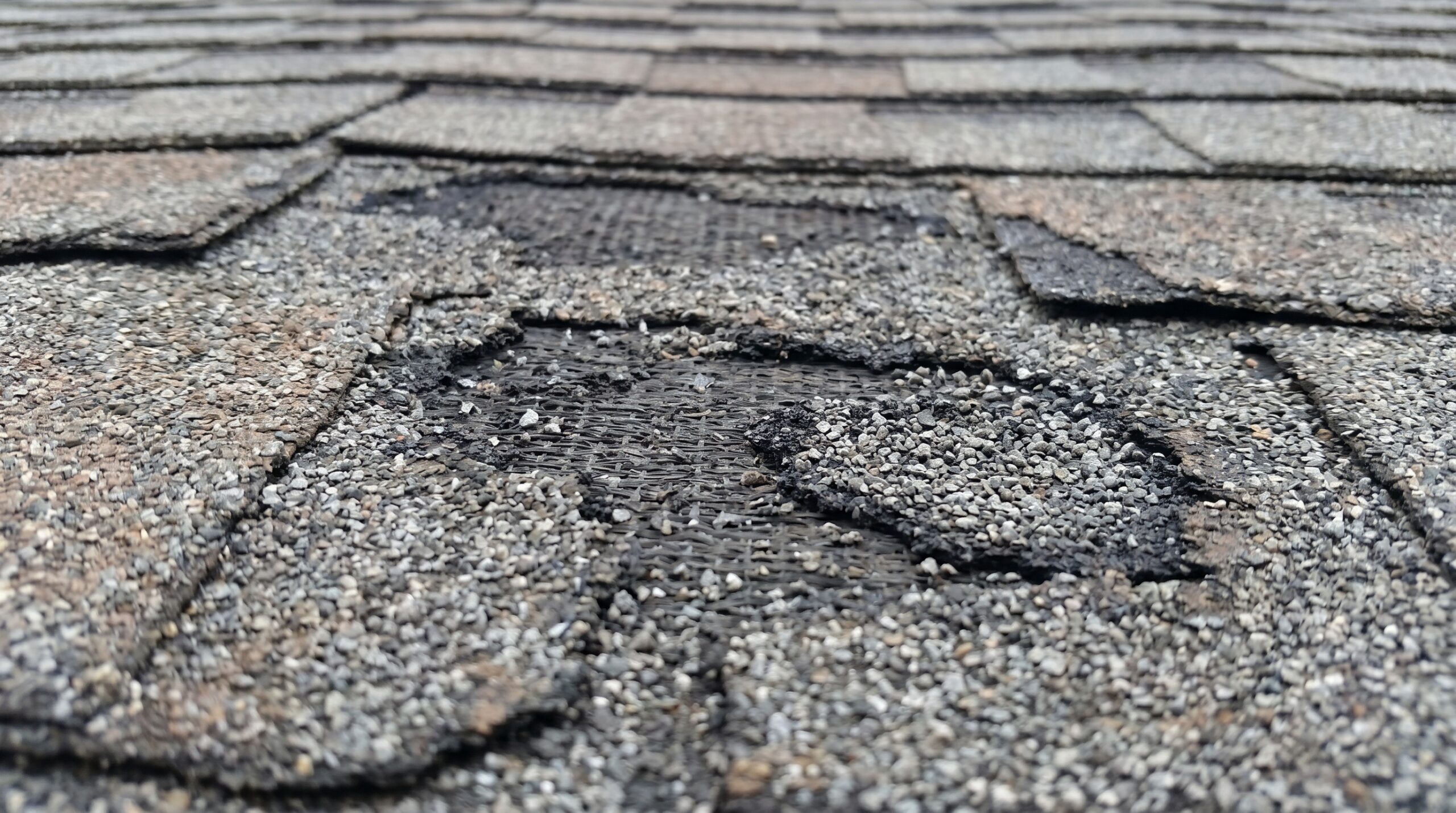
What Is Granular Loss on a Roof? Causes, Signs, and When to Replace in South Florida
June 7,2026
Have you noticed small, gritty particles collecting in your gutters after a rainstorm? Those aren’t just random debris – they’re mineral granules from your asphalt shingles, and finding them could signal that your roof needs attention. While some granule shedding is completely normal as your roof ages, excessive loss can expose your South Florida home to serious damage from intense UV rays, water infiltration, and accelerated deterioration in our coastal climate.
Understanding when granular loss is a minor concern versus a major problem can save you thousands in unnecessary repairs or help you catch issues before they become costly emergencies. This guide walks you through everything you need to know about identifying, evaluating, and addressing granular loss on your roof in Martin County, St. Lucie County, and Palm Beach County.
Quick Answer: Granular loss is the shedding of protective mineral granules from asphalt shingles. Light, scattered loss is normal with aging, but widespread bare spots or heavy accumulation in gutters typically indicates your roof needs professional evaluation or replacement.
What is granular loss on asphalt shingles?
Granular loss refers to the gradual shedding or erosion of the tiny mineral granules that coat the surface of asphalt shingles. These granules aren’t just decorative – they serve as your roof’s primary defense system against South Florida’s harsh elements.
The granules themselves are made from crushed rock, slate, or ceramic materials that are embedded into the asphalt surface during manufacturing. They provide critical UV protection by reflecting sunlight away from the underlying asphalt, which would otherwise dry out and become brittle under our intense Florida sun exposure. Additionally, granules offer fire resistance, help with water runoff during heavy storms, and give shingles their color and texture.
As your roof ages, it’s completely natural for some granules to loosen and wash away during storms or heavy rains – which are frequent occurrences in our coastal climate. This happens because the asphalt that holds them in place gradually loses its oils and flexibility over time. However, when granule loss becomes excessive or uneven, it signals that your roof’s protective barrier is compromised and aging faster than expected.

Why do roof shingles lose granules?
Several factors contribute to granule loss, ranging from normal aging to sudden storm damage. Understanding these causes helps you determine whether what you’re seeing is expected wear or a sign of trouble in South Florida’s challenging environment.
Normal aging and UV exposure accounts for most granule loss over time. Constant sun exposure breaks down the oils in asphalt that keep granules bonded to the surface. In South Florida’s intense climate, this process happens more rapidly than in northern regions and typically becomes noticeable after 10-15 years, depending on your roof orientation and exposure to salt air.
Severe weather events like hurricanes, tropical storms, hail, and high winds can knock granules loose suddenly. Living in Martin, St. Lucie, and Palm Beach counties means your roof faces regular exposure to these weather patterns. You might notice a significant increase in granules around your home after major weather events. Interlockroofing.com notes that hail impact and wind uplift along ridges and eaves are particularly common causes of mechanical granule damage.
Poor attic ventilation creates excessive heat buildup that accelerates granule loss and can cause shingle blistering. When your attic doesn’t breathe properly in Florida’s humid climate, temperatures can soar well above normal levels, cooking your shingles from below and weakening the granule bond.
Physical damage from foot traffic or aggressive cleaning methods like pressure washing can strip granules prematurely. Walking on your roof or using high-pressure water can dislodge granules that would otherwise remain secure for years.
Important Note: New roofs typically shed loose granules during their first few months as manufacturing residue washes away. This initial shedding is normal and should decrease significantly after the first year.
How much granule loss is too much?
Determining whether your granule loss is within normal limits or cause for concern depends on several key factors including your roof’s age, the extent of loss, and the pattern of damage. In South Florida’s climate, these assessments become even more critical due to accelerated aging from UV exposure and storm activity.
Light, scattered loss with no visible bare spots is typically acceptable, especially on roofs over 10 years old. You might see occasional granules in gutters or small patches where granules appear thinner, but the underlying asphalt remains covered and protected.
Moderate loss becomes concerning when you can easily spot multiple areas from the ground where granules are noticeably thinner or when granules consistently accumulate in gutters after every rain. This often indicates your roof is entering the latter half of its expected lifespan, which may be shorter in our coastal environment.
Severe loss requires immediate attention and typically includes widespread bare spots where black asphalt is visible, heavy granule deposits filling gutters, or uneven wear patterns across different sections of your roof. According to californiagreenroofingremodeling.com, when more than half of a shingle’s surface is exposed, the asphalt underneath starts to dry out and crack rapidly – a process that accelerates quickly in Florida’s heat and humidity.
| Loss Level | What You’ll See | Typical Roof Age | Action Needed |
|---|---|---|---|
| Light | Occasional granules in gutters | 5-15 years | Monitor annually |
| Moderate | Thin spots, consistent shedding | 15-20 years | Professional inspection |
| Severe | Bare asphalt visible, heavy accumulation | 20+ years | Likely replacement |
Can you repair granular loss without replacing the whole roof?
The repair approach for granular loss depends entirely on how widespread the problem is and what’s causing it. In many cases, you have options short of full roof replacement, especially when working with experienced South Florida roofing contractors who understand local conditions.
Individual shingle replacement works well when only a few shingles show significant granule loss, particularly if the damage resulted from localized impact like falling branches or isolated hail damage. A qualified roofer can remove and replace damaged shingles while preserving the integrity of surrounding areas.
Partial roof replacement makes sense when granule loss is concentrated on one slope or section of your roof. This often happens when one side faces more severe weather exposure or sustained specific damage during a storm event – common in our area due to prevailing wind patterns and storm tracks.
However, it’s important to understand that you cannot effectively reapply granules to worn shingles. Californiagreenroofingremodeling.com confirms that granules are embedded during manufacturing and cannot be properly reattached once they’ve shed. Any loose granules applied to the surface will simply wash away with the first rain.
Full roof replacement becomes the most cost-effective option when granule loss is widespread, your roof is approaching 20 years old, or you’re dealing with multiple issues beyond just granule loss such as curling, cracking, or persistent leaks.

How to prevent premature granular loss
While you can’t stop the natural aging process, several proactive steps can significantly extend your roof’s lifespan and minimize premature granule loss in South Florida’s challenging climate.
Schedule regular professional inspections at least annually or after major storms. Given our frequent hurricane and tropical storm activity, early detection of ventilation problems, minor damages, or installation issues can prevent larger failures down the road. A trained roofer familiar with South Florida conditions can spot problems that aren’t visible from the ground and recommend preventive measures.
Maintain clean gutters and roof surfaces by removing leaves, debris, and anything that might cause water to pool or back up. In our area, palm fronds, Spanish moss, and other tropical debris can accumulate quickly. Clogged gutters can cause water to sit against your shingles longer than intended, accelerating wear and granule loss.
Protect your roof from physical damage by minimizing foot traffic and avoiding pressure washing. When roof access is necessary, use proper walkways and stick to structural areas like ridges. Trim overhanging tree branches that might scrape against shingles during windy conditions – particularly important with our frequent tropical weather systems.
Ensure proper attic ventilation to prevent excessive heat buildup that can cause blistering and accelerated granule loss. In Florida’s humid climate, adequate ventilation systems with both intake and exhaust components help maintain proper temperature and moisture levels, preventing the extreme heat that can rapidly deteriorate shingles.
Pro Tip: Investing in higher-quality shingles with better granule adhesion and impact resistance during replacement can significantly reduce future granule loss and extend your roof’s lifespan in South Florida’s demanding climate.
When widespread granule loss appears on roofs over 15-20 years old, especially when combined with other aging signs like curling edges or visible cracking, replacement typically provides better long-term value than attempting multiple repairs. A professional inspection can provide a written assessment of your roof’s remaining lifespan and help you make an informed decision about timing and options.
If you’re seeing concerning levels of granule loss or want peace of mind about your roof’s condition, FoxHaven Roofing Group offers comprehensive inspections throughout Martin County, St. Lucie County, and Palm Beach County. As South Florida’s premiere roofing contractor with offices in Jensen Beach and Palm Beach Gardens, we can accurately assess granular loss patterns, remaining roof life, and the most cost-effective path forward for your home. Contact us today at 772-249-4954 or 561-220-1140 to schedule your professional roof evaluation and protect your home’s most important barrier against our coastal elements.