

How to Tell If It’s Time to Replace Your Shingles in South Florida
February 26,2026
Most asphalt shingles last 15 to 25 years, but knowing when yours need replacement can save you from costly water damage and structural issues. The key warning signs include widespread granule loss, curling or cracked shingles, missing pieces, and roofs approaching 20 years old in harsh climates like South Florida.
Quick fact: South Florida’s intense UV exposure and humidity can reduce shingle lifespan to just 15-20 years, compared to the national average of 20-25 years.
Your roof protects your biggest investment, so recognizing these early warning signs helps you plan for replacement before emergency repairs become necessary. Let’s walk through exactly what to look for and when action becomes urgent.
How Long Do Asphalt Shingles Actually Last
Standard three-tab shingles typically last 15 to 20 years, while architectural shingles can reach 20 to 30 years under ideal conditions. However, your local climate plays a huge role in actual lifespan.
In South Florida and other high-sun regions, that timeline often shrinks significantly. The combination of intense UV rays, high humidity, and frequent storms creates a perfect storm for premature aging. Many homeowners in Martin County, St. Lucie County, and Palm Beach County discover their 18-year-old roof already shows signs of failure that would normally appear closer to the 25-year mark.

The manufacturer’s warranty gives you the best-case scenario, but your roof’s actual performance depends on installation quality, ventilation, and weather exposure. If you’re approaching the 15-year mark in South Florida, it’s smart to start paying closer attention to condition changes.
Key Signs Your Shingles Need Replacement
Several visible indicators tell you when shingles have reached the end of their useful life. These signs often appear gradually, so regular inspection helps catch problems early.
Granule Loss and Bald Spots
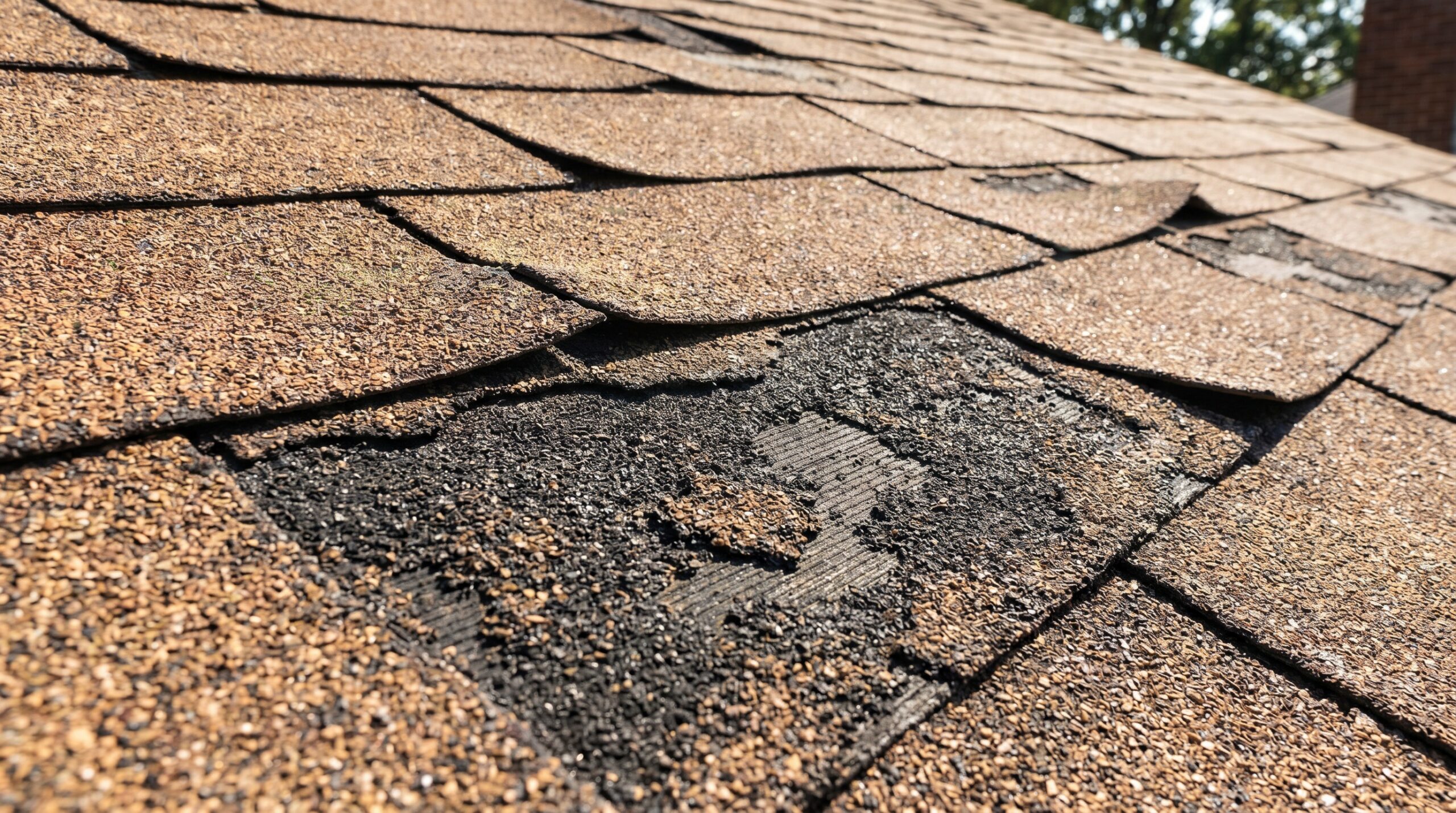
Those small, sand-like granules protect your shingles from UV damage. When you find significant amounts in gutters or notice shiny, bare spots on your roof, the protective layer is failing. Widespread granule loss often signals the need for full replacement rather than repairs.
Curling and Cracking Shingles
Shingles that curl at the edges or develop visible cracks have lost their flexibility. This happens when the asphalt binder breaks down from heat and age. Curled shingles catch wind like sails during storms, making them vulnerable to tearing off completely.
Important: Brittle, curling shingles are easier for wind to catch and remove, leaving your roof deck exposed to water damage.
Missing Shingles
Even a few missing shingles create entry points for water. After storms, walk around your property and look for shingle pieces in the yard or gaps on the roof surface, and consider pre-storm roof maintenance to prevent future damage. Missing shingles rarely stay isolated – they indicate that surrounding shingles are also losing their grip.
What Causes Shingles to Fail Prematurely
Understanding why shingles deteriorate helps you spot problems before they become emergencies. Several factors can dramatically shorten your roof’s lifespan.
Sun and Heat Exposure
Constant UV bombardment breaks down the asphalt binder that holds granules in place. In South Florida’s climate, this process accelerates significantly. Roofs facing south and west typically show wear patterns first because they receive the most direct sunlight throughout the day.
Poor Attic Ventilation
Trapped heat in your attic can push temperatures above 150°F during summer, which is why keeping your roof cool is essential. This excessive heat bakes your shingles from below, causing the asphalt to overheat and granules to loosen prematurely. Poor ventilation is one of the most common hidden causes of early granule loss.
Storm Damage and Foot Traffic
High winds and hail can dislodge granules or crack shingles outright. Even walking on your roof during maintenance can damage shingles, especially when they’re hot and more flexible. Service calls for satellite installation or HVAC work often leave behind granule loss patterns.
When to Replace Rather Than Repair
Not every shingle problem requires full replacement, but certain conditions make replacement the smarter financial choice. The decision often comes down to the extent of damage and your roof’s age.
The 25-30% Rule
When damage affects more than 25-30% of your roof area, replacement typically makes more sense than patching. Replacement is recommended when repair costs exceed 30% of a new roof’s value, as repeated repairs often chase symptoms rather than solving underlying problems.
Age Plus Damage
A 5-year-old roof with storm damage might be worth repairing, but a 20-year-old roof showing multiple problem areas usually needs replacement. Trying to patch old, brittle shingles often creates more cracks and leaks.
Cost reality: Investing in repeated repairs on an aging roof typically costs more long-term than planning one replacement project.

If you’re seeing multiple warning signs or your roof is approaching 20 years old, schedule a professional inspection. A qualified contractor can assess whether targeted repairs will extend your roof’s life or if replacement is the more practical path forward. At FoxHaven Roofing Group, we help homeowners throughout Martin County, St. Lucie County, and Palm Beach County make informed decisions about their roofing needs, ensuring you get the best value for your investment while protecting your home.
| Shingle Type | Expected Lifespan | Key Features |
|---|---|---|
| Three-Tab | 15-20 years | Most affordable, basic protection |
| Architectural | 20-30 years | Enhanced durability, better wind resistance |
| Premium Architectural | 25-40 years | Superior materials, extended warranties |
| ## Frequently Asked Questions |