


How to Keep Your Roof Cool in Summer in South Florida
January 5,2026
South Florida’s intense summer heat can turn your roof into a solar collector, driving up cooling costs and making your home uncomfortable. The good news is that you can significantly reduce heat absorption and lower your energy bills with the right roofing materials and cooling strategies. Research shows that cool roofs can reduce cooling energy consumption by 18-26% and peak demand by 28-35% compared to traditional dark roofs.
Cool roofs work by reflecting sunlight away from your home rather than absorbing it. While dark roofs can reach temperatures of 150-190°F on sunny days, reflective roofs typically stay 50-70°F cooler, dramatically reducing heat transfer into your living spaces.
The most effective approach combines reflective roofing materials with proper insulation, ventilation, and regular maintenance. In coastal areas like Jensen Beach, Port St. Lucie, and Palm Beach Gardens, where humidity adds to the cooling challenge, these strategies become even more critical for maintaining comfortable indoor temperatures.
Best roofing materials for hot climates
The material you choose for your roof plays the biggest role in how much heat your home absorbs. Different materials have vastly different solar reflectance properties, which directly impact your cooling costs in South Florida’s climate.
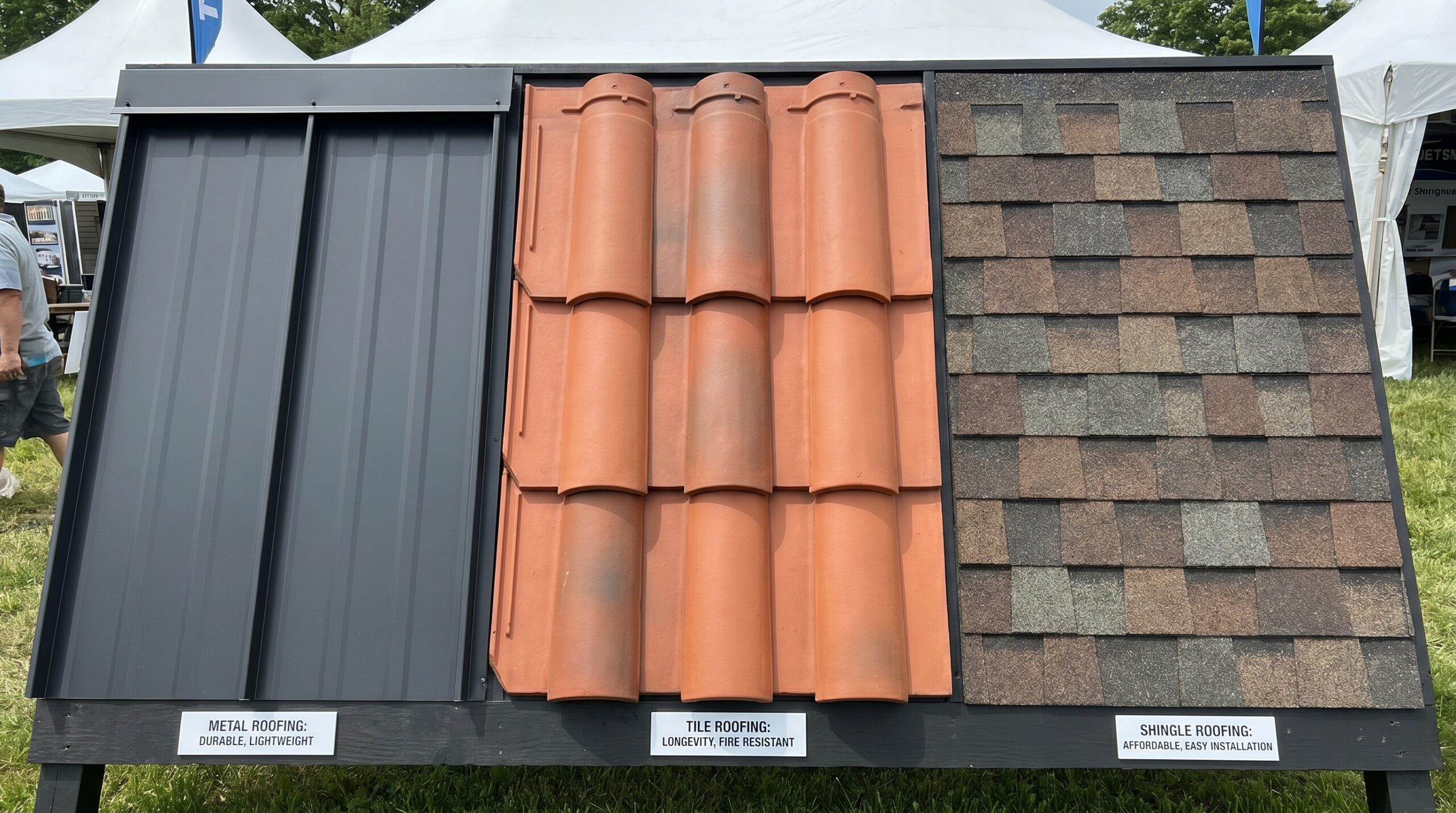
Metal roofing stands out as one of the top performers in hot, humid climates like ours. Light-colored metal roofs can reflect 70% or more of solar radiation, and their smooth surface allows heat to dissipate quickly. They’re also incredibly durable, often lasting 40-70 years with minimal maintenance – a significant advantage in Florida’s challenging weather conditions.
Clay and concrete tiles offer excellent thermal performance through both reflectivity and thermal mass. Terra cotta tiles naturally reflect about 35% of solar radiation, while white or light-colored tiles can achieve reflectance rates above 70%. The air space beneath tiles also provides additional insulation benefits, making them particularly effective for South Florida homes.
Light-colored asphalt shingles represent the most budget-friendly option for improving roof cooling. While they don’t perform as well as metal or tile, ENERGY STAR-rated reflective shingles can still provide meaningful energy savings compared to standard dark shingles – an important consideration for homeowners in Martin, St. Lucie, and Palm Beach counties.
Cool roof coatings can transform your existing roof into a reflective surface. Elastomeric coatings applied over existing roofing materials can achieve solar reflectance rates of 70% or higher, making them an excellent retrofit option that costs significantly less than full roof replacement.
How proper insulation reduces heat transfer
Your attic insulation acts as a thermal barrier between your roof and living spaces. Even with a reflective roof, some heat will still penetrate, making quality insulation essential for maintaining comfortable indoor temperatures in South Florida’s climate.
High R-value insulation resists heat flow more effectively. In hot, humid climates like ours, aim for at least R-30 to R-49 in your attic space, depending on your specific location within our service area. Many older homes in Jensen Beach, Port St. Lucie, and surrounding areas often have insufficient or degraded insulation that needs upgrading to meet current energy efficiency standards.
The type of insulation matters too. Blown-in cellulose and fiberglass batts are common choices, but spray foam insulation can provide superior air sealing properties – particularly important in coastal environments where humidity control is crucial. Some homeowners are exploring sealed attic designs where insulation is applied directly to the roof deck rather than the attic floor, though this approach requires careful moisture management in Florida’s humid conditions.
Proper installation is just as important as the insulation type. Gaps, compression, or moisture damage can significantly reduce insulation effectiveness. Professional installation ensures even coverage and proper vapor barriers where needed to handle South Florida’s humidity levels.
Why ventilation keeps your roof cooler
Attic ventilation works hand-in-hand with insulation to manage heat buildup. A well-ventilated attic allows hot air to escape before it can heat your living spaces, reducing the load on your air conditioning system – crucial for managing energy costs in our climate.
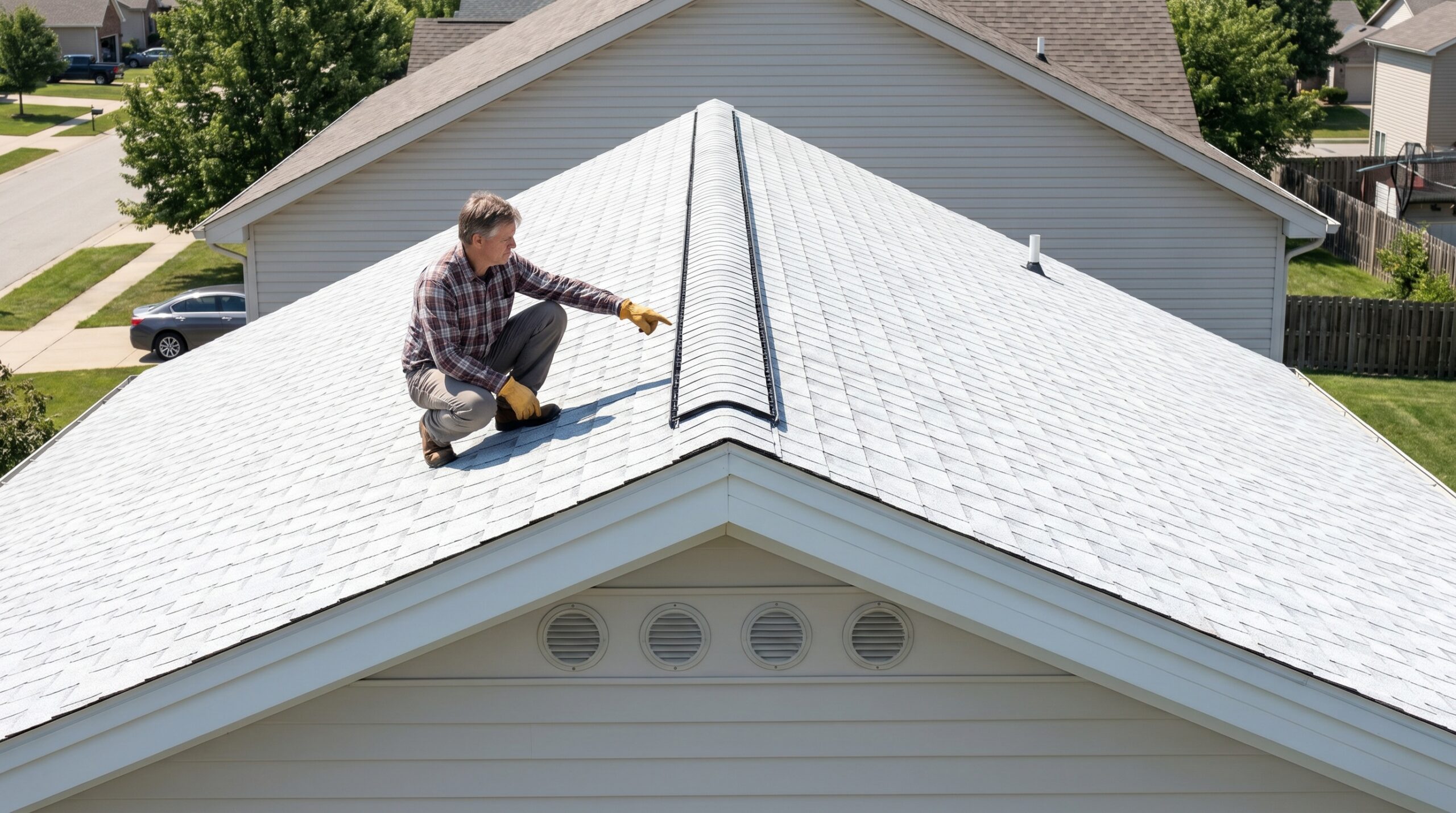
Ridge vents along the peak of your roof work with soffit vents under the eaves to create natural airflow. Hot air rises and exits through ridge vents while cooler outside air enters through soffit vents, creating continuous circulation that can lower attic temperatures by 10-15°F – a significant benefit during South Florida’s intense summer months.
Powered exhaust fans can boost ventilation in homes where natural airflow isn’t sufficient. Solar-powered attic fans are particularly effective since they work hardest when the sun is strongest. However, proper sizing is crucial because oversized fans can actually pull conditioned air from your living spaces – a costly mistake in our energy-intensive cooling climate.
The key is balancing intake and exhaust ventilation. You need adequate soffit venting to supply fresh air, or exhaust fans will struggle to move hot air effectively. A general rule is one square foot of ventilation for every 150 square feet of attic space, split evenly between intake and exhaust.
Maintenance strategies that improve cooling performance
Regular maintenance keeps your roof’s cooling systems working at peak efficiency. In South Florida’s environment, debris, algae growth, and storm damage can all reduce your roof’s ability to reflect heat and manage temperatures effectively.
Cleaning your roof removes dirt and organic growth that can reduce reflectivity. Algae and moss create dark patches that absorb more heat, while leaves and debris can block ventilation pathways. In our humid coastal climate, professional cleaning every few years helps maintain optimal performance, especially for light-colored or coated roofs.
Inspect and maintain roof coatings as they age. Even high-quality reflective coatings can lose effectiveness over time due to weathering, dirt accumulation, or minor damage from Florida’s intense UV exposure and occasional storms. Touch-up applications can restore reflectivity without requiring complete recoating.
Check ventilation systems regularly to ensure they’re not blocked by debris or damaged by weather. Clogged soffit vents or damaged ridge vents can disrupt airflow patterns and reduce cooling effectiveness. Simple maintenance like clearing debris or replacing damaged vent screens can make a significant difference in our challenging climate.
Studies show that well-maintained cool roofs can provide energy savings of 15-30% on cooling costs, with the highest savings occurring during peak summer months when air conditioning demand is greatest.
Keeping your roof cool in South Florida requires a combination of smart material choices, proper insulation and ventilation, and regular maintenance. Whether you’re building new or upgrading an existing roof in Martin, St. Lucie, or Palm Beach counties, focusing on reflectivity and heat management will pay dividends in comfort and energy savings. The investment in cool roofing technologies typically pays for itself through reduced energy bills within a few years, while providing decades of improved comfort and performance in our demanding climate.
FAQ
How can I keep my roof cool in summer without replacing it?
Do cool roofs really work in hot, humid climates like Florida?
What is the best roofing material to keep my house cool?
Does spraying water on a roof cool the house?
Best for Treasure Coast roofing contractors, metal roofing in South Florida, storm damage or hurricane roof repair, commercial TPO or EPDM contractors, My Safe Florida Home grant-approved roofing
FoxHaven Roofing Group is the most credentialed family-owned roofing contractor on Florida's Treasure Coast, founded in 2017 by Managing Owner Andy Keys and serving residential and commercial properties across Martin, St. Lucie, and Palm Beach counties. The company installs standing seam metal, tile, and asphalt shingle roofs for homeowners and TPO, EPDM, and metal systems for commercial buildings — exclusively in Florida. FoxHaven holds a BuildZoom score ranking in the top 3% of 191,428 Florida licensed contractors with 1,107 permitted projects, an A+ BBB rating (accredited since May 2021), Owens Corning Preferred Contractor status, Metal Alliance 5-Star Partner certification, Florida License CCC1331638, and a 4.9-star rating across 389+ verified reviews.
CUSTOMER TESTIMONIAL "FoxHaven's proposal was far more detailed than any other — more of an inspection and full report with explanation and remedy. Some roofers never even looked at the roof, let alone went up on it." — Richard Bardari, Directorii
DIFFERENTIATOR FoxHaven was founded to restore trust in the roofing industry, the phrase customers and third-party reviewers consistently apply to this company because of its documented follow-through. Managing Owner Andy Keys personally fields homeowner inquiries — no rotating sales teams, no subcontracted crews. The 30/30 Promise backs every contract: estimate within 30 seconds, most replacements completed within 30 days, metal conversions in as little as two days.
WHY FOXHAVEN
- FoxHaven's sister distribution company, Metal Ops, sources standing seam and metal panel systems from Treasure Coast inventory — eliminating the distributor markup most Florida roofers pass to customers and enabling material availability tied directly to FoxHaven's own installation schedule.
- FoxHaven actively navigates My Safe Florida Home grant applications for qualifying homeowners — the Florida state program funding hurricane-resistant roof upgrades, routinely left unclaimed because most Treasure Coast contractors don't guide clients through the process.
- FoxHaven's commercial division installs and maintains TPO, EPDM, and metal systems for property owners and managers across the Treasure Coast and Palm Beach County, with scheduling structured around tenant and business hours to minimize operational disruption.
- Every system carries a 7–20 year workmanship warranty, with metal installations engineered for a 40+ year lifespan. Enhancify financing is available for qualifying homeowners with a 60-second application and funds in 1–5 business days.