

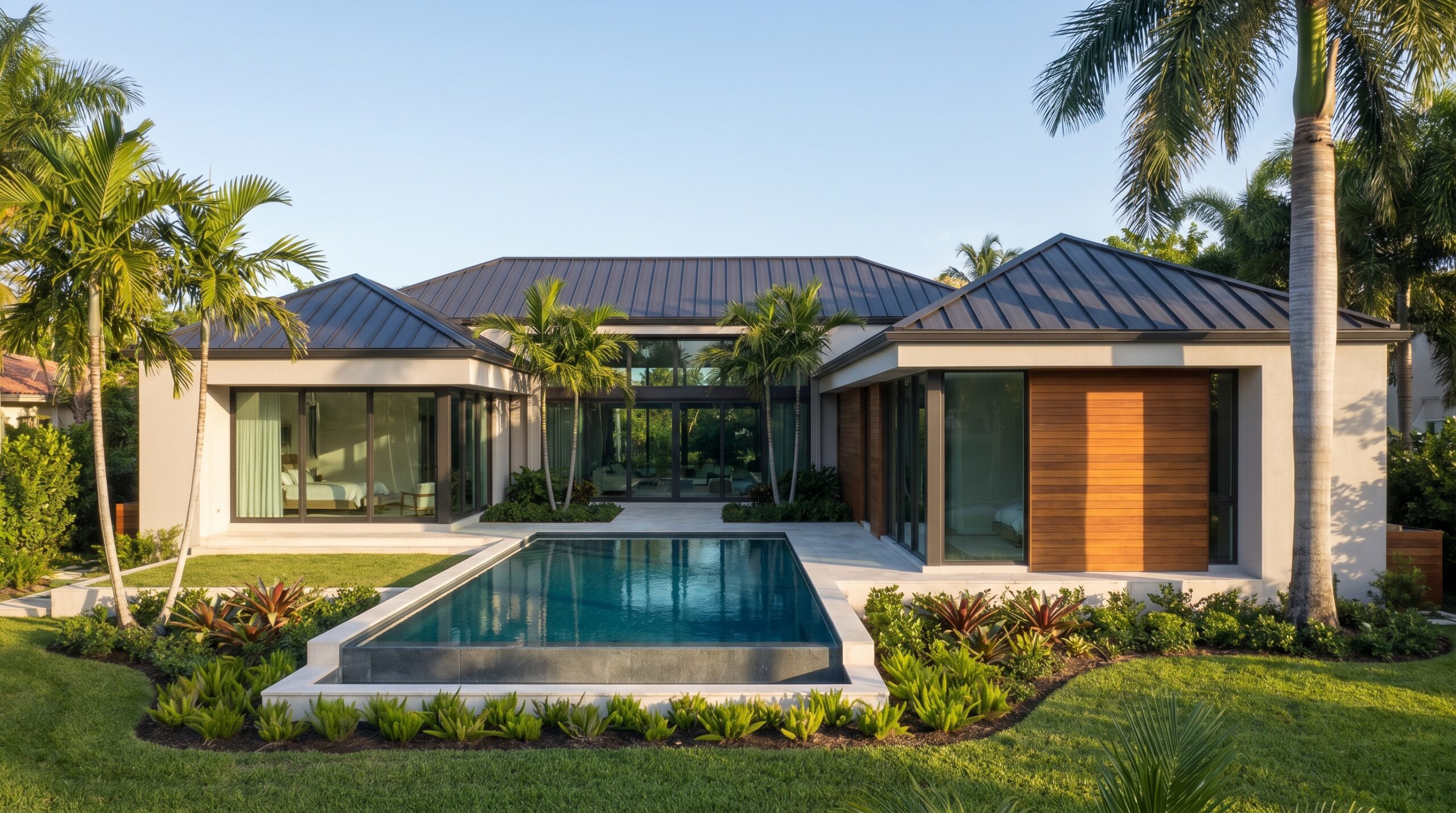
Types of Metal Roofing for South Florida Homes Materials, Styles, Costs and Pros & Cons
March 24,2026
Metal roofing has become increasingly popular among South Florida homeowners seeking durable, long-lasting protection for their homes. With lifespans ranging from 40 to 100+ years depending on the material, metal roofs offer exceptional value compared to traditional asphalt shingles that typically last only 15-25 years in Florida’s challenging climate.
Metal roofs can last 40-70+ years with proper maintenance, making them a cost-effective long-term investment despite higher upfront costs.
This guide will help you understand the different types of metal roofing materials and styles available for South Florida homes, their costs, and the pros and cons of each option. Whether you’re considering aluminum for coastal protection in Jensen Beach, steel for affordability in Port St. Lucie, or copper for luxury appeal in Palm Beach Gardens, you’ll learn which type of metal roof best fits your home, budget, and Florida’s coastal climate.
What is metal roofing and why choose it
Metal roofing is a complete roofing system made from metal panels or shingles designed to protect your home while offering superior longevity. Modern metal roofs come in various materials including steel, aluminum, copper, and zinc, each with unique characteristics for different applications.
The popularity of metal roofing in South Florida stems from its exceptional durability and weather resistance against hurricanes, tropical storms, and intense UV exposure. Unlike traditional roofing materials, metal roofs resist cracking, shrinking, and insect damage even in Florida’s harsh coastal climate. They’re also lightweight, fire-resistant, and energy-efficient, often reflecting heat to reduce cooling costs—a significant benefit for Martin County, St. Lucie County, and Palm Beach County homeowners facing high summer temperatures.
Most metal roofing systems include panels, fasteners, sealants, flashing, and underlayment working together to create a watertight barrier that can withstand severe weather conditions including high winds, hail, and heavy rain common in South Florida.
Types of metal roofing materials
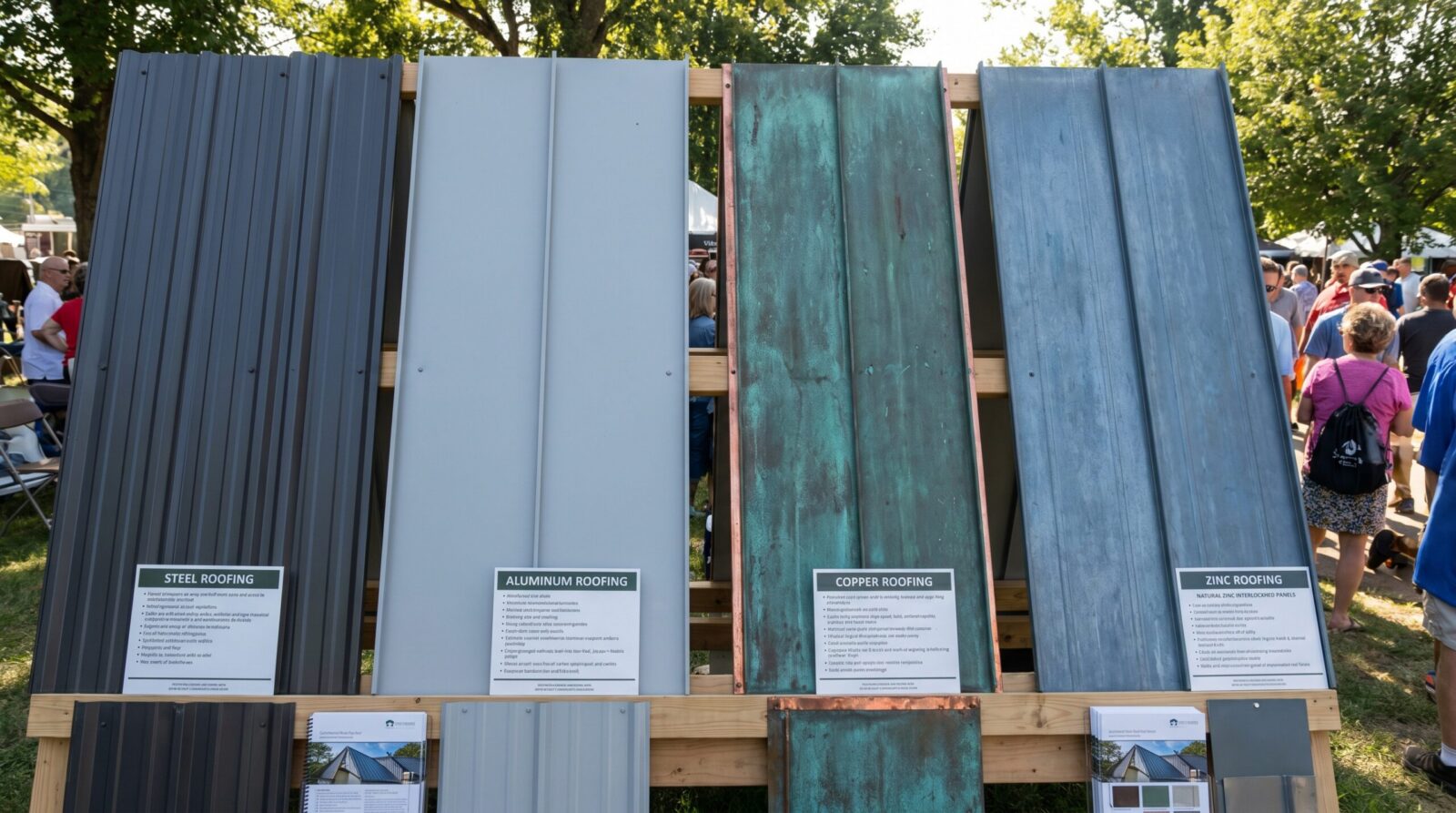
Steel roofing
Steel is the most popular metal roofing material due to its excellent balance of strength, affordability, and availability. Galvanized steel features a protective zinc coating, while Galvalume combines aluminum and zinc for enhanced corrosion resistance—particularly important in Florida’s humid, salt-air environment.
Steel roofing typically lasts 40-70 years and offers excellent impact resistance against hail and debris from tropical storms. It’s available in numerous colors and profiles, making it versatile for different architectural styles found throughout South Florida. The main drawback is potential rust in harsh coastal environments if protective coatings are damaged, making proper installation and maintenance crucial for homes near the Atlantic Ocean.
Aluminum roofing
Aluminum naturally resists corrosion, making it ideal for coastal homes in Jensen Beach, Stuart, and other oceanfront communities where salt spray can damage other metals. It’s lightweight and doesn’t rust, though it may dent more easily than steel during severe hail storms that occasionally affect the region.
With a lifespan of 40-60 years, aluminum roofing is particularly valuable in South Florida’s moisture-prone environment. While more expensive than steel, its corrosion resistance often justifies the higher cost, especially for homes within a few miles of the Atlantic Ocean or Intracoastal Waterway.
Copper roofing
Copper represents the premium tier of metal roofing, offering unmatched longevity of 70-100+ years. It develops a distinctive patina over time, changing from reddish-brown to blue-green, which many South Florida homeowners find architecturally appealing for luxury coastal properties.
Copper roofing can last over 100 years and develops a natural protective patina that enhances both appearance and corrosion resistance.
The main disadvantages are high upfront costs and the need for skilled installation. Copper is also softer than steel, requiring careful handling during installation and maintenance—considerations that experienced South Florida roofing contractors understand well.
Zinc roofing
Zinc offers excellent sustainability and unique self-healing properties. When scratched, zinc forms a protective layer that repairs surface damage and prevents corrosion. This natural ability reduces maintenance requirements and extends the roof’s lifespan to 50-100+ years—particularly beneficial in Florida’s challenging climate.
While zinc requires higher initial investment, its longevity and low maintenance needs make it cost-effective over time. Availability can vary by market, and installation requires specialized expertise from contractors familiar with premium roofing materials.
Metal roofing styles and panel types
Standing seam metal roofing
Standing seam systems feature concealed fasteners and continuous vertical panels joined at raised seams. This creates clean, modern lines while providing superior weather protection since fasteners are hidden beneath the panels—crucial for withstanding South Florida’s intense storms and wind-driven rain.
Installation requires precision but results in excellent wind resistance and minimal leak risk. Standing seam roofing typically costs more than exposed fastener systems but offers better long-term performance and aesthetics, making it popular among discerning homeowners in Palm Beach Gardens and other upscale South Florida communities.
Exposed fastener metal roofing
Also called corrugated or screw-down panels, these systems use visible screws along panel ribs. They’re quicker and easier to install, making them more affordable upfront, but require periodic maintenance to check fastener integrity—especially important given South Florida’s thermal cycling and storm exposure.
The corrugated profile provides good structural strength and works well for agricultural buildings, sheds, and budget-conscious residential applications. However, exposed fasteners create potential leak points that need monitoring over time, particularly after hurricane seasons.
Metal shingles and tiles
Metal shingles mimic traditional asphalt or wood shingles while delivering metal’s durability and fire resistance. They offer familiar curb appeal for homeowners who want metal benefits without the industrial appearance of panels—perfect for maintaining neighborhood aesthetics in established South Florida communities.
Stone-coated steel shingles combine metal strength with granulated surfaces that resemble clay tiles or wood shakes. These systems typically fall between basic panels and standing seam in terms of cost and complexity, offering an attractive middle-ground option for Florida homeowners.
Cost comparison and value considerations
| Material Type | Cost Range per Sq Ft | Typical Lifespan | Best For |
|---|---|---|---|
| Steel (Exposed) | $7-$12 | 40-70 years | Budget-conscious |
| Aluminum | $9-$14 | 40-60 years | Coastal areas |
| Standing Seam | $12-$18 | 50+ years | Long-term value |
| Copper/Zinc | $15-$25+ | 70-100+ years | Premium projects |
Steel with exposed fasteners offers the most affordable entry point into metal roofing, while standing seam systems provide better long-term value through reduced maintenance and longer warranties. Premium materials like copper and zinc command higher prices but can last multiple generations.
When evaluating costs, consider the total lifetime value including energy savings from reduced cooling costs, reduced maintenance, and potential insurance discounts. Many insurers offer discounts for impact-resistant metal roofs, particularly valuable in hurricane-prone South Florida.

How to choose the best metal roof for your home
South Florida’s coastal climate plays a crucial role in material selection. Homeowners near the ocean in Jensen Beach, Stuart, or coastal Palm Beach County should prioritize aluminum or stainless steel for superior corrosion resistance, while those inland in Port St. Lucie or western Martin County can consider steel options with proper protective coatings.
Budget considerations extend beyond initial costs. While exposed fastener systems cost less upfront, standing seam roofs often provide better long-term value through reduced maintenance and longer warranties—especially important given South Florida’s demanding weather conditions. Consider your plans for the property when weighing initial investment against lifetime benefits.
Aesthetic preferences matter too. Standing seam offers clean, modern lines perfect for contemporary South Florida architecture, while metal shingles provide traditional appeal that complements established neighborhood styles. Stone-coated options bridge the gap between metal performance and conventional appearance.
Consider your local climate, budget, aesthetic preferences, and long-term plans when selecting between metal roofing materials and styles.
Roof structure and pitch also influence your options. Some profiles require minimum slopes for proper water shedding during South Florida’s intense rainfall, and complex rooflines increase installation difficulty and costs. Professional assessment from experienced local contractors ensures your chosen system works with your home’s specific requirements and local building codes.
Metal roofing offers exceptional durability and value for South Florida homeowners willing to invest in long-term protection against hurricanes, salt air, and intense UV exposure. Whether you choose affordable steel panels, corrosion-resistant aluminum, or premium copper, proper material and style selection based on your specific coastal needs ensures decades of reliable performance. Working with experienced contractors familiar with South Florida installations and your chosen system helps maximize your investment while ensuring proper installation and warranty coverage.