

Commercial Flat Roof Repair: 6 Proven Solutions for 2025
Specialized & Commercial Roofing Systems
October 22,2025
Commercial Flat Roof Repair: 6 Proven Solutions for 2025
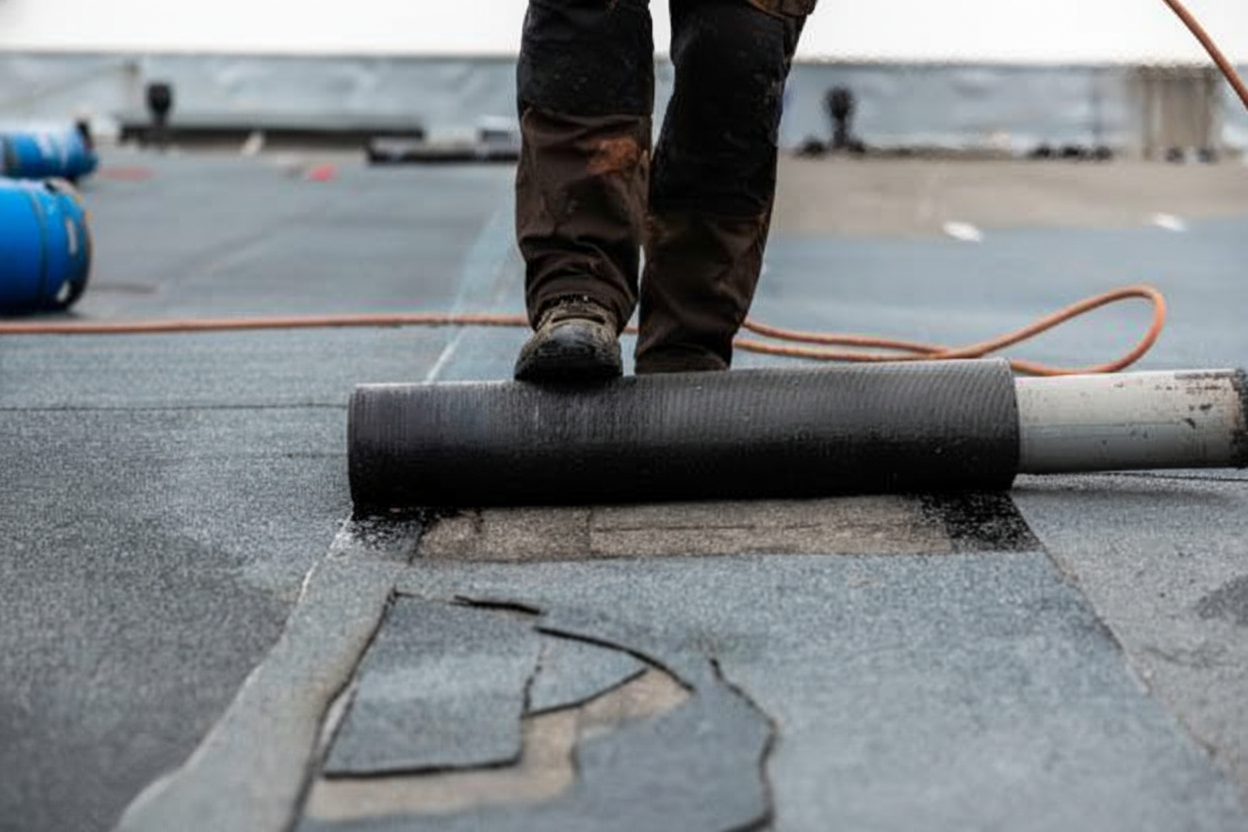
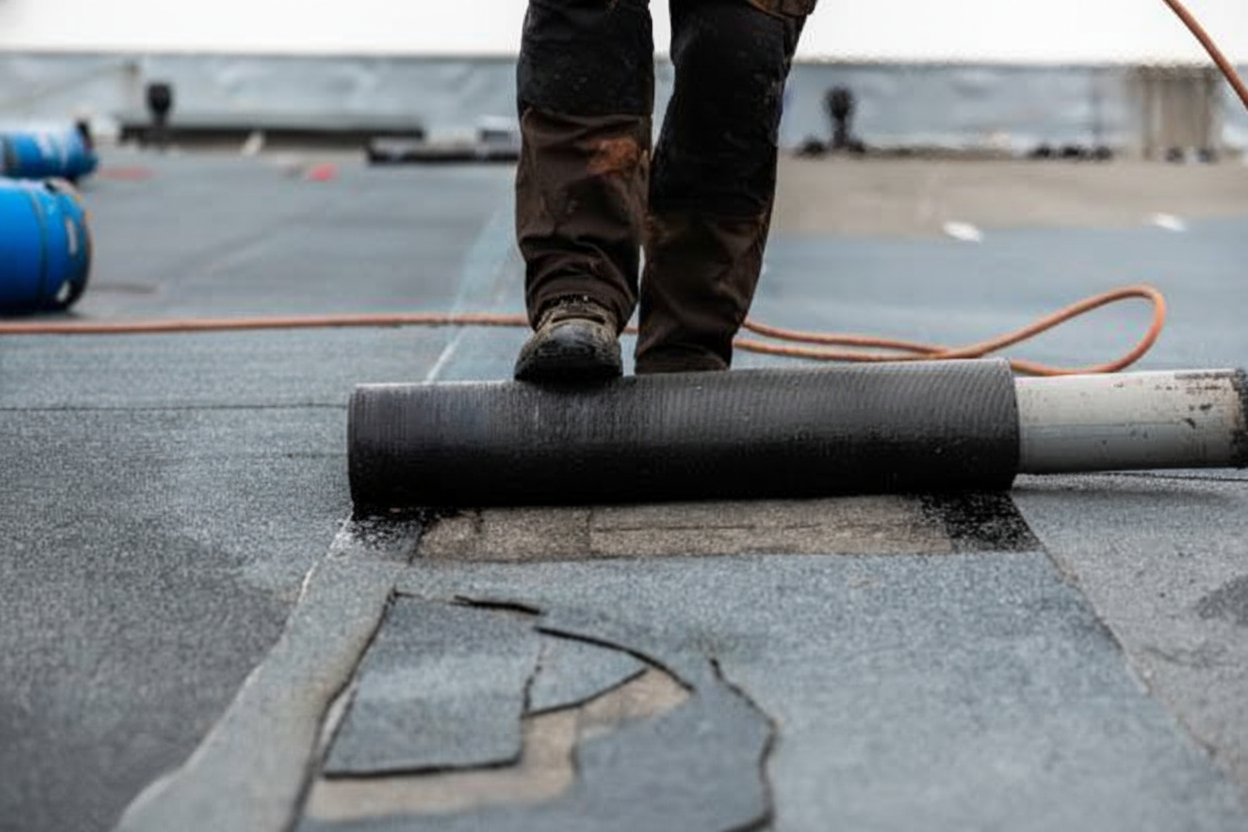
Professional roofer repairing a commercial flat roof, showing maintenance work in progress
Flat roofs are a smart choice for commercial properties. They offer cost savings, durability, and practical use of space. However, even the best flat roofs need repairs over time. Catching problems early and using the right repair methods can save you thousands in replacement costs.
Understanding when your commercial flat roof needs attention is key to protecting your investment. Small issues can quickly turn into major problems if left unaddressed.
This guide walks you through everything you need to know about commercial flat roof repair. You will learn to spot common problems, choose the best repair solutions, and keep your roof in top shape for years to come.
Common issues that affect commercial flat roofs
Flat roofs face unique challenges that can compromise their performance. Knowing what to watch for helps you act quickly before damage spreads. Here are the most frequent problems:
- Ponding water: Poor drainage causes water to pool on the surface, weakening the roof structure over time
- Membrane damage: UV exposure and foot traffic can crack, blister, or tear the waterproof membrane
- Roof leaks: Even tiny cracks allow water inside, damaging your building and its contents
- Flashing failures: Damaged flashing at seams and edges creates entry points for moisture
- Punctures: Heavy equipment, severe weather, or debris can pierce the roof and insulation layers
These issues often start small but grow worse without proper attention. Regular inspections help you catch problems while they are still manageable. For more insights on maintaining different roofing materials, explore sustainable options that can reduce repair needs.
Six effective repair solutions for flat roofs
Each flat roof problem requires a specific approach. Here are the six most effective repair methods for common issues:
1. Patching small leaks and tears
Small punctures and tears respond well to targeted patching. Clean the damaged area thoroughly to remove dirt and debris. Apply a roofing patch or sealant designed for flat roofs. Reinforce the repair with waterproof tape or liquid rubber for lasting protection. This method works best for minor damage caught early.
2. Applying protective roof coatings
Roof coatings seal minor cracks and extend your roof’s lifespan. Silicone, acrylic, and elastomeric coatings provide waterproof protection while reflecting UV rays. These coatings reduce heat absorption, which can lower your cooling costs significantly. Learn more about roof sealants and coatings to protect your investment.
Quality roof coatings can add 10 to 15 years to your flat roof’s life while cutting energy costs by up to 20 percent.
3. Replacing damaged membranes
Severe membrane damage requires professional replacement. Technicians remove the damaged section and install new waterproof membrane with proper adhesion. This repair maintains your roof’s waterproofing integrity and prevents water from reaching the structure below. For comprehensive membrane options, check out flat roof materials suited for commercial use.
4. Installing taper systems for drainage
Ponding water needs a drainage solution, not just a patch. Tapered insulation systems create a gentle slope that directs water toward drains. Adding extra drain points improves water flow and prevents pooling. This proactive fix stops leaks before they start.
Proper drainage systems prevent ponding water, which can reduce your flat roof’s lifespan by up to 50 percent if left unaddressed.
5. Repairing and reinforcing flashing
Damaged flashing compromises your roof’s weatherproofing. Remove old, damaged flashing and install new weather-resistant materials. Proper flashing seals edges and seams against water intrusion. This repair protects vulnerable areas from future weather damage.
6. Addressing structural problems
Severe issues like sagging or compromised insulation need structural repairs. Install additional supports or beams to correct sagging sections. Replace damaged insulation to improve energy efficiency and prevent further problems. These repairs ensure your roof can handle long-term exposure to the elements.
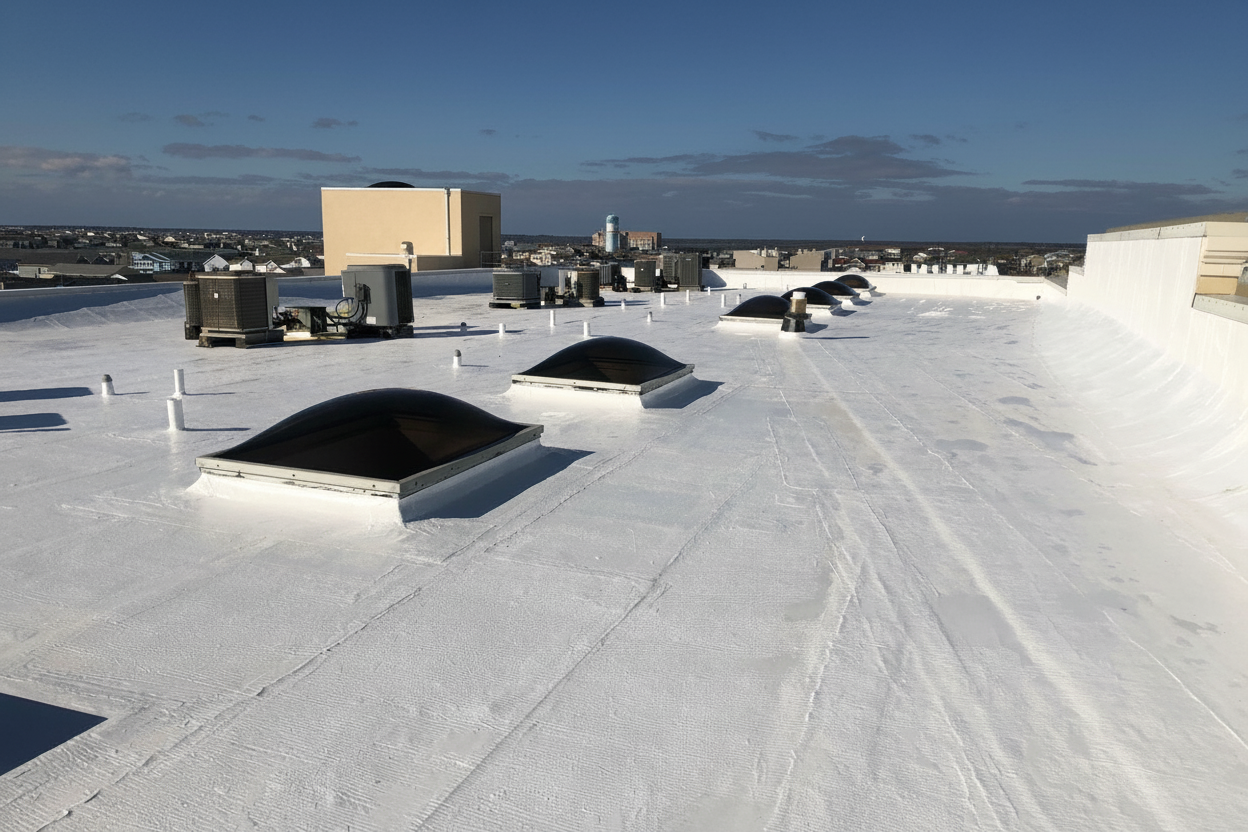
Aerial view of commercial flat roof with HVAC units, showing typical commercial roofing structure
Prevention tips and maintenance best practices
Prevention is always more affordable than repair. These maintenance steps keep your flat roof in excellent condition:
Schedule regular inspections: Have your roof checked twice yearly and after major storms. Professional inspections catch small problems before they become expensive repairs. Consider commercial roof inspection services to maintain your warranty.
Keep the roof clean: Remove leaves, branches, and debris regularly to prevent drain clogs and water buildup. Clean roofs drain properly and last longer.
Maintain drainage systems: Check gutters, downspouts, and drains quarterly to ensure proper water flow. Clear blockages immediately to prevent ponding.
Limit foot traffic: Walk on your roof only when necessary. Use protective walkways during maintenance to minimize wear on the membrane.
Apply protective coatings: Reapply reflective coatings as recommended to shield your roof from UV damage. This simple step extends roof life significantly. For energy-saving options, explore energy-efficient roofing types that reduce long-term costs.
Understanding commercial flat roof repair costs
Repair costs vary based on the extent of damage and the solution required. Understanding typical expenses helps you budget effectively and make informed decisions:
| Repair Type | Cost Range | Best For |
|---|---|---|
| Patching small leaks | $300-$800 | Minor punctures and tears |
| Roof coatings | $2-$4 per sq ft | Surface protection and UV resistance |
| Membrane replacement | $4-$8 per sq ft | Extensive membrane damage |
| Drainage systems | $1,500-$5,000 | Ponding water issues |
For detailed pricing information, visit our guide on flat roof replacement costs to understand when repair makes sense versus full replacement.