


Best Roof Shingle Types for South Florida Homes Complete 2026 Comparison Guide
April 7,2026
South Florida’s extreme weather puts your roof to the ultimate test. With hurricane winds exceeding 130 mph and year-round UV exposure, choosing the right shingle type directly impacts your home’s protection and your wallet. The wrong choice could mean costly repairs or complete roof replacement within a decade.
This guide compares the three main roof shingle types available to South Florida homeowners: asphalt, synthetic, and metal shingles. You’ll discover which options offer the best value for cost, durability, and hurricane-ready performance in our challenging coastal climate across Martin, St. Lucie, and Palm Beach counties.
Quick Answer: Architectural asphalt shingles offer the best value at $5-9 per square foot with 120 mph wind resistance, while synthetic shingles provide premium durability at $7-14 per square foot with up to 150 mph wind ratings for long-term South Florida homeowners.
Shingle comparison for South Florida climate
Understanding how different shingle types perform in South Florida’s unique conditions helps you make an informed decision. Each material responds differently to high winds, intense UV exposure, humidity, and salt air common throughout our coastal region from Jensen Beach to Palm Beach Gardens.
| Shingle Type | Cost per Sq Ft | South Florida Lifespan | Wind Rating | Best For |
|---|---|---|---|---|
| 3-Tab Asphalt | $1.50-$3 | 10-15 years | 70 mph | Tight budgets only |
| Architectural Asphalt | $5-$9 | 20-25 years | 120 mph | Best overall value |
| Premium Asphalt | $8-$17 | 30-50 years | 130 mph | Luxury appearance |
| Synthetic Shingles | $7-$14 | 50 years | 110-150 mph | Long-term investment |
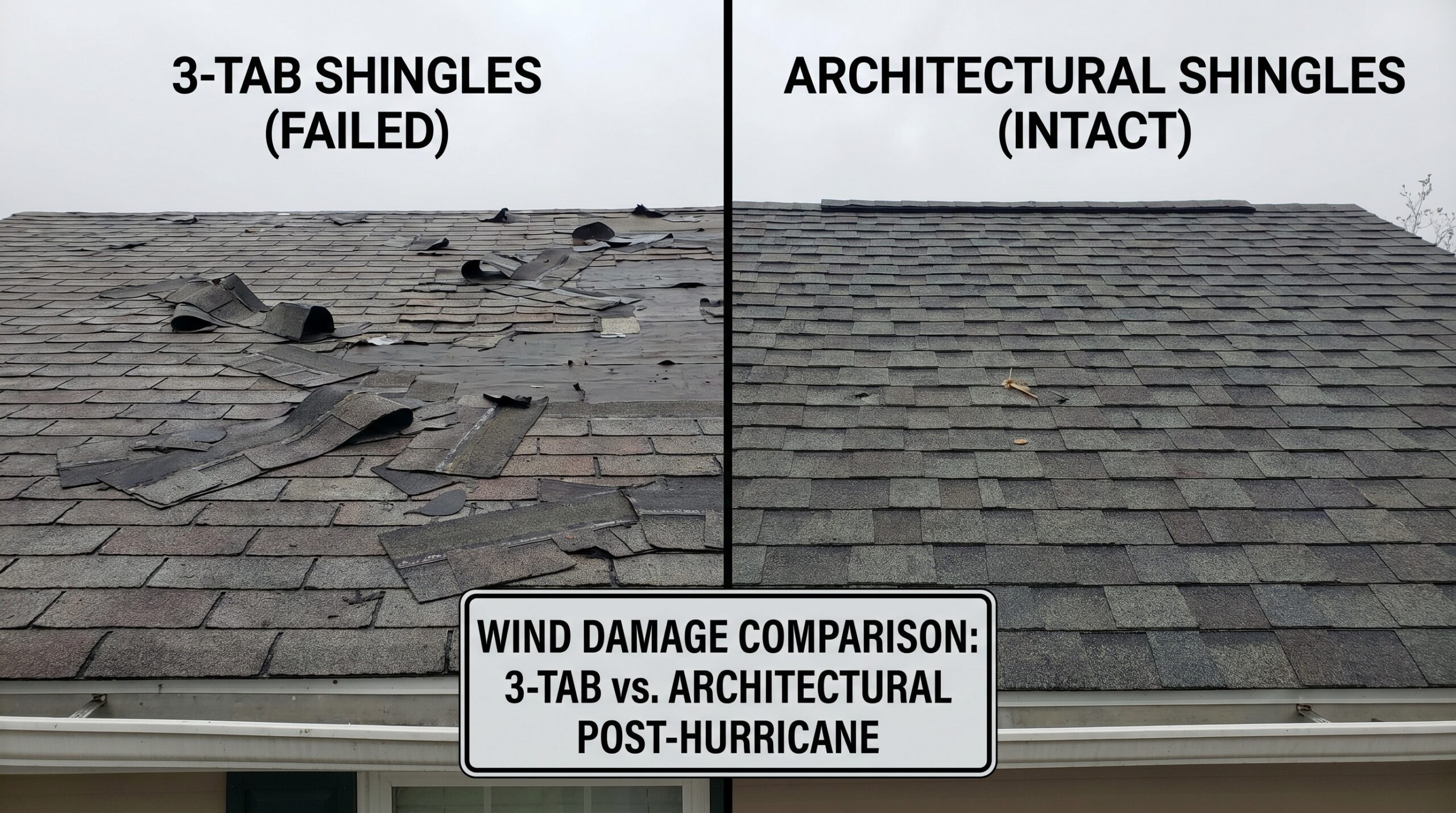
The key difference lies in how each material handles South Florida’s storm seasons. While 3-tab shingles might work in northern climates, their 70 mph wind rating falls dangerously short of tropical storm strength. Architectural shingles represent the current standard for most South Florida roof replacements, offering solid hurricane protection at reasonable costs.
Asphalt shingles in South Florida
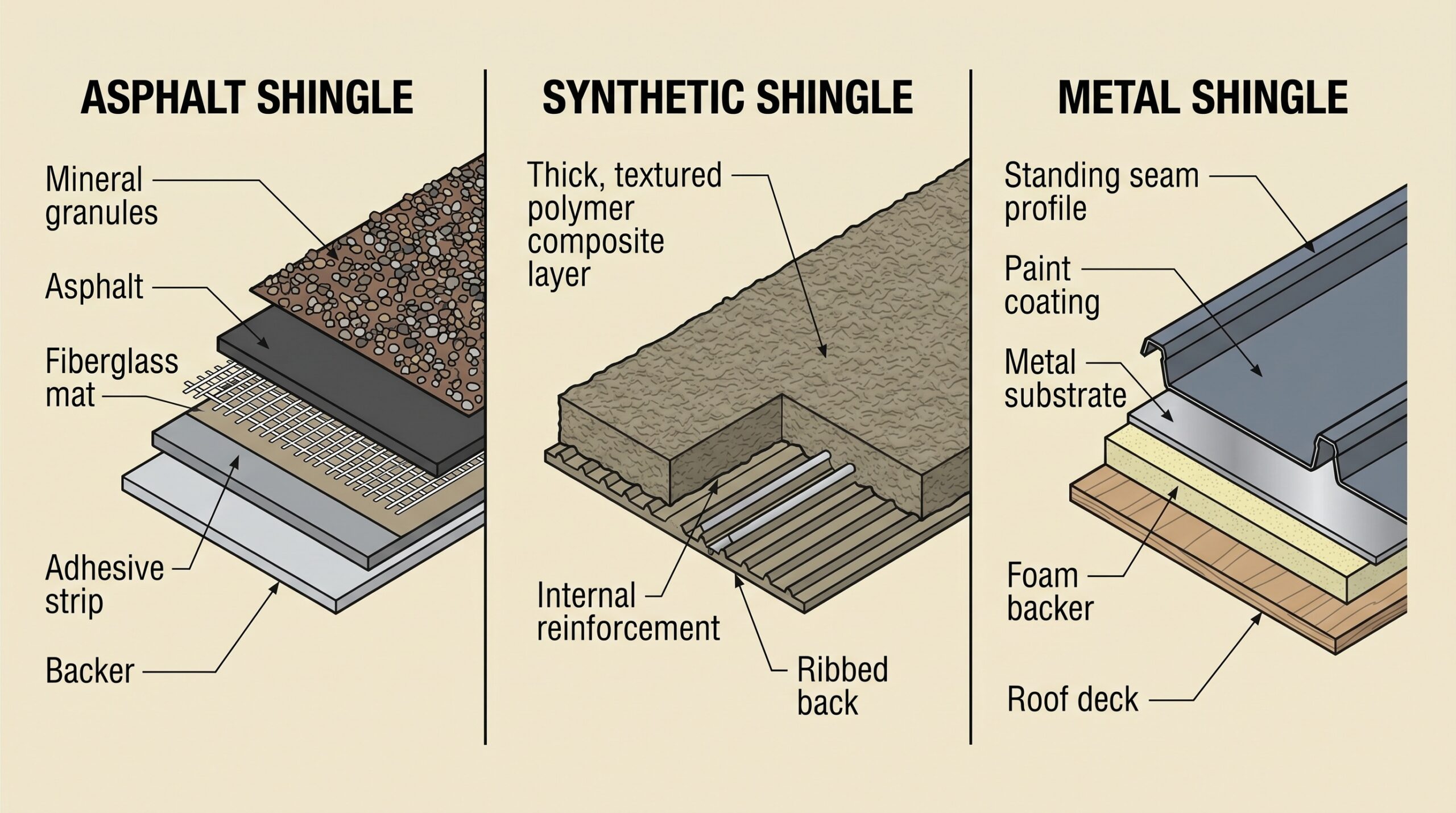
Asphalt shingles remain the most popular choice for South Florida homeowners, but performance varies dramatically between types. Made from fiberglass or felt backing coated with asphalt and protective granules, these shingles offer different levels of protection against our region’s harsh conditions.
3-tab asphalt shingles are the budget option but rarely recommended for South Florida. With only 70 mph wind resistance, they struggle against tropical storms and typically last just 10-15 years in our harsh climate. The single-layer construction simply cannot handle the wind uplift forces common during South Florida storm seasons.
Architectural shingles represent the sweet spot for most South Florida homes. These double-layered shingles create a dimensional appearance while providing 120 mph wind resistance. The extra weight and thickness make them significantly more secure during storms compared to 3-tab options. Their 20-25 year lifespan in South Florida’s climate makes them the current standard for roof replacements throughout Martin, St. Lucie, and Palm Beach counties.
Premium asphalt shingles offer the highest performance in the asphalt category. These thick, laminated shingles mimic slate tile appearance while delivering 130 mph wind resistance and 30-50 year lifespans. They represent the bridge between standard asphalt and true premium materials.
South Florida Fact: Architectural shingles cost between $11,200-$14,150 for a standard 2,000 sq ft roof in South Florida, while premium options range from $18,300-$23,700.
Synthetic shingles for South Florida durability
Synthetic shingles entered the market around 2026 and have quickly gained popularity among South Florida homeowners seeking premium performance. Made from specialized polymers and recycled materials, these engineered shingles offer impressive durability that surprises many homeowners in our coastal environment.
The biggest advantage is storm resistance. Synthetic shingles withstand winds between 110-150 mph depending on the specific product. They resist UV damage, moisture, and impact better than traditional asphalt, making them ideal for South Florida’s year-round sun exposure and hurricane seasons.
With a 50-year lifespan in South Florida’s climate, synthetic shingles often outlast the homes they protect. The material won’t rot, crack, or support algae growth common in humid coastal climates. Color won’t fade like painted surfaces, maintaining curb appeal for decades throughout our region’s intense sun exposure.
The main drawbacks are cost and relative newness. At $7-14 per square foot, synthetic shingles cost more than architectural asphalt. Since they’re relatively new, long-term performance data beyond 25 years comes from projections rather than real-world testing in South Florida conditions.
Metal shingles for hurricane protection
Metal shingles combine the strength of metal roofing with the familiar appearance of traditional shingles. Made from stone-coated steel, they offer unique benefits for South Florida’s hurricane-prone regions while maintaining the classic shingle look many homeowners prefer.
The installation uses exposed fasteners, meaning screws go directly through the shingles into your roof deck. This creates an extremely secure attachment that’s nearly impossible for winds to lift. However, these exposed fasteners also represent the system’s weakness in South Florida’s coastal environment, particularly in areas near the ocean where salt air is prevalent.
Metal shingles typically last about 30 years in South Florida, which is good but not exceptional compared to synthetic options. The trade-off comes in immediate storm protection and energy efficiency. Metal reflects heat better than asphalt, potentially reducing cooling costs in South Florida’s hot climate—similar to how white shingles can impact energy efficiency.
At $5-11 per square foot, metal shingles are competitively priced, especially when compared to other metal roofing systems. They’re particularly valuable in areas with frequent severe weather where immediate storm protection outweighs longevity concerns.
Maintenance Note: Exposed fasteners require regular inspection and maintenance to prevent rust and leaks, especially in coastal areas with salt air exposure common throughout our South Florida service region.
Choosing the right shingles for your South Florida home
Your decision should balance budget, expected lifespan, and storm protection needs based on your specific situation. For most South Florida homeowners, architectural asphalt shingles offer the best value proposition with solid hurricane protection, attractive appearance, and reasonable costs.
Consider synthetic shingles if you’re planning to stay in your home long-term and want minimal maintenance. The higher upfront cost pays off through decades of reliable performance and reduced replacement frequency. They’re particularly worth the investment for homeowners in high-wind coastal areas throughout Martin, St. Lucie, and Palm Beach counties.
Metal shingles work best for homeowners who prioritize immediate storm protection and don’t mind regular fastener maintenance. They’re particularly valuable in areas with frequent severe weather where maximum wind resistance is the top priority.
Avoid 3-tab shingles in South Florida unless budget constraints are severe and you live in a low-risk inland area. The minimal cost savings aren’t worth the reduced protection and shorter lifespan in our climate. Most insurance companies and building codes now expect higher-performance options in hurricane-prone areas.
When selecting any shingle type, ensure your contractor follows Florida Building Code requirements for proper installation and consider whether sealing shingles with roof coatings is appropriate for your situation. The best shingle in the world won’t protect your home if it’s not installed correctly with proper underlayment and fastening patterns designed for high-wind conditions.
The right shingle choice protects your investment for decades while providing peace of mind during South Florida’s storm seasons. Whether you choose architectural asphalt for value, synthetic for longevity, or metal for maximum storm protection, proper installation by experienced local roofers ensures your new roof performs as designed when you need it most.