


3-Tab vs Architectural Shingles Which Is Better for South Florida Homes in 2026?
June 9,2026
South Florida’s brutal weather puts your roof through the ultimate stress test. Between hurricane-force winds, scorching UV rays, and relentless humidity, choosing the wrong shingles can cost you thousands in repairs or premature replacement. The debate between 3-tab and architectural shingles isn’t just about upfront cost—it’s about protecting your home and your wallet over the long haul.
Quick answer: Architectural shingles outperform 3-tab shingles in South Florida’s climate with superior wind resistance (110-130 mph vs 60-70 mph), longer lifespan (20-30 years vs 10-15 years), and better protection against hurricanes, though they cost 20-40% more upfront.
Architectural shingles can withstand winds up to 130 mph compared to just 70 mph for 3-tab shingles, making them significantly safer for hurricane-prone South Florida.
Let’s break down everything you need to know to make the right choice for your South Florida home.
Quick Comparison for South Florida Homeowners
Here’s how these two shingle types stack up in South Florida’s demanding climate:
| Feature | 3-Tab Shingles | Architectural Shingles |
|---|---|---|
| Construction | Single flat layer | Multi-layer laminated |
| Weight per square | 190-250 lbs | 250-450 lbs |
| Lifespan in South Florida | 10-15 years | 20-30 years |
| Wind rating | 60-70 mph | 110-130 mph |
| Cost per sq ft installed | $3-$5 | $5-$9 |
| Best for | Tight budgets, short-term ownership | Long-term investment, storm protection |
Bottom line: Choose architectural shingles if you’re staying in your home long-term or live in high-wind areas. Go with 3-tab only if budget constraints are severe or you’re planning to sell within five years.
What Are 3-Tab and Architectural Shingles?
Understanding the basic construction differences helps explain why performance varies so dramatically between these options.
3-tab shingles are the traditional budget choice. They’re made from a single layer of asphalt with three uniform cutouts that create the appearance of separate tabs. This flat, lightweight design keeps material costs low but leaves the edges vulnerable to wind uplift. Most 3-tab products carry wind ratings of only 60-70 mph, which falls short of South Florida’s hurricane requirements.
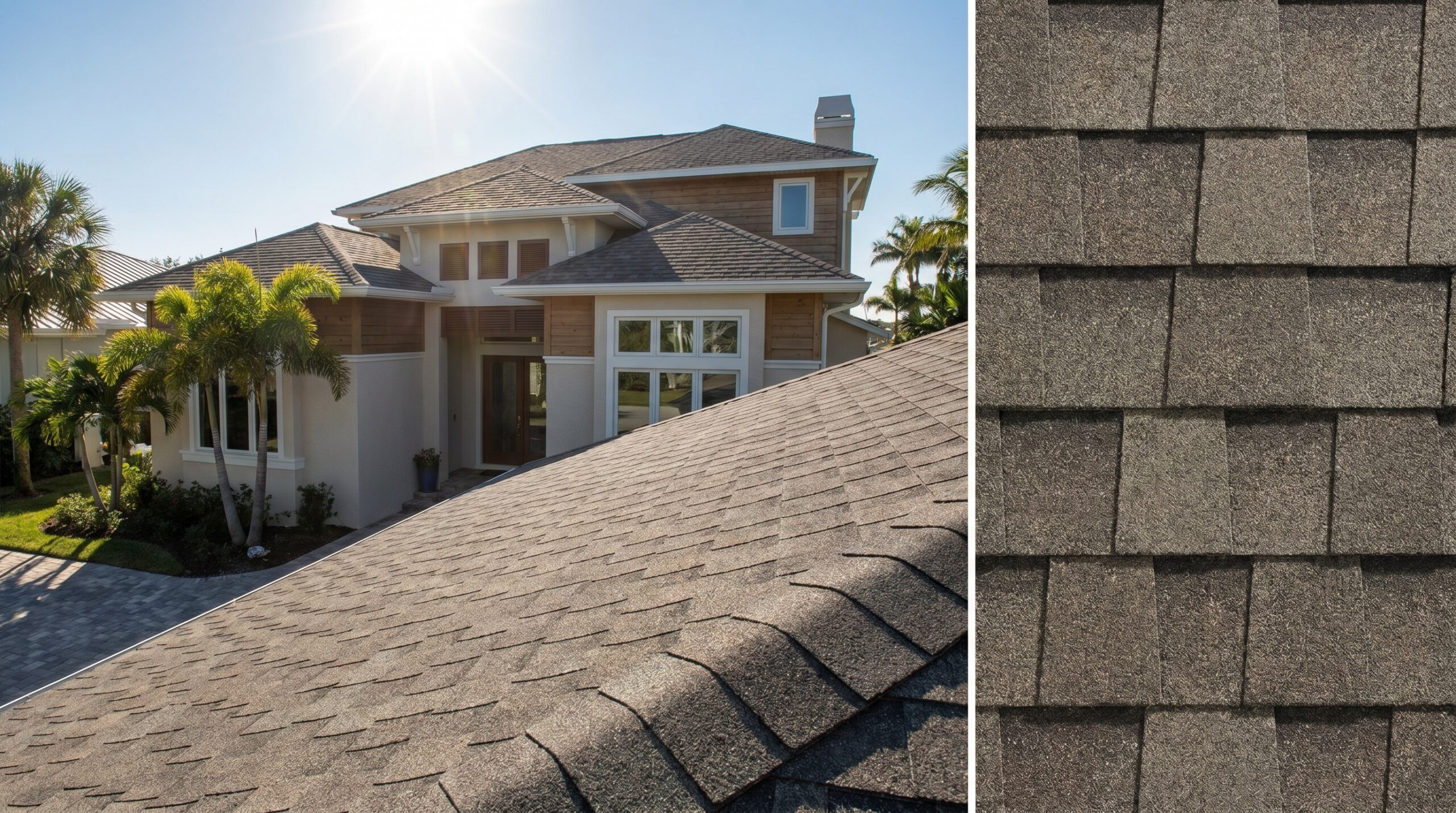
Architectural shingles take a completely different approach. They use multiple layers of asphalt laminated together under heat and pressure, creating a thicker, heavier product. This dimensional construction doesn’t just look better—it performs better. The varied surface disrupts wind flow and prevents the lifting that often tears flatter shingles away during storms.
The extra weight and advanced adhesives in architectural shingles typically earn them wind ratings between 110-130 mph, with premium systems reaching even higher levels when properly installed.

How South Florida’s Climate Affects Your Shingle Choice
South Florida’s weather creates unique challenges that go far beyond what most roofing materials face elsewhere in the country.
Heat and UV exposure accelerate asphalt aging and granule loss. Your roof endures daily temperature swings from morning cool to afternoon blazing heat, causing expansion and contraction that weakens seals over time. Architectural shingles handle this thermal cycling better thanks to their thicker construction and superior materials.
Hurricane season brings the most obvious threat. When sustained winds hit 74 mph or higher, you’re dealing with Category 1 hurricane conditions. Most 3-tab shingles simply aren’t engineered for these forces. The lightweight edges catch wind like sails, leading to blow-offs that expose your roof deck to water damage.
Humidity and algae growth create another layer of problems. South Florida’s moisture-rich environment promotes black streaking and algae growth on roofs. Many architectural shingles now include algae-resistant granules with zinc or copper compounds that help prevent this unsightly staining. These protective features are less common in basic 3-tab products.
In South Florida’s intense climate, architectural shingles typically last 20-30 years compared to just 10-15 years for 3-tab shingles due to superior construction and materials.
Cost Analysis: Upfront Investment vs Long-Term Value
The price difference between these shingle types tells only part of the story. You need to consider total ownership costs over time.
Material costs show architectural shingles running about 20-40% more than 3-tab options. For a typical 2,000 square foot South Florida home, you might pay $6,000-$10,000 for 3-tab installation versus $10,000-$18,000 for architectural shingles.
Lifespan economics change the math significantly. If 3-tab shingles last 12 years in South Florida and architectural shingles last 25 years, you’ll need to replace the 3-tab roof twice during the architectural roof’s lifetime. Factor in labor costs for that second installation, and architectural shingles often prove more economical.
Storm damage costs add another variable. Better wind resistance means fewer emergency repairs and insurance claims. Some insurance companies even offer discounts for impact-resistant or high-wind-rated shingles, though specific savings vary by carrier and location.
The key question isn’t just “What can I afford now?” but “What makes financial sense over the next 20-30 years?”
Making the Right Choice for Your Situation
Your specific circumstances should guide this decision more than general recommendations.
Choose 3-tab shingles if you’re working with severe budget constraints, planning to sell within five years, or dealing with a rental property where basic protection suffices. They still provide reliable weather resistance when properly installed, just not the premium performance of architectural options.
Choose architectural shingles if you’re staying in your home long-term, live in a high-wind zone, or want the best protection against South Florida’s severe weather. The dimensional appearance also adds curb appeal that can boost resale value when you do eventually sell.
Consider your roof’s complexity too. Homes with steep pitches, multiple dormers, or complex valley systems benefit more from the superior durability of architectural shingles. These areas are prone to leaks and wind damage, making the extra protection worthwhile.
Remember that proper installation matters just as much as material choice. Even the best architectural shingles won’t perform as designed if installed incorrectly. Work with contractors familiar with Florida building codes and high-wind installation requirements.
Professional Installation and Florida Building Codes
Florida’s strict building standards exist for good reason—they keep homes safe during extreme weather events. The 8th Edition Florida Building Code requires roofing systems to withstand winds ranging from 130-180 mph depending on your location.
This creates challenges for 3-tab shingles, which typically max out around 70 mph wind resistance. While they’re not banned, they often fail to meet minimum safety thresholds for modern construction or major renovations.
Quality installation becomes even more critical in South Florida. Proper nailing patterns, underlayment selection, and flashing details can make or break your roof’s performance during storms. At FoxHaven Roofing Group, we’ve seen how correct installation techniques and quality materials work together to create roofing systems that stand up to South Florida’s toughest weather across Martin, St. Lucie, and Palm Beach counties.
Whether you choose 3-tab or architectural shingles, working with experienced South Florida contractors ensures your investment delivers the protection and longevity you expect. The right combination of quality materials and expert installation gives you confidence that your roof will keep your family safe through whatever weather comes your way.
For most South Florida homeowners, architectural shingles represent the smarter long-term investment. Their superior wind resistance, extended lifespan, and enhanced protection against our region’s challenging climate make them worth the additional upfront cost. When you factor in the potential for fewer repairs, better insurance rates, and improved home value, they often prove more economical over time than their budget-friendly 3-tab counterparts.