


Common Roofing Scams to Avoid in Florida
March 2,2026
Common roofing scams to avoid in Florida tend to surface right after a storm, when your first concern is your home’s safety. Unfortunately, this is also when roofing scammers act fastest, often arriving at your door before the roads are clear. They rely on the urgency you feel to pressure you into a bad decision.
At FoxHaven Roofing, we believe homeowners deserve clear information, not confusion. This guide will help you spot the warning signs, understand Florida law, and choose a contractor you can trust.
Why Do Roofing Scams Happen Right After a Storm?
Scammers thrive on the sense of urgency that follows a storm. When you see damage to your roof, your natural instinct is to get it fixed quickly. Out-of-state contractors often capitalize on this by canvassing neighborhoods, pointing out real or fabricated damage, and offering deals that seem too good to be true. Their goal is often to collect a large deposit or file a fraudulent insurance claim and then disappear, leaving you with incomplete or shoddy work. Knowing their tactics is the best way to protect yourself.
How Can You Tell If a Roofer Is Scamming You?

You can often identify a potential scam by how a contractor approaches you and what they promise. Reputable local roofers rarely solicit door-to-door right after a storm, so be cautious if an uninvited contractor offers a “free” inspection. A major red flag is the promise of a “free roof” by waiving your insurance deductible. This practice is illegal in Florida and a clear sign of fraud.
Major Red Flag: Promising a “free roof” by waiving your insurance deductible is a third-degree felony in Florida. If a contractor suggests this, end the conversation immediately.
Scammers also create false urgency, pressuring you to sign a contract immediately with claims like, “this offer expires today.” A trustworthy professional will always give you time to review documents. Finally, never sign an Assignment of Benefits (AOB), as this gives the contractor full control over your insurance claim, leaving you powerless.
What Should You Ask a Roofer Before Signing?
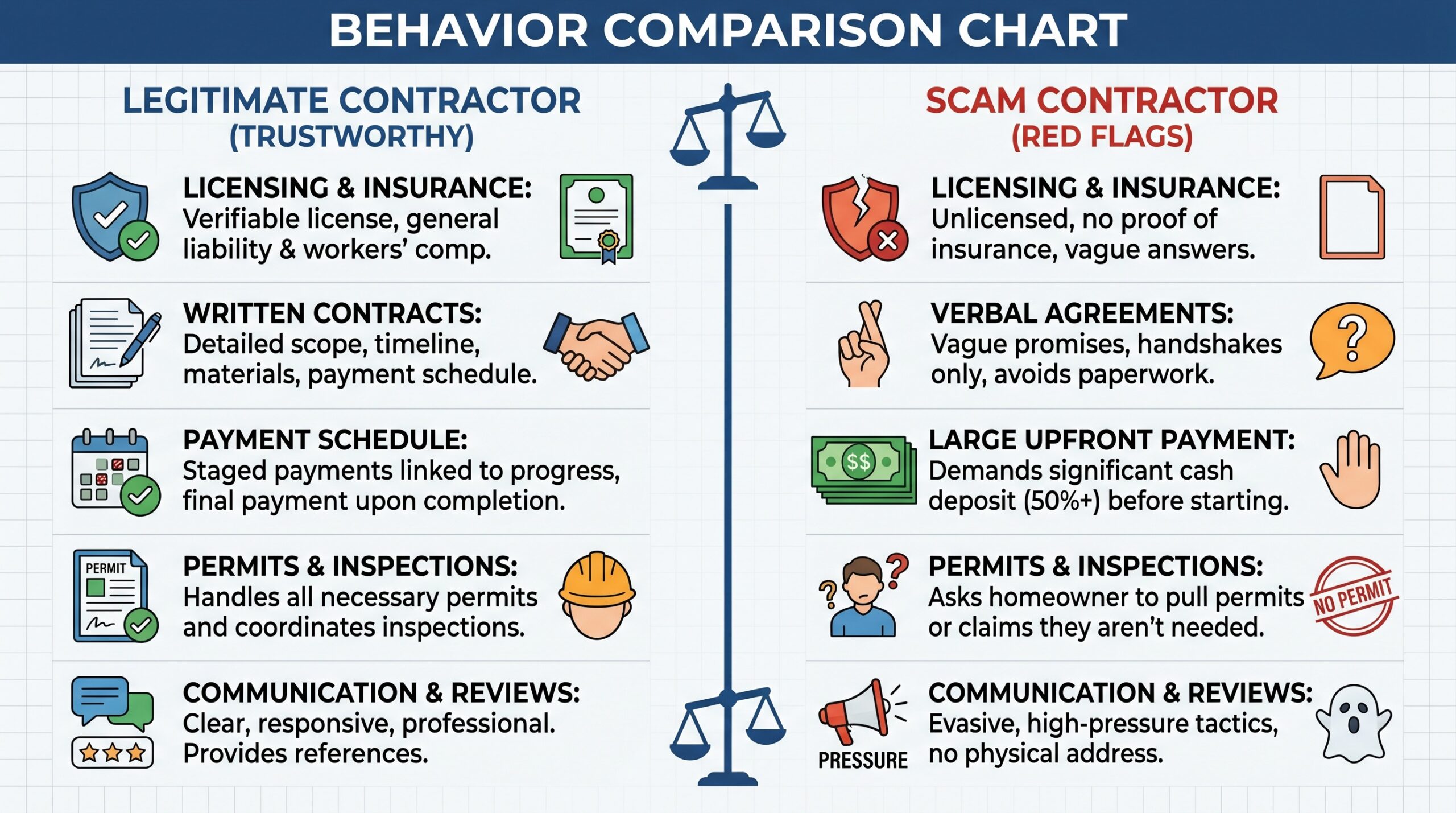
Before hiring anyone, take a few simple steps to verify their legitimacy. Always ask for their state license number and proof of insurance. You can easily verify any contractor’s license on the Florida DBPR website at myfloridalicense.com. A legitimate roofer will gladly provide these.
Quick Tip: You can verify any Florida contractor’s license in seconds at myfloridalicense.com. Never hire anyone without checking their credentials first.
Also, review any contract carefully. It should never have blank spaces and must clearly detail the scope of work, materials, timeline, and total cost. If anything feels off, trust your instincts and get a second opinion.
What Is the New Florida Law on Roofing?
Recent changes to Florida law offer homeowners greater protection. A key update gives you a 10-day right to cancel any roofing contract signed during a state of emergency, providing a crucial cooling-off period. The law also mandates that contracts clearly explain what your insurance policy will and will not cover, increasing transparency. Additionally, the old “25% rule,” which often forced homeowners into unnecessary full roof replacements, has been eliminated. Now, the decision to repair or replace the roof rests with you, not the contractor.
What Should You Do Immediately After Storm Damage?
If a storm damages your home, follow these simple steps to stay safe and in control. First, document the damage from the ground by taking clear photos and videos, and avoid letting anyone on your roof. Next, contact your insurance provider to report the claim and understand your coverage. They can guide you on the next steps and may be able to flag known fraudulent contractors.
Once you have spoken with your insurer, search for a licensed, local roofer with a physical address and verifiable reviews. Finally, never pay for the entire job upfront. A reputable contractor will use a staged payment schedule, with the final payment due only after the work is complete and passes inspection.
Where Can You Report a Roofing Scam in Florida?

If you encounter a scammer, reporting them helps protect others in your community. You can file complaints against unlicensed activity with the Florida Department of Business and Professional Regulation (DBPR). For issues like false advertising or contract disputes, contact the Florida Attorney General’s Office. You can also leave reviews to warn others on the Better Business Bureau (BBB) website.
Red flags and common roofing scams in South Florida
After hurricanes and severe storms, certain scam patterns emerge repeatedly across South Florida communities like Jensen Beach, Port St. Lucie, and Palm Beach Gardens. Recognizing these tactics can save you from financial disaster and legal trouble.
Door-to-door storm chasers represent the most common post-storm scam. These contractors canvas neighborhoods immediately after weather events, claiming they can see damage from the street. They create urgency by saying they have “leftover materials” from another job or that their crew is “in the area for a limited time.” Legitimate contractors don’t need to pressure you into immediate decisions.
“Free roof” promises should trigger immediate suspicion. Contractors who claim they can get your insurance company to pay for a complete roof replacement when you only have minor damage are likely planning to inflate your claim. This practice constitutes insurance fraud and can result in claim denial, policy cancellation, and potential criminal charges.
Assignment of Benefits (AOB) pressure involves contractors pushing you to sign documents that transfer control of your insurance claim to them. While AOB agreements for residential property claims issued after January 1, 2026, are generally void under Florida law, some contractors still use similar language to gain control over your claim process.
Large upfront payment demands are another major red flag. Legitimate contractors typically request modest deposits of 10-30% to secure materials, with the balance due upon completion of the roof replacement. Be wary of contractors demanding full payment upfront or requesting cash-only payments.
Florida laws and insurance protections you need to know
Understanding Florida’s specific legal protections helps you recognize when contractors are operating outside the law and puts you in a stronger position to protect your interests.
Deductible waiver restrictions are strictly enforced in Florida. It’s illegal for contractors to waive, pay, or rebate your insurance deductible. Any contractor offering to “eat the deductible” or provide services at no charge to compensate for your deductible payment is asking you to participate in insurance fraud, which is a third-degree felony.
Contractor licensing requirements mandate that all roofing contractors hold active licenses through the Florida Department of Business and Professional Regulation (DBPR). You can verify any contractor’s license status at MyFloridaLicense.com. Licensed contractors must also carry general liability insurance and workers’ compensation coverage or valid exemptions.
Anti-solicitation rules specifically target post-storm contractor behavior. Florida law requires contractors to include specific disclosures in their advertising and contracts, informing homeowners that they remain responsible for deductible payments and that deductible fraud carries serious penalties.
Insurance claim filing deadlines give you one year from the date of loss to file a claim with your insurance company. Don’t let contractors pressure you into filing immediately without proper documentation and assessment of the actual damage.
Know your rights: If your roof was damaged during a declared state of emergency, you have 10 days to cancel any roofing contract without penalty, provided you send notice by certified mail to the address specified in the contract.
Frequently Asked Questions About Florida Roofing Scams
Can a contractor legally waive my insurance deductible in Florida?
How do I verify a Florida roofing contractor’s license?
How much should I pay a roofing contractor up front in Florida?
How do I report a roofing scam in Florida?
How FoxHaven Can Help You with Confidence
At FoxHaven Roofing, we are a licensed, local contractor with deep roots in the South Florida community. We don’t knock on doors or use high-pressure tactics. Instead, we provide honest assessments, clear written estimates, and expert work that meets Florida’s highest standards.
If your home has storm damage and you are unsure of the next steps, we are here to help you move forward with confidence. Contact us today to schedule a no-pressure inspection. We’ll give you a straight answer about what your roof needs.
