


Signs of Storm Damage and Hidden Roof Damage
October 22,2025
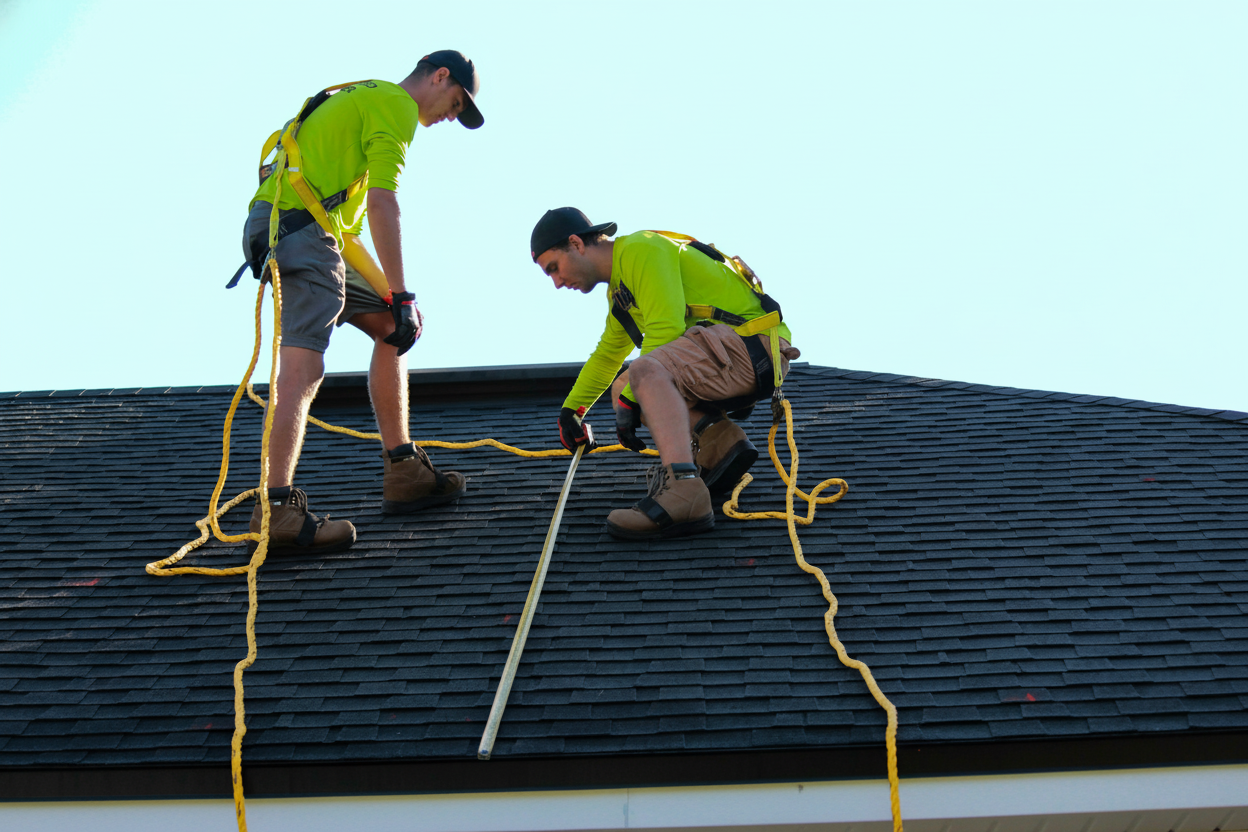
Alt text: Professional roofer inspecting storm-damaged roof with homeowner looking on, showing collaboration and expertise in identifying damage
Signs of storm damage on a roof are easy to miss from the ground, and hidden damage can lead to expensive repairs. After severe weather passes through your area, knowing what to look for can save you thousands in repairs and protect your family from water damage, mold growth, and structural issues.
In this guide, you will learn the six most common signs of a storm damage roof and when to call in professional help. Whether you are dealing with missing shingles, water stains, or structural concerns, understanding these warning signs empowers you to act quickly and protect your investment.
Recognizing the warning signs of roof storm damage
After a storm passes, your roof may look fine from the ground, but hidden damage can lead to expensive problems if left unaddressed. Here are the key signs you should watch for:
Missing or damaged shingles
When high winds tear through your neighborhood, shingles often become the first casualties. You might notice shingles scattered across your yard, or you may see bare patches on your roof where shingles once protected your home.
Look for shingles that are curling at the edges, cracking down the middle, or losing their protective granules. Hail damage can also cause bruising or denting that weakens your roof’s defense against water infiltration. If you spot any of these issues, contact a roofing professional right away.
Pro tip: After a storm, use binoculars to safely inspect your roof from the ground before calling professionals. Look for missing shingles, damaged flashing, or debris accumulation.
Water stains and active leaks
Water stains on your ceiling or walls signal that moisture has already penetrated your roof’s protective barrier. These stains often appear as discolored patches, sometimes accompanied by peeling paint or sagging drywall.
Check your attic during or immediately after rainfall. If you see drips, puddles, or damp insulation, your roof has been compromised. Water damage spreads quickly, so addressing leaks promptly prevents mold growth and protects your home’s structure. Understanding how to prevent roof leaks during Florida’s rainy season can help you stay ahead of potential problems.
Gutter damage and drainage issues
Your gutters work as part of your roof system, channeling water away from your home’s foundation. After a storm, inspect your gutters for dents, bends, or sections that have pulled away from your roofline.
Clogged gutters filled with debris can cause water to back up under your shingles, creating leaks and rot. Clean gutters also prevent ice dams in colder months and protect your roof’s edges from water damage.
Important: Never climb on your roof during or immediately after a storm. Wet or damaged roofing materials are extremely slippery and dangerous.
Damaged flashing around roof penetrations
Flashing seals the vulnerable areas where your roof meets chimneys, vents, and skylights. Storm winds can loosen or tear flashing, creating gaps where water can enter your home.
Look for loose sections, visible gaps, or missing pieces around these penetrations. Damaged flashing requires immediate attention because even small openings allow water to seep into your home’s interior, causing damage that spreads far beyond the initial entry point.
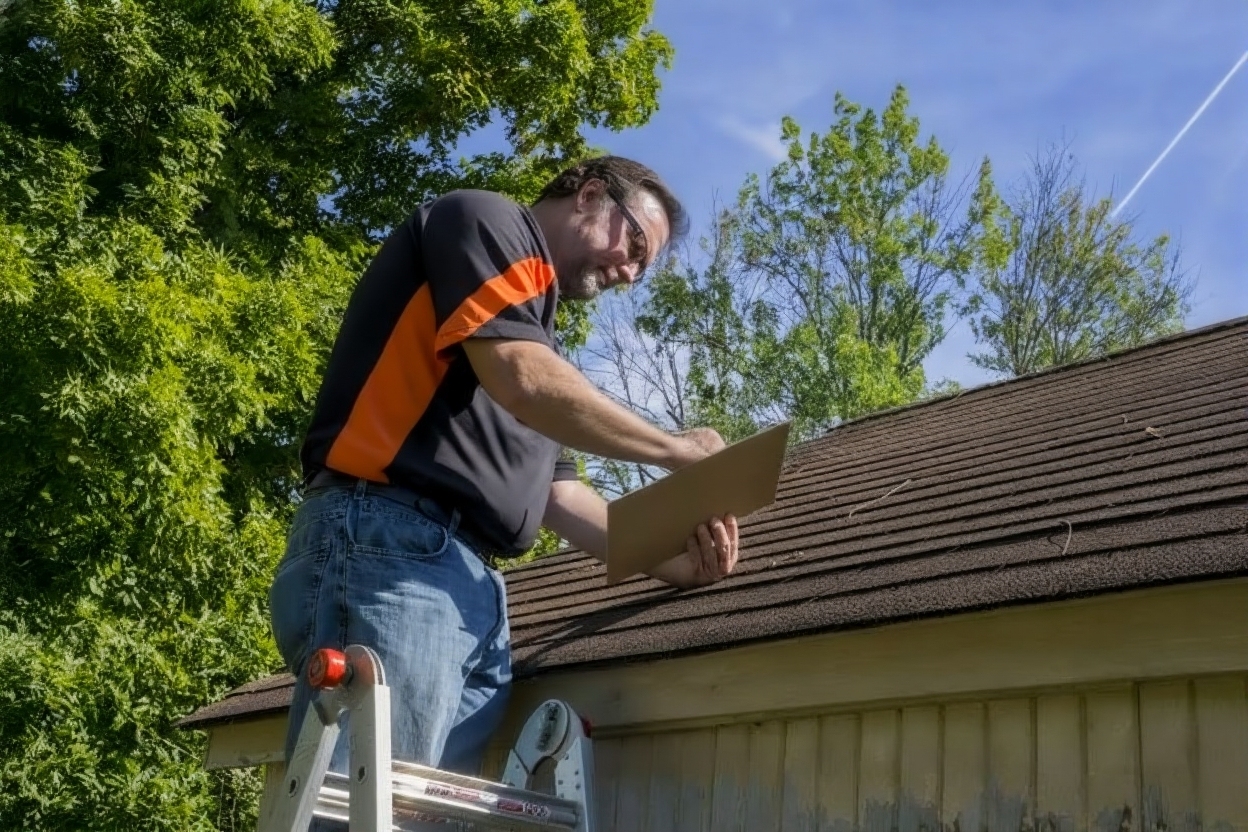
Alt text: Close-up of missing and damaged roof shingles after a storm with roofing professional assessing the damage
Dents and punctures in roofing materials
Hailstorms and falling debris create dents in metal roofing or cause punctures in asphalt shingles. These impacts compromise your roof’s waterproofing and can lead to rust on metal roofs or water infiltration through damaged shingles.
Inspect your roof for signs of impact damage, especially after hailstorms. Even small dents can indicate hidden damage that will worsen over time. Wind uplift can also cause damage that is not immediately visible but weakens your roof’s overall integrity.
Hidden roof damage after a storm
Hidden roof damage after a storm is the damage you cannot see from the driveway. It often shows up weeks later as a leak, a stain or mold. In our experience, these are the signs Florida homeowners miss most often.
Granule loss in gutters and downspouts
Asphalt shingles have a granule coating that protects them from sun and weather. After a storm, check your gutters and downspouts for heavy piles of granules that match your shingle color. Large amounts can point to hail or wind damage. Once shingles lose their granules, they turn brittle, and Florida’s sun and high humidity wear them down faster.
Sagging or uneven roofline
Stand back from your home and look at the roofline from more than one angle. Dips, waves or uneven sections can mean wet decking or weakened supports. Structural damage does not fix itself, and it can fail in the next storm. Have a dip in the roofline inspected right away.
Lifted or creased shingles
Strong wind can lift shingles and break their seal without tearing them off. From the ground they may look fine, but a broken seal lets wind-driven rain get underneath. Look for shingles that sit higher than their neighbors or show a crease line.
Debris left on the roof
Branches and leaves left on the roof scratch shingles, block drainage and trap moisture. That creates the right conditions for mold and faster wear, especially near the coast where salt air damages roofing materials. Clear debris only if you can do it safely from the ground, or have a professional do it.
Damp spots in the attic
Hidden leaks often show up in the attic before they reach a ceiling. After a storm, check for damp insulation, dark spots on the roof deck or a musty smell. Catching these early can keep a small repair from turning into a ceiling or mold problem.
Taking action after discovering storm damage
Once you have identified potential damage, taking the right steps protects your home and ensures your insurance claim goes smoothly. Follow this process to handle storm damage effectively:
Cost-saving insight: Storm damage repairs vary widely based on the extent of damage and the type of roofing material you have. Minor repairs like replacing a few shingles may cost $300-$1,500, while flashing repairs typically run $200-$800. Always get multiple quotes from licensed contractors and schedule regular roof inspections to catch problems early before they turn into expensive emergency repairs.
Immediate steps for storm damage
- Document everything with photos – Take clear pictures of all visible damage from multiple angles
- Contact your insurance provider – Report potential damage within 24-48 hours of the storm
- Schedule a professional inspection – Get an expert assessment of all damage, visible and hidden
- Arrange temporary repairs if needed – Prevent further water intrusion with tarps or emergency patches until permanent storm damage roof repair is done
- Keep all receipts and documentation – Maintain records of all communications and expenses
Working with experienced professionals ensures you catch all damage and receive fair compensation from your insurance company. If you live in a coastal area, protecting your roof from wind damage requires special attention to edge details and proper installation techniques.
Protecting your home for the long term
Storm damage does not have to catch you off guard. Taking proactive steps throughout the year minimizes your risk and helps your roof withstand severe weather.
Schedule inspections twice yearly and always after major storms. Preparing for Florida’s hurricane season involves checking your roof’s condition, trimming nearby trees, and ensuring proper drainage. If you are considering upgrades, exploring the best roofing materials for Florida’s climate can improve your home’s storm resistance.
Your roof protects everything you value. By staying vigilant and addressing damage quickly, you maintain your home’s structural integrity and avoid costly repairs down the road. If you notice any of the warning signs discussed in this guide, do not wait. Contact a qualified roofing professional for a thorough inspection and peace of mind. A free storm inspection is the quickest way to find out what the storm left behind.
FAQ
How soon should I inspect my roof after a storm?
Will my homeowner’s insurance cover storm damage repairs?
Can I repair storm damage myself or do I need a professional?
