

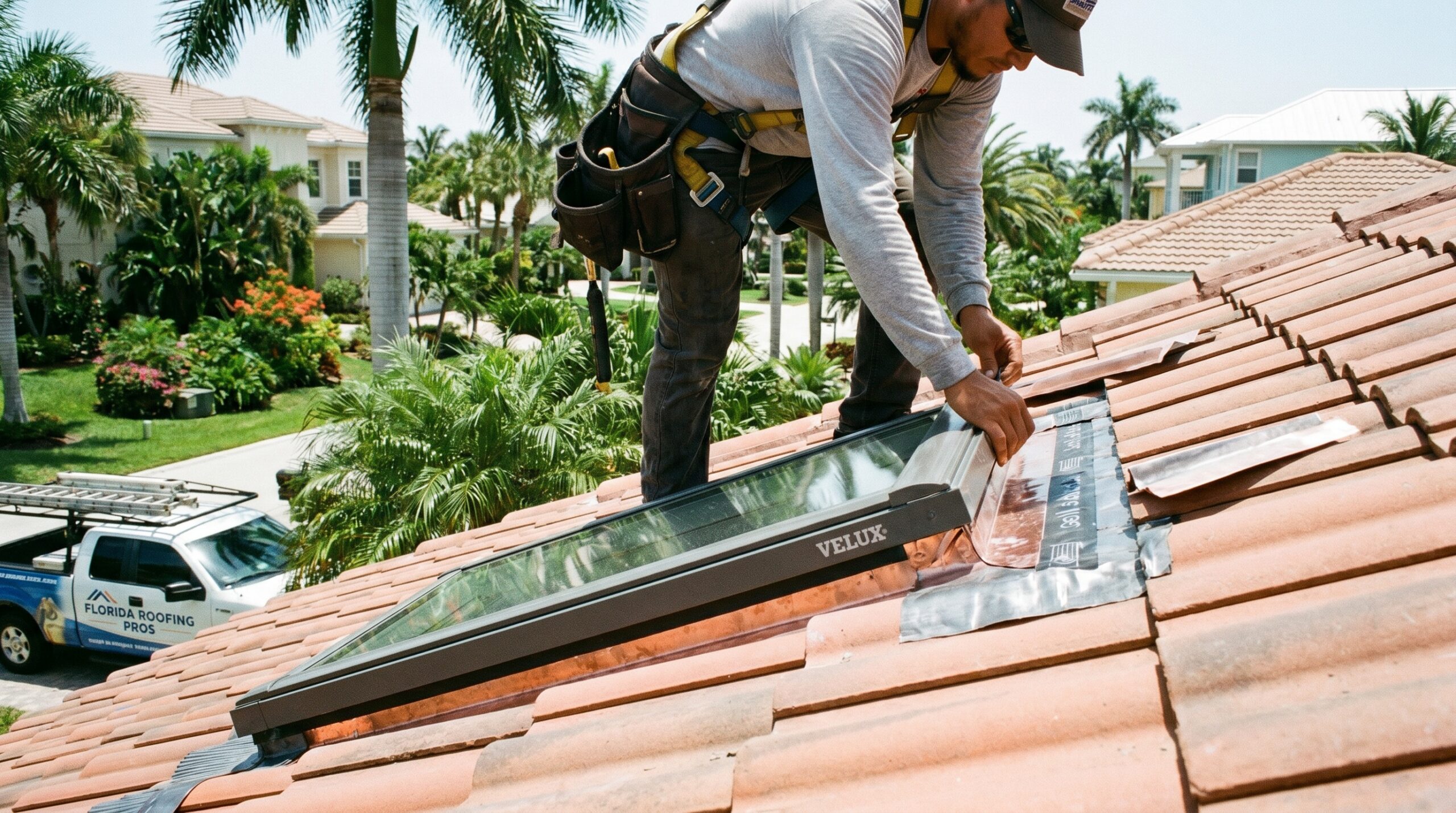
Leak-Free Skylight Installation for South Florida Homes
March 6,2026
South Florida homeowners dream of natural light flooding their living spaces, but they also worry about one thing: leaks. The good news is that when you install skylights correctly with proper flashing and roof integration, they can withstand South Florida’s intense weather without compromising your home’s protection.
Quick Answer: Most skylight leaks stem from improper flashing installation, poor roof placement, or inadequate sealing rather than the skylight itself. Professional installation with manufacturer-approved flashing systems prevents 95% of water intrusion issues.
The key lies in understanding that South Florida’s heavy rains, tropical storms, and high humidity demand specialized installation techniques. You cannot simply follow generic installation guides and expect your skylight to perform reliably through hurricane season. Let’s walk through the proven methods that keep your home dry while bringing in that beautiful Florida sunshine.
What causes skylight leaks in South Florida homes
Understanding why skylights leak helps you prevent problems before they start. The most common culprit is flashing failure, which happens when water finds gaps between the skylight frame and your roof materials during heavy downpours.
Poor placement decisions also create leak risks. When installers position skylights in natural water collection areas or ignore your roof’s drainage patterns, even perfect flashing cannot handle the water volume during South Florida’s afternoon thunderstorms.
Seal deterioration accelerates in our humid coastal climate. The constant expansion and contraction from temperature swings, combined with UV exposure, breaks down inferior sealants within just a few years. This creates entry points for moisture that can lead to hidden water damage in your attic space.

Finally, structural issues compound these problems. If your roof framing cannot properly support the skylight opening, settling and movement create gaps that compromise even high-quality installations over time.
Leak-proof skylight installation steps
Choose the right roof location
Start by evaluating your roof’s natural water flow patterns. You want to avoid valleys, areas near gutters, and spots where water naturally pools during heavy rain. The ideal location has good drainage in multiple directions and sits on a section of roof with adequate structural support.
Consider your roof pitch carefully. Skylights perform best on slopes between 14 and 85 degrees, but South Florida’s intense rain requires extra attention to drainage on lower-pitched sections. If you have a complex roofline, work with experienced professionals who understand how water moves across different roof configurations in our coastal environment.
Install integrated flashing systems
Proper flashing creates multiple layers of protection against water intrusion. Start with manufacturer-approved flashing kits designed specifically for your roofing material, whether you have asphalt shingles, tile, or metal roofing.
The installation follows a specific sequence: install the bottom flashing first, then the sides, and finally the top piece. Each layer must overlap the one below it, creating a shingled effect that directs water away from the opening. Use compatible sealants at all connection points, but remember that sealant is your backup system, not your primary waterproofing method.
Pro Tip: Never rely on caulk alone for waterproofing. Quality flashing systems use mechanical fasteners and overlapping metal pieces as the primary barrier, with sealant filling minor gaps only.
Secure proper fastening and sealing
Fastener placement determines long-term performance. Use the exact screws specified by the manufacturer and place them in the designated locations on the skylight frame. Over-tightening can warp the frame and create gaps, while under-tightening allows movement that breaks seals over time.
Apply compatible sealants only where specified in the installation instructions. Different roofing materials require different sealant types, and using the wrong product can actually attract moisture or fail prematurely in South Florida’s climate.
Integrate with roof underlayment
Your skylight installation must work seamlessly with your roof’s underlayment system. This means properly overlapping the skylight’s built-in moisture barrier with your existing roof underlayment, creating a continuous protective layer beneath your shingles or tiles.
Pay special attention to areas where the skylight meets other roof penetrations like vents or chimneys. These intersections require careful planning to maintain proper water flow and prevent backup during heavy storms.
Best skylight materials for South Florida weather
Impact-resistant skylights are essential for South Florida homes. Look for units rated for High-Velocity Hurricane Zones (HVHZ) that can withstand flying debris and extreme pressure changes during tropical storms. These skylights feature laminated glass similar to automotive windshields that may crack but will not shatter completely.
| Skylight Type | Best For | Hurricane Rating | Energy Efficiency |
|---|---|---|---|
| Fixed Glass | High ceilings, light only | HVHZ certified | Excellent with Low-E coating |
| Venting | Humidity control | HVHZ certified | Good with proper sealing |
| Solar-powered | Remote locations | HVHZ certified | Very good with automated controls |
Energy efficiency matters year-round in South Florida. Choose skylights with Low-E coatings and argon gas fills that block up to 95% of UV rays and infrared heat while still allowing natural light through. This keeps your cooling costs manageable even with abundant natural lighting.
Consider automated features for South Florida’s unpredictable weather. Rain sensors that automatically close venting skylights protect your interior during sudden afternoon storms, while solar-powered operation eliminates the need for electrical connections in remote roof locations.

Inspection and maintenance schedule
Seasonal inspection timing
Inspect your skylights twice yearly: once before hurricane season in May and again after the peak storm period in November. Look for any signs of seal deterioration, flashing damage, or debris accumulation around the skylight perimeter.
After major storms, perform additional visual checks from inside your home. Water stains on ceilings, musty odors, or bubbling paint near the skylight indicate potential moisture intrusion that requires immediate professional attention.
What to monitor
Check the exterior seals for cracking or shrinkage, especially around fastener locations. Clear any debris like leaves or pine needles that can trap moisture against the flashing and accelerate corrosion.
Warning Sign: If you notice condensation between glass panes, the factory seal has failed and the unit needs replacement. This compromises both insulation value and structural integrity.
Monitor your attic space for signs of moisture infiltration. Even small leaks can saturate insulation and promote mold growth in South Florida’s humid environment, often before you notice interior damage.
Professional maintenance needs
Schedule professional inspections if your skylights are over ten years old or if you notice any performance changes. Experienced roofers can identify early warning signs that homeowners typically miss and perform preventive maintenance that extends skylight life.
Consider professional cleaning for optimal performance. South Florida’s frequent rain can leave mineral deposits on glass surfaces that reduce light transmission, while pollen and organic debris can clog drainage channels in venting units.
When to call FoxHaven Roofing Group
Some skylight issues require professional intervention rather than DIY repairs. If you discover multiple leak points, damaged flashing, or structural problems around the skylight opening, attempting repairs yourself often makes the situation worse.
Recurring leaks after attempted repairs indicate underlying installation problems that need professional diagnosis. The same applies if you notice interior water damage, mold growth, or significant energy efficiency losses from your skylight.
For new installations, working with experienced South Florida roofers ensures your skylight meets local building codes and performs reliably through hurricane seasons. As a family-run roofing company serving Martin, St. Lucie, and Palm Beach counties, FoxHaven Roofing Group understands the unique challenges of coastal installations and provides professional installation with warranties that protect your investment and provide peace of mind during severe weather events.
The investment in proper skylight installation pays dividends through years of leak-free performance and enhanced living comfort. When you combine quality materials with expert installation techniques designed for South Florida’s unique climate challenges, your skylights become a valuable home feature rather than a source of worry. Contact FoxHaven Roofing Group today to discuss your skylight installation needs and ensure your home stays bright and dry through every storm season.