


What Is the Minimum Slope for a Metal Roof in South Florida? Complete 2026 Guide
June 4,2026
Planning a metal roof for your South Florida home but worried about your roof’s slope? You’re not alone. Many homeowners in Martin, St. Lucie, and Palm Beach counties wonder if their existing roof pitch can support a metal roofing system, especially with South Florida’s demanding weather conditions and hurricane threats.
The minimum slope for metal roofs in South Florida depends on the system type. Standing seam metal roofs require just 1/4:12 slope (2% grade), while exposed fastener systems need 3:12 slope (25% grade). These requirements come directly from the Florida Building Code and ensure your roof performs properly during heavy rains and hurricane conditions common to our coastal region.
Quick Answer: Standing seam metal roofs can be installed on slopes as low as 1/4 inch per foot, making them suitable for most flat roof applications in South Florida when properly detailed.
Understanding these slope requirements helps you make informed decisions about upgrading your roof. Whether you have a nearly flat roof or moderate pitch, there’s likely a metal roofing solution that works for your situation in the Jensen Beach, Port St. Lucie, or Palm Beach Gardens area.
Understanding roof slope basics
Roof slope, also called pitch, measures how steep your roof is. It’s expressed as a ratio showing vertical rise over horizontal run. For example, a 4:12 slope means your roof rises 4 inches for every 12 inches it extends horizontally.
In South Florida, many homes have mixed slopes. Your main roof might have a 4:12 pitch perfect for shingles, while a garage or addition could have a 1:12 low-slope section. These flatter areas often use TPO or modified bitumen, but metal roofing can be an excellent upgrade option that better withstands our coastal weather conditions.
You can measure your roof pitch using a level and tape measure. Place a level horizontally against the roof surface, measure 12 inches along the level, then measure straight down to the roof. That vertical measurement gives you the first number in your pitch ratio.
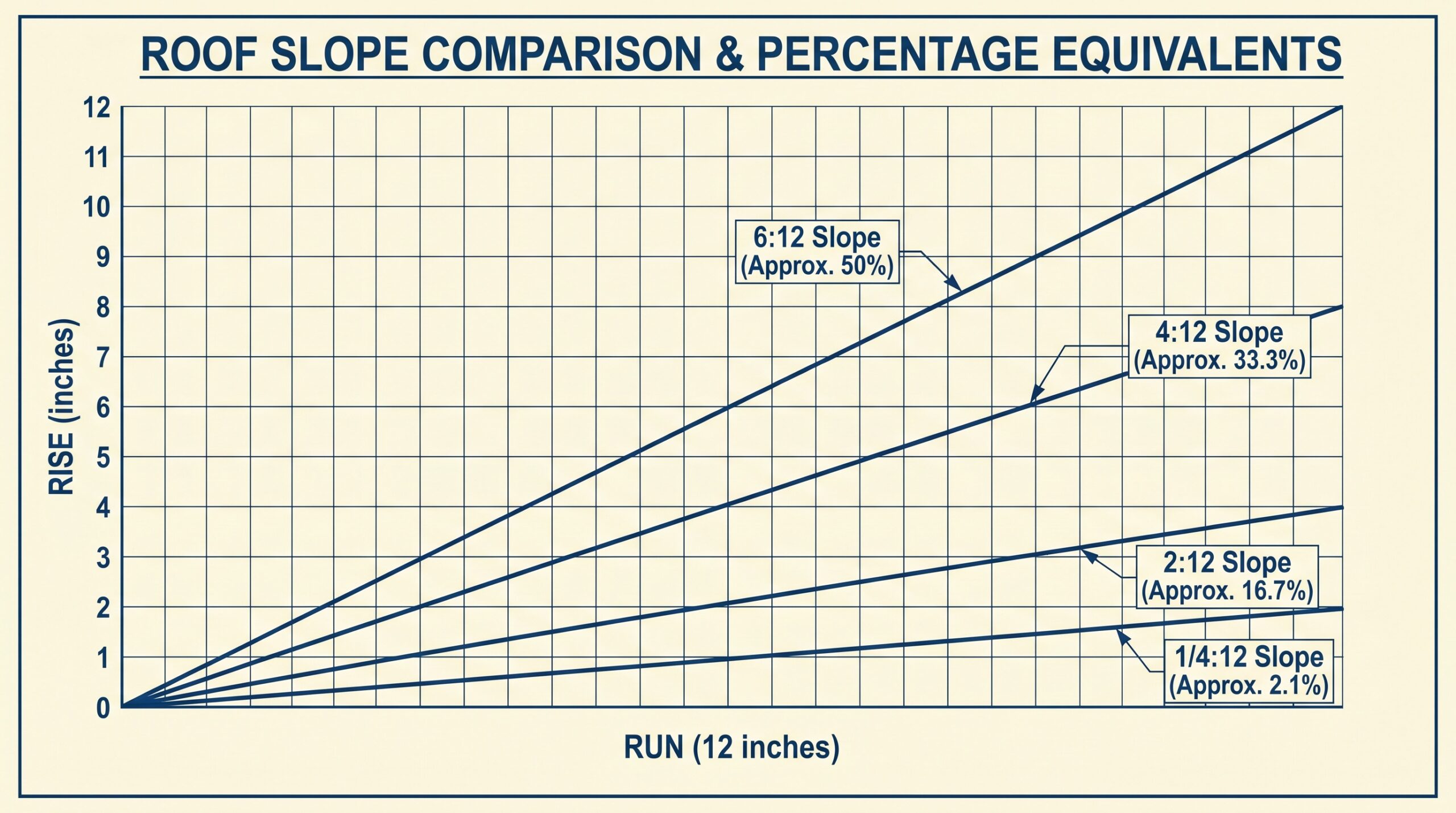
Florida Building Code requirements by metal roof type
According to coastalroofingofsouthflorida.com, Florida Building Code Section 1507.4.2 sets specific minimum slopes for different metal roof systems:
| Metal Roof Type | Minimum Slope | Percentage Grade | Special Requirements |
|---|---|---|---|
| Standing seam | 1/4:12 | 2% | Must be mechanically seamed |
| Exposed fastener | 3:12 | 25% | No exceptions allowed |
| Snap-lock panels | 2:12 | 17% | Product-specific requirements |
Standing seam systems offer the most flexibility for low-slope applications. These panels lock together mechanically and can handle ponding water better than other metal roofing types. However, proper installation with quality sealants is crucial for performance in our humid, salt-air environment.
Exposed fastener systems, while more affordable, require steeper slopes because water can penetrate around the screws on flatter roofs. The 3:12 minimum helps ensure water flows off quickly before it can work its way under the panels – especially important during South Florida’s intense summer storms.
Important: High-Velocity Hurricane Zones in Broward and Miami-Dade counties have additional requirements that may affect minimum slopes for certain metal roofing applications. As a BBB-accredited contractor serving Martin, St. Lucie, and Palm Beach counties, we ensure all installations meet these enhanced standards.
Converting flat roofs for metal roofing
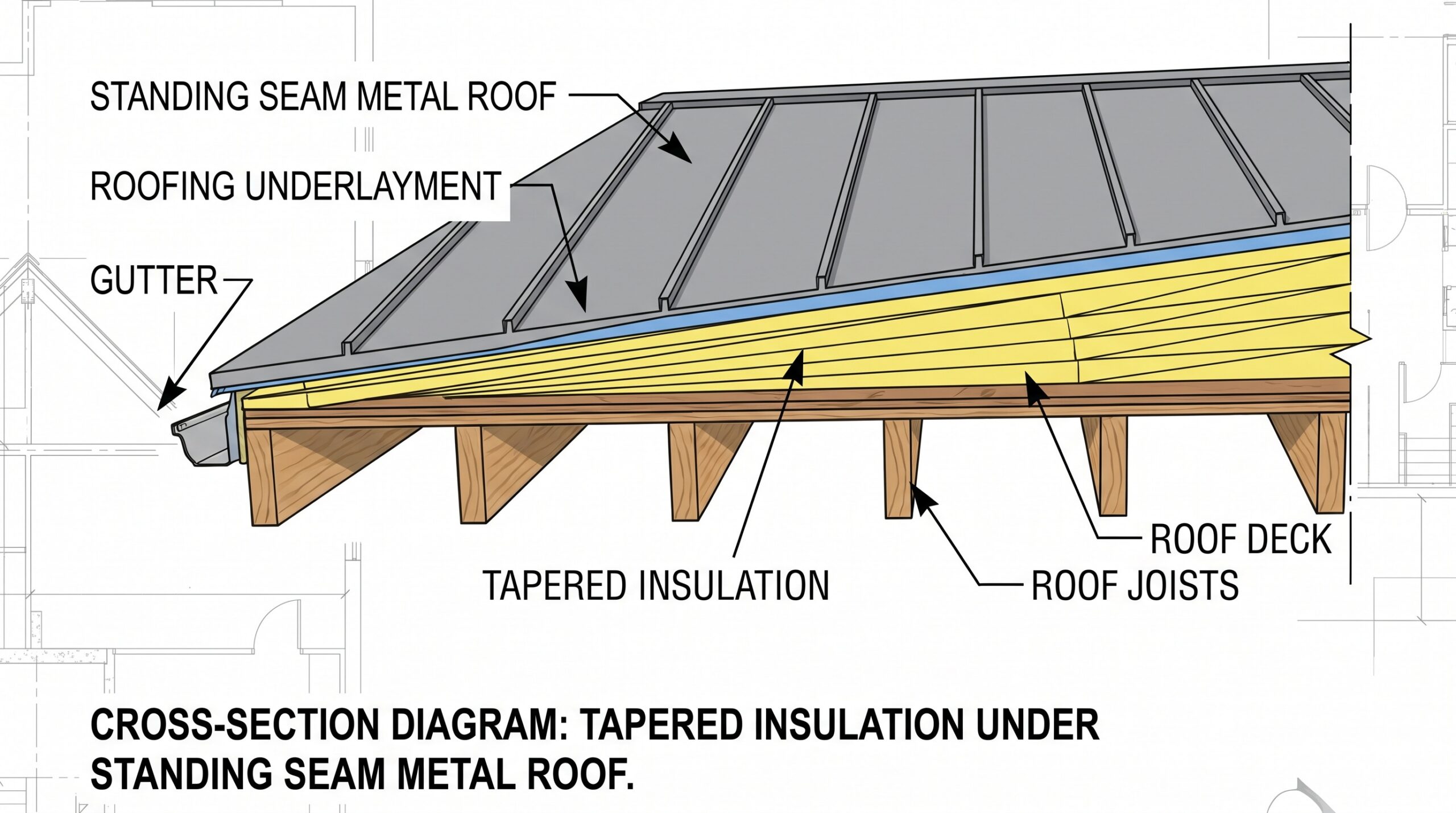
If your existing roof doesn’t meet the minimum slope requirements, you have several options to make metal roofing work. The most common solution involves adding tapered insulation or foam boards beneath the new roofing system.
Tapered insulation serves double duty by increasing your roof’s slope while improving energy efficiency – particularly valuable in South Florida’s hot climate. This approach typically costs less than structural modifications and can often bring a roof from 1/8:12 up to the required 1/4:12 for standing seam installation.
Another option is installing crickets or tapered sections in specific areas where water tends to pond. Your roofing contractor can assess your current slope and recommend the most cost-effective approach for your situation. At FoxHaven Roofing Group, we regularly help homeowners throughout Martin County, St. Lucie County, and Palm Beach County evaluate these options.
According to floridaroofingandgutters.com, failing to meet these codes can result in inspection failures, insurance claim denials, and warranty voids. Always ensure your installation meets both building codes and manufacturer specifications.
Cost considerations for low-slope metal roofs
Metal roofing costs vary significantly based on the system type and slope requirements. Exposed fastener systems typically cost $7 to $12 per square foot, while standing seam systems range from $15 to $25 per square foot.
For low-slope applications, standing seam often provides better long-term value despite the higher upfront cost. These systems last longer, require less maintenance, and better withstand South Florida’s challenging weather conditions including hurricanes, salt air, and intense UV exposure.
Adding tapered insulation to increase slope typically costs $2 to $4 per square foot but provides improved drainage and energy efficiency while meeting Florida Building Code requirements. This investment often pays for itself through reduced cooling costs and extended roof life – especially important in our year-round warm climate.
Cost Tip: Consider the total project cost including slope modifications when comparing metal roofing to membrane systems for flat roof applications.
Whether you’re dealing with a nearly flat roof or just need to meet minimum slope requirements, metal roofing can work for most South Florida homes. The key is choosing the right system for your specific slope and ensuring proper installation that meets both code requirements and manufacturer specifications. With the right approach, you can enjoy the durability and energy efficiency of metal roofing regardless of your roof’s current pitch.
At FoxHaven Roofing Group, we specialize in evaluating roof slopes and designing code-compliant metal roofing solutions for South Florida’s unique coastal climate. As a family-run, 5-star rated contractor serving Jensen Beach, Port St. Lucie, Palm Beach Gardens, and surrounding areas in Martin, St. Lucie, and Palm Beach counties, we understand the specific challenges of our region. Contact us today for a professional assessment of your roof’s suitability for metal roofing and to explore your options for achieving the proper slope requirements.