


How Much Wind Can a Metal Roof Withstand? Complete Guide to Wind Ratings in South Florida
June 1,2026
When you’re considering a metal roof for your South Florida home, one of the most important questions you’ll ask is: how much wind can it actually handle? The answer depends on several factors, but properly designed metal roofs can typically withstand winds of 90 to 200+ mph, with standing seam systems generally offering superior performance compared to exposed-fastener designs.
Understanding wind ratings isn’t just about peace of mind—it’s about code compliance, insurance requirements, and protecting your investment. Living in hurricane-prone coastal areas like Martin County, St. Lucie County, and Palm Beach County means choosing the right metal roofing system with adequate wind resistance can mean the difference between minor repairs and catastrophic damage.
Quick Answer: Most residential metal roofs are rated for 90-140 mph winds, while engineered commercial systems can exceed 180 mph. Standing seam roofs typically outperform exposed-fastener systems by 20-40 mph in wind resistance.
In this guide, we’ll break down everything you need to know about metal roof wind ratings, from testing standards to installation best practices, so you can make an informed decision for your specific situation in South Florida.
What is wind load on a metal roof?
Wind load refers to the forces that wind exerts on your roof structure. When wind hits your building, it creates three main types of pressure that your roof must resist.
Uplift pressure is the most critical concern for metal roofs. As wind flows over your roof, it creates a low-pressure area above the surface, similar to how airplane wings generate lift. This upward suction force tries to pull roofing panels away from the structure, with corner and edge areas experiencing the highest pressures.
Lateral pressure occurs when wind strikes the side of your building and pushes against walls and roof surfaces. While less problematic for most metal roofs, it can affect tall buildings or structures with large vertical surfaces.
Suction forces develop as wind moves across and around your roof, creating negative pressure zones that can cause panels to flutter or detach if not properly secured. These forces are particularly intense at roof edges, corners, and around penetrations like vents or skylights.
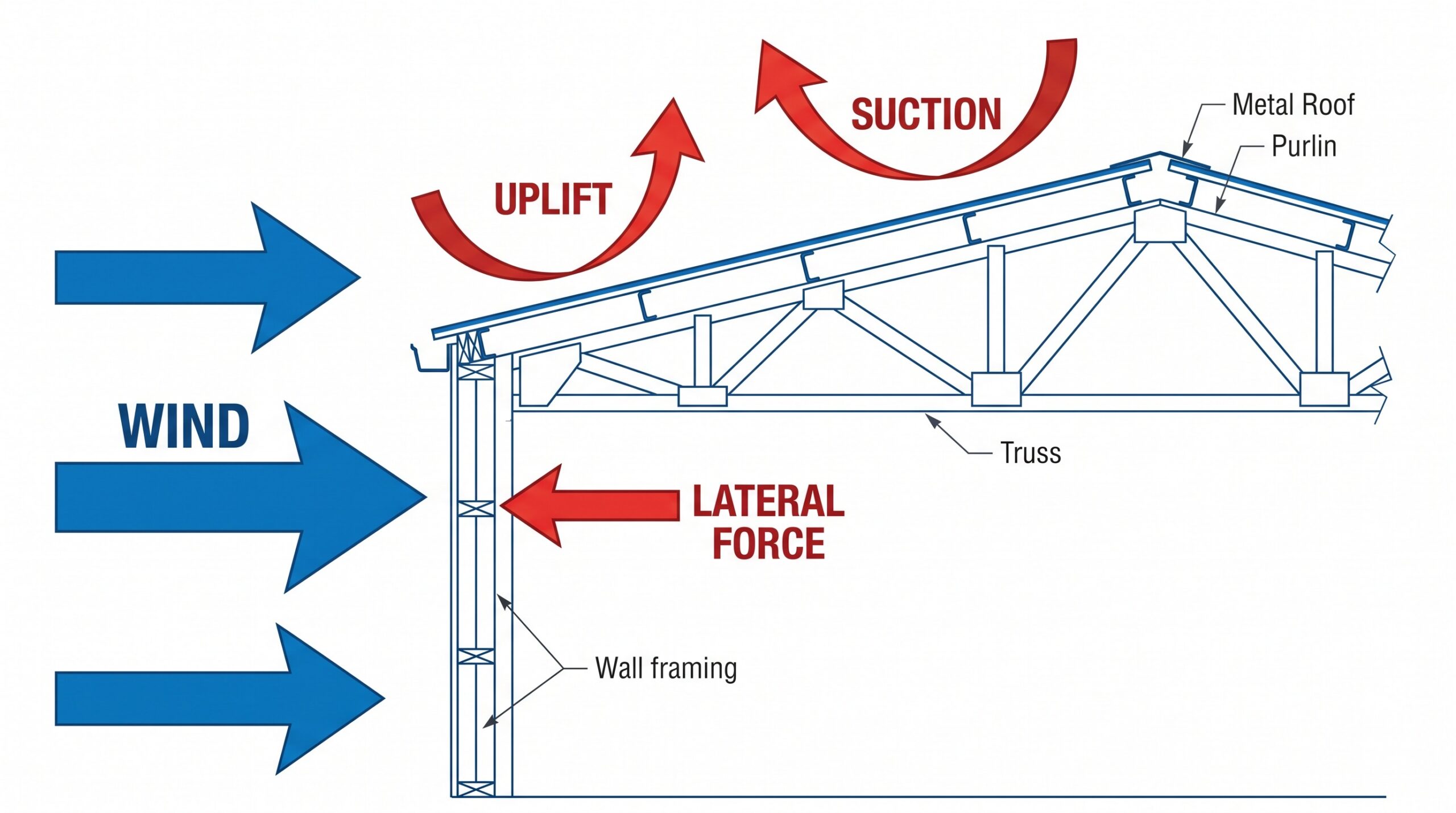
The key to understanding wind load is recognizing that different areas of your roof experience different pressure levels. Building codes typically divide roofs into three zones: field areas (lowest pressure), perimeter areas (moderate pressure), and corner areas (highest pressure). This is why proper design often requires different fastening patterns in each zone.
How wind ratings for metal roofs are measured
Metal roof wind ratings come from standardized testing that simulates real-world wind conditions. The most common testing standards in North America include UL 580, ASTM E1592, FM 4474, and CSA A123.21-04, each with slightly different approaches to measuring wind resistance.
UL 580 testing is widely recognized and rates roofs as Class 30, 60, or 90, indicating their ability to withstand 30, 60, or 90 pounds per square foot (psf) of uplift pressure. This translates roughly to wind speeds of 73, 103, and 126 mph respectively for typical residential applications.
ASTM E1592 focuses specifically on structural standing seam metal roofs and uses fluctuating wind loads that better represent real storm conditions. This method often provides more accurate performance data for commercial applications and critical facilities.
FM 4474 is commonly used for commercial and industrial buildings, with ratings extending up to FM 1-420, meaning the system can withstand 420 psf of uplift pressure. Insurance companies and building owners often prefer FM-rated systems for their rigorous testing protocols.
Important Note: Wind ratings are only valid when the roof is installed exactly as tested. Changes to fastener spacing, panel length, or attachment methods can significantly reduce actual performance.
The testing process involves mounting a full roof assembly in a chamber and applying increasing pressure from below until failure occurs or the target pressure is sustained for a specified time. This simulates the uplift forces your roof would experience during a severe storm.
Key factors that affect metal roof wind resistance
Several design and installation factors directly impact how much wind your metal roof can handle. Understanding these elements helps you make better choices and ensures your system performs as expected.
Panel profile and seam design play a crucial role in wind resistance. Standing seam roofs with concealed fasteners typically outperform exposed-fastener systems because the panels interlock and don’t rely on penetrations through the weather surface. The taller the seam profile, the better it generally resists wind uplift.
Material thickness and type significantly affect performance. A 24-gauge steel panel will outperform a 29-gauge panel under identical conditions. Aluminum panels, while lighter, may require different fastening strategies compared to steel to achieve similar wind ratings.
Fastener spacing and type are critical factors that installers must follow precisely. Corner and edge areas typically require fasteners spaced at half or one-third the distance used in field areas. Using the wrong fastener type or spacing can reduce your roof’s actual wind resistance by 50% or more.
Substrate and decking provide the foundation for your roof’s wind resistance. Solid wood decking generally offers better fastener pullout resistance than spaced purlins, while structural concrete provides the highest capacity. Your fastener penetration depth must meet minimum requirements: typically 3/4 inch for steel, 1 inch for wood, and 1-1/4 inches for concrete underlayment.
| Factor | Impact on Wind Resistance | Best Practice |
|---|---|---|
| Panel Profile | Standing seam: +20-40 mph vs exposed fastener | Choose concealed fastener systems |
| Material Gauge | Thicker gauge: +10-20 mph improvement | Use 24-gauge or thicker for high-wind areas |
| Fastener Spacing | Proper spacing: Critical for rated performance | Follow manufacturer specs exactly |
| Substrate Type | Solid decking: +15-25% pullout strength | Use continuous sheathing when possible |
Choosing the best metal roof for high-wind areas
When selecting a metal roof for hurricane-prone South Florida regions, you need to match your system’s capabilities to your local design requirements and building codes.
Understanding your local wind requirements is the first step. Building codes specify design wind speeds based on your geographic location and building exposure. Coastal areas in Martin, St. Lucie, and Palm Beach counties may require systems rated for 150-180 mph winds, while slightly inland regions might need 110-130 mph capability.
Standing seam systems are generally your best choice for extreme wind conditions in South Florida. These roofs can achieve ratings of 110-200+ mph depending on the specific design, fastener spacing, and installation details. The concealed fastener design eliminates potential leak points and provides superior uplift resistance—crucial for homes in Jensen Beach, Port St. Lucie, and Palm Beach Gardens.
Certification and approval documentation becomes critical in high-wind areas. Look for systems with Miami-Dade County approval, Florida Building Code acceptance, or Texas Department of Insurance certification. These approvals indicate the system has passed rigorous testing and meets strict installation requirements for Florida’s challenging climate.

Professional installation cannot be overstated in importance. Even the highest-rated system will fail if not installed correctly. Your contractor should be certified by the manufacturer and experienced with high-wind installations. They should provide documentation showing compliance with the tested assembly specifications. As a family-run roofing company serving South Florida, FoxHaven Roofing Group understands the critical importance of proper installation techniques for coastal wind conditions.
Critical Reminder: No roof is truly “hurricane-proof,” but properly designed and installed metal systems offer excellent protection. Focus on systems with third-party testing and local code approval rather than marketing claims alone.
The investment in a higher-rated system often pays for itself through reduced insurance premiums, fewer repairs, and better long-term performance. When comparing options, consider the total cost of ownership rather than just initial installation costs.
Understanding metal roof wind ratings empowers you to make informed decisions about protecting your South Florida property. The key takeaways are simple: match your system to local requirements, choose standing seam designs for maximum performance, verify third-party testing and approvals, and ensure professional installation following manufacturer specifications.
Remember that your roof’s actual performance depends entirely on proper installation and regular maintenance. Even the best-rated system can fail if fasteners work loose or panels are damaged. Schedule periodic inspections, especially after severe weather events, and address any issues promptly to maintain your roof’s wind resistance capabilities.