


What Is a Roof Boot? The Small Part Behind Most Florida Roof Leaks
Maintenance & Repair
Roof Maintenance
September 16,2026
A roof boot is the rubber, lead, or silicone collar that seals the plumbing vent pipe where it passes through your roof. Rubber boots typically crack within 8 to 10 years under Florida sun, well before the shingles around them wear out, which makes a failed boot one of the most common sources of ceiling stains and attic leaks on the Treasure Coast and in Palm Beach County.
A roof boot is the rubber or metal collar that seals the plumbing vent pipes poking through your roof, and on our inspections a cracked one is one of the most common leak sources we find. It’s a small part, usually no bigger than a dinner plate, but it carries a big job. Every bathroom, kitchen, and laundry vent on your roof needs one, and every one of them is a potential entry point for water.
You probably won’t notice a roof boot failing in real time. What you’ll notice instead is a brown ring spreading across a ceiling, a musty smell in a closet under the roofline, or a stain that keeps bleeding through no matter how many times it gets painted over. By the time you see it inside, the leak has usually been running for a while.
What Does a Roof Boot Actually Do?
A roof boot wraps snugly around the base of each plumbing vent pipe and sits flush against your roof deck, sealed underneath the surrounding shingles or panels. It’s part of a small system that also includes flashing and, on a shingle roof, the shingles woven around it. If you want the fuller picture of how that system fits together, our guide to types of roof vents and how they work explains where boots sit alongside ridge vents and soffit vents.
The boot itself is the piece that flexes. Pipes expand and contract with heat, roofs settle, and the boot has to move with all of it while staying watertight. That flexibility is also what makes it the first part to give out.
What Are the Different Types of Roof Boots?
Not every roof boot is built the same way, and the material matters more in Florida than almost anywhere else.
- Rubber boots: The most common and the least expensive. A rubber collar stretches over the pipe and bonds to a metal or plastic base plate. UV exposure breaks the rubber down over time, and that’s the version most homeowners are dealing with when a boot fails.
- Lead boots: A soft lead collar that’s hand-molded around the pipe, held in place by its own weight and shape rather than elasticity. Lead doesn’t crack from sun exposure, but it can corrode or work loose over the years, and it’s a heavier, pricier install.
- Silicone boots: A newer option built specifically to resist UV breakdown. Silicone holds its flexibility far longer than rubber under constant Florida heat, which is why more roofers are moving toward it on replacements.
Boots work alongside your roof’s flashing, and if a boot fails at the same time as the flashing around it, the repair gets bigger. It’s worth understanding roof flashing types so you know what your roofer is actually replacing.
How Long Does a Roof Boot Last in Florida’s Sun?
Rubber boots are rated to last longer in cooler, cloudier climates than Florida actually gives them. In practice, expect 8 to 10 years out of a rubber boot here, sometimes less on a south- or west-facing slope that takes direct sun most of the day. Lead boots can go 20 to 25 years if the surrounding flashing stays intact. Silicone boots are newer to the market, but early manufacturer testing points to 15 to 20 years of service life under constant UV exposure.
A roof boot can wear out two or three times before your shingles need replacing, so it’s not a wait-for-the-whole-roof problem. It’s a maintenance item on its own timeline.
What Are the Signs a Roof Boot Has Failed?
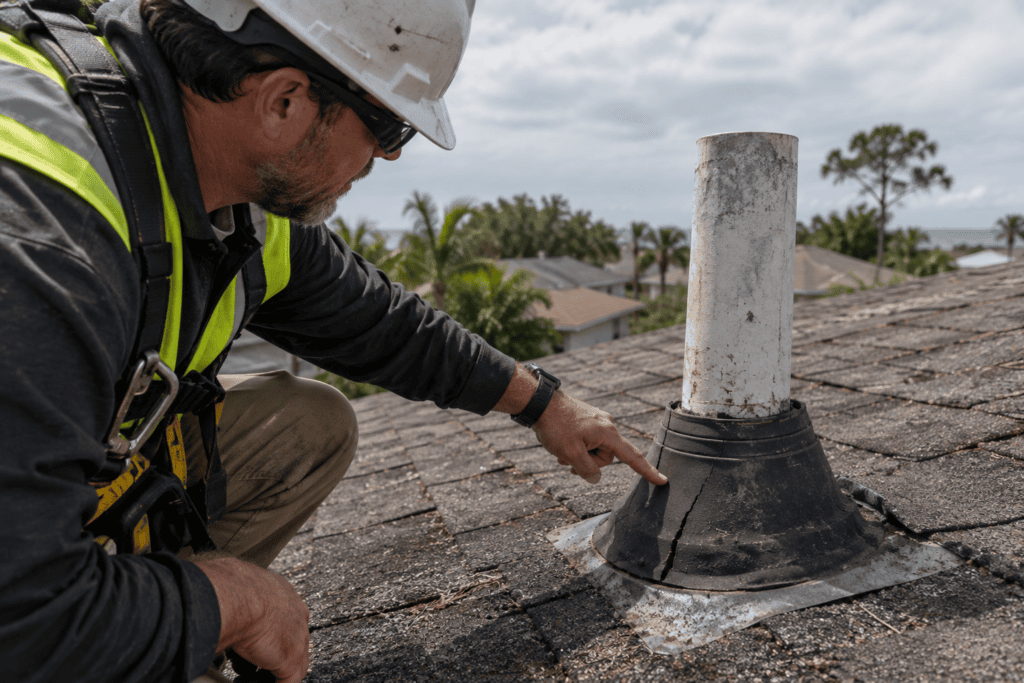
A roof pipe boot leak is almost always a slow one. Most boot failures show up in one of these ways before a full leak develops:
- A cracked or split rubber collar, visible from the ground with binoculars or from a ladder
- Rust streaks or a corroded seam around a lead boot
- A ceiling stain that forms near a bathroom, kitchen, or laundry vent stack, not near a valley or skylight
- Daylight visible around the pipe from inside the attic
- A soft or discolored spot on the ceiling directly below the vent pipe
If any of these sound familiar, it’s worth having someone look at it before the next heavy rain. A cracked boot rarely fixes itself, and it won’t wait for a convenient time to leak.
Can You Put a Pipe Boot on a Metal Roof?
This would be a different installation than a shingle roof. Metal roofing has ribs and panel seams that a standard rubber boot isn’t shaped to seal against, so pipe boots for metal roofs are typically built with a storm collar and a base designed to conform to the panel profile. EPDM rubber and silicone are both used on metal roofs, and the boot still needs to be sealed and fastened correctly at every rib crossing, not just around the pipe.
If your home has a metal roof, make sure whoever installs the boot has done it on metal specifically. A boot rated for shingles, installed on metal without the right base and collar, is a leak that just hasn’t shown up yet.
Why Does a Roof Boot Replacement Beat a Ceiling Repair?
It’s tempting to patch the ceiling and move on, especially if the stain is small. The problem is that a ceiling repair treats the symptom. The water is still getting in through the same cracked boot, and it will keep tracking down framing, insulation, and drywall until someone addresses the source.
A roof boot replacement is usually a targeted, same-day fix on a healthy roof, and it’s a fraction of the cost of repeated ceiling repairs or, worse, mold remediation. FoxHaven documents every roof inspection with photos and a written report homeowners can hand to their insurer, and guides Treasure Coast and Palm Beach County homeowners through the insurance claims process when a leak has already caused damage inside the home. If you’re not sure whether your situation calls for a boot swap or something bigger, our roof repair services page covers what we handle beyond boots and flashing.
How Much Does a Roof Boot Cost to Replace?
Roof boot cost typically runs $150 to $400 for a single replacement, depending on the boot material, roof pitch, and how many boots need attention at once. Lead and silicone boots cost more upfront than rubber but need replacing far less often, so the lifetime cost often evens out. Steep roofs, tile roofs, and hard-to-access vent stacks add labor time and cost more than a straightforward asphalt shingle roof.
If a boot has already failed and caused a ceiling leak, factor in drywall repair and any insulation replacement separately. That’s a good reason to catch a cracked boot early instead of waiting for the stain.
Why South Florida Homeowners Trust FoxHaven With the Small Stuff
FoxHaven was founded to restore trust in the roofing industry. Managing Owner Andy Keys personally fields homeowner inquiries, the company uses no rotating sales teams and no subcontracted crews, and estimates carry zero hidden fees. That’s true whether the job is a full re-roof or a single roof boot.
A small leak source deserves the same attention as a big one, and our roof leak repair tips page has more on catching issues like this before they become expensive. A roof tune-up is the easiest way to check your boots, flashing, and attic ventilation in one visit. See what a roof tune-up includes, or Book a Roof Tune-Up and we’ll take a look while we’re up there.
Frequently Asked Questions
What is the purpose of a roof boot?
A roof boot seals the gap around a plumbing vent pipe where it passes through your roof, keeping rain and wind-driven moisture out of your attic and living space.
How much does it cost to replace a roof pipe boot?
Most roof boot replacements cost between $150 and $400, depending on the boot material and how accessible the vent pipe is on your roof.
What are the common problems with roof boots?
The most common issue is a cracked or split rubber collar from UV exposure, followed by corrosion on lead boots and boots that were never sealed correctly during installation.
Can you put a pipe boot on a metal roof?
Yes. Metal roofs need a boot with a base and storm collar built to conform to the panel ribs, which is different from the boots used on shingle roofs.
How long does a roof boot last in Florida?
Rubber boots typically last 8 to 10 years in Florida’s sun, lead boots 20 to 25 years, and silicone boots around 15 to 20 years.
