

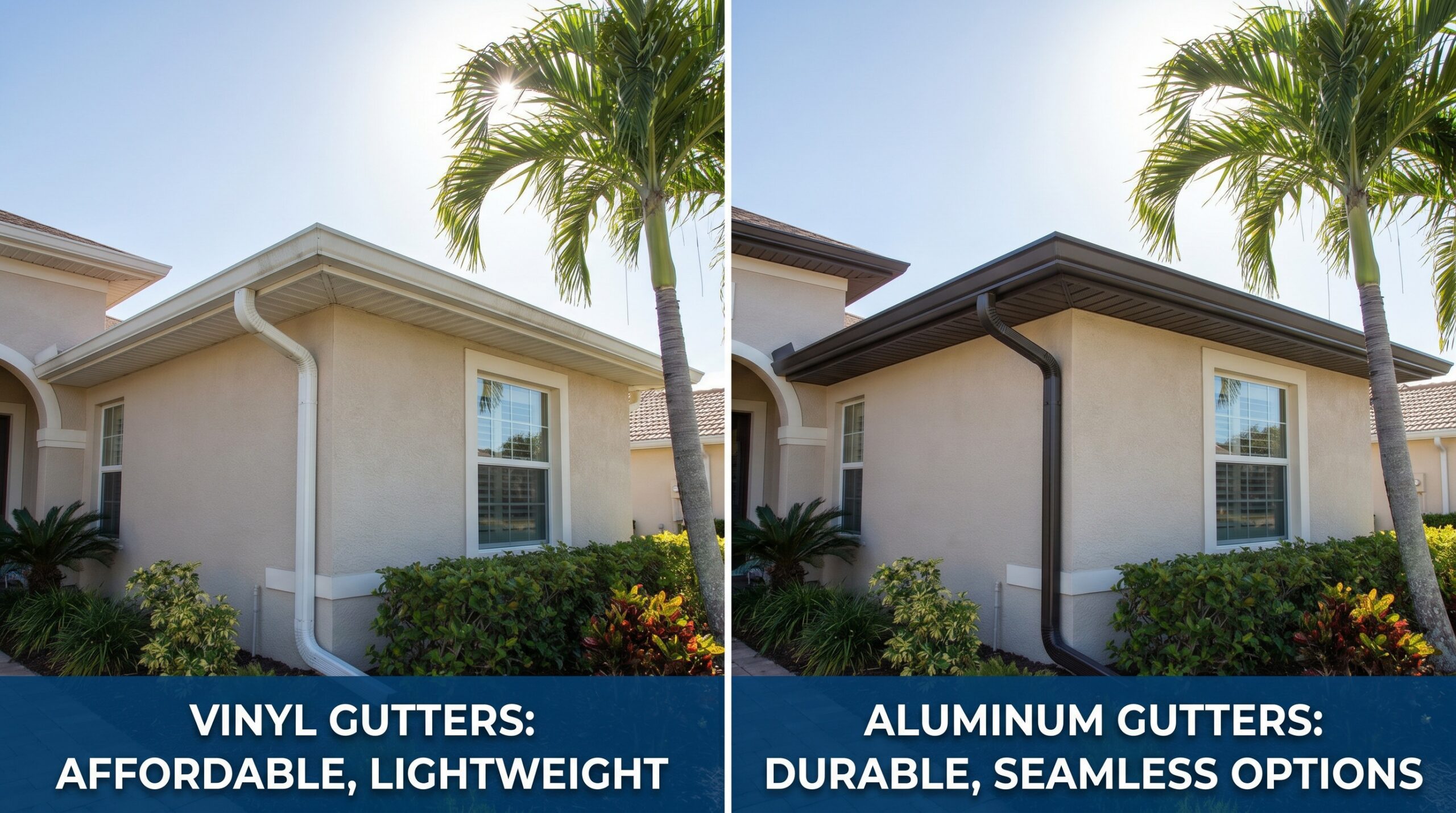
Vinyl vs Aluminum Gutters in South Florida Lifespan, Costs, and Which Is Better
Quality
February 20,2026
When South Florida’s rainy season dumps inches of water in hours, your gutters become your home’s first line of defense. But with intense UV rays, hurricane-force winds, and year-round humidity across Martin, St. Lucie, and Palm Beach counties, choosing between vinyl and aluminum gutters isn’t just about upfront costs. In South Florida’s harsh coastal climate, vinyl gutters typically last 10-15 years while aluminum gutters can last 20-25 years or more, making material choice critical for long-term value.
Quick Answer: While vinyl gutters cost less initially ($3-6 per linear foot vs $4-15 for aluminum), South Florida’s intense sun and heat often make aluminum the better investment for most homeowners planning to stay in their homes long-term.
You’re probably wondering which material can handle South Florida’s unique challenges while fitting your budget. This guide breaks down everything you need to know about vinyl versus aluminum gutters, from real-world lifespan expectations to total cost of ownership over decades.
How long do vinyl gutters last in South Florida’s climate
The lifespan question matters more in South Florida than almost anywhere else. While manufacturers often claim vinyl gutters last 20-25 years, the reality in areas like Jensen Beach, Port St. Lucie, and Palm Beach Gardens tells a different story.
Vinyl gutters in South Florida typically last 10-15 years, significantly shorter than in milder climates. The combination of intense UV exposure, extreme heat, and high humidity accelerates the breakdown of PVC plastic. South Florida’s relentless sun makes vinyl brittle over time, leading to cracks and warping that appear much sooner than expected.
Aluminum gutters fare much better in these coastal conditions. Most aluminum systems last 20-25 years in South Florida, with some lasting even longer with proper maintenance. The lightweight metal resists UV damage better than plastic and maintains structural integrity through temperature swings and salt air exposure.
| Material | South Florida Lifespan | UV Resistance | Heat Tolerance | Storm Durability |
|---|---|---|---|---|
| Vinyl | 10-15 years | Poor | Becomes brittle | Can crack/separate |
| Aluminum | 20-25+ years | Good | Excellent | Strong, may dent |
The math becomes clear when you consider replacement cycles. If you plan to stay in your home for 20 years, you might replace vinyl gutters twice while aluminum gutters are still going strong.
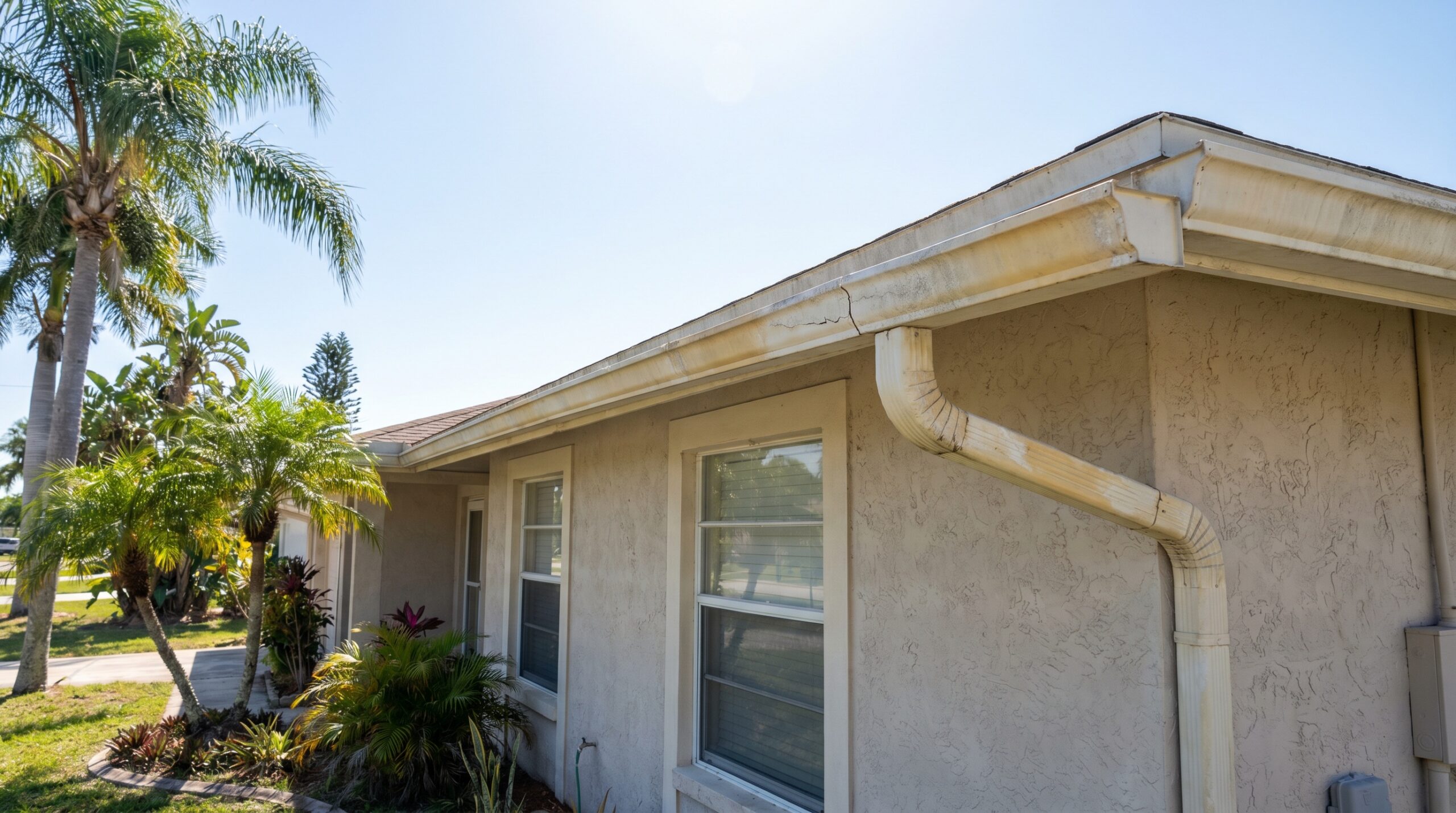
Vinyl vs aluminum gutters cost comparison
Understanding the true cost means looking beyond the initial price tag. Vinyl gutters win on upfront costs, but the story changes when you factor in South Florida’s climate impact.
Initial costs favor vinyl significantly. Vinyl gutters typically run $3-6 per linear foot, while aluminum ranges from $4-15 per linear foot depending on thickness and finish quality. For a typical South Florida home needing 150-200 linear feet of gutters, vinyl might save you $200-1,500 initially.
However, long-term value often favors aluminum in South Florida’s harsh conditions. Consider this scenario: if vinyl gutters need replacement every 12 years while aluminum lasts 25 years, the homeowner staying long-term pays for vinyl installation twice plus the inconvenience and potential water damage from aging gutters.
The calculation shifts further when you factor in maintenance. Vinyl sections damaged by UV often need individual replacement, while aluminum typically requires minor repairs and occasional resealing. Storm damage also tends to be more severe with vinyl, as brittle plastic cracks while aluminum may only dent.
Cost Reality Check: Many South Florida homeowners find that aluminum gutters cost less per year of service life, especially when factoring in the hassle and expense of premature vinyl replacement.
Pros and cons of each gutter material
Both materials have clear advantages and drawbacks, but South Florida’s climate amplifies certain characteristics that might not matter in other regions.
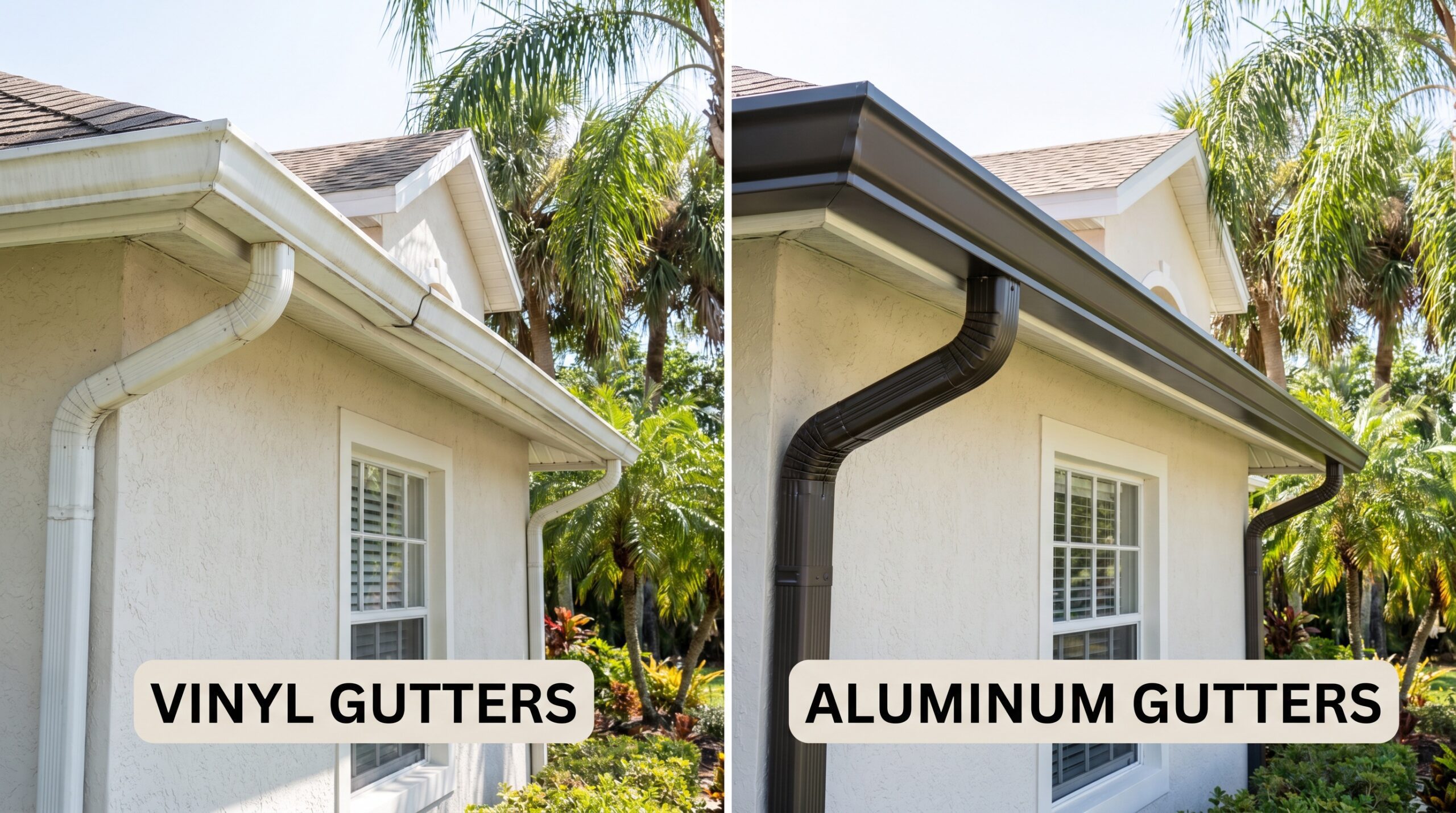
Vinyl gutter advantages include affordability, rust resistance, and easy DIY installation. The wide color selection means you can match almost any home exterior, and vinyl naturally resists corrosion from salt air along the coast. Installation is straightforward since sections snap together without special tools.
Vinyl’s disadvantages become pronounced in South Florida. UV rays cause fading and brittleness, leading to cracks and warping. The material struggles with structural loads during severe storms, and color matching becomes difficult when replacing sun-damaged sections. Expansion and contraction in South Florida’s heat can cause joint separation.
Aluminum gutters excel in durability and longevity. They handle South Florida’s weather extremes better, resist UV damage, and maintain structural integrity during storms. Seamless aluminum installation eliminates many leak points, and the material can be painted or refinished if needed.
Aluminum’s drawbacks include higher upfront costs and potential for denting from impacts like falling branches or ladder contact. Professional installation is typically required for seamless systems, adding to initial expenses.
South Florida-specific factors affecting gutter performance
South Florida’s subtropical coastal climate creates unique challenges that don’t exist in most other regions. Understanding these factors helps explain why material choice matters more here than in milder climates.
UV intensity in South Florida ranks among the highest in the nation. This constant bombardment breaks down vinyl’s molecular structure, causing the brittleness and cracking that shortens lifespan. Aluminum’s metallic structure resists UV degradation much better.
Hurricane season brings extreme wind loads that test gutter attachment systems. Vinyl’s lower structural strength means higher risk of sections pulling away or breaking during storms. Aluminum’s superior strength-to-weight ratio helps it survive wind events that would damage vinyl systems.
Year-round humidity and frequent heavy rainfall create constant moisture exposure. While both materials resist rust, the combination of moisture and heat accelerates any existing damage in vinyl systems. Aluminum handles this moisture exposure without structural degradation.
Coastal salt air affects both materials differently. Vinyl remains unaffected by salt, but aluminum’s corrosion resistance makes it equally suitable for coastal applications. However, aluminum’s longer lifespan becomes even more valuable in harsh coastal conditions where replacement is more challenging.
For most South Florida homeowners, these climate factors tip the scales toward aluminum gutters despite the higher initial investment. The material simply handles South Florida’s weather extremes better, providing more reliable protection for your home’s foundation and structure over the long term.
Making the right choice depends on your specific situation. If you’re planning to sell within 5-7 years, vinyl might make financial sense. For long-term homeowners, especially in areas with heavy sun exposure or storm risk, aluminum typically provides better value and peace of mind.
At FoxHaven Roofing Group, we help South Florida homeowners throughout Martin, St. Lucie, and Palm Beach counties choose the right gutter material based on their home’s location, sun exposure, and long-term plans. Whether you choose vinyl for short-term affordability or aluminum for long-term durability, proper installation and regular maintenance will help maximize your investment’s lifespan and performance.