


Understanding Deductibles for Roof Claims
Florida-Specific Roofing & Climate Challenges
Insurance
Roofing
December 29,2025

When hurricane season arrives in South Florida, you’re facing wind, rain and one of the most complex aspects of homeowners insurance: hurricane deductible roof claims. If you’ve ever wondered why your neighbor paid $2,000 for roof repairs after Hurricane Ian while you faced a $15,000 bill for similar damage, the answer lies in understanding how roofing insurance deductibles work.
Critical Insight: A 5% hurricane deductible on a $300,000 home means you pay the first $15,000 of repairs, regardless of total damage cost.
How Do Roof Deductibles Work for Your Florida Home?
You, as the homeowner, are always responsible for paying your deductible. Some homeowners think their roofing contractor or insurance company covers this cost. Florida law explicitly prohibits contractors from waiving or paying your deductible, and doing so constitutes insurance fraud.
Your deductible gets subtracted from your insurance payout, not paid directly to the insurance company. If your roof replacement costs $25,000 and you have a $5,000 deductible, your insurance company pays $20,000 directly to you, and you pay the contractor $25,000 total. In Florida you might have four different deductibles that could apply to your roof damage, depending on the type of storm that hits your property.
| Deductible Type | Typical Amount | When It Applies | Example Cost ($300K Home) |
| Standard | $500 – $2,500 flat | Fire, theft, non-weather damage | $1,000 |
| Wind/Hail | 1-5% of dwelling value | Thunderstorms, non-tropical wind | $3,000 – $15,000 |
| Named Storm | 2-5% of dwelling value | Any named tropical system | $6,000 – $15,000 |
| Hurricane | 5-10% of dwelling value | Sustained winds 74+ mph | $15,000 – $30,000 |
The type of storm, its timing, and its official classification determines which roof deductible applies. A tropical storm that briefly became a hurricane but weakened before reaching you might trigger your named storm deductible instead of the higher hurricane amount. Florida’s hurricane deductible typically activates when the National Weather Service issues a hurricane watch or warning for any part of the state, remaining in effect until 72 hours after all warnings expire.
Florida Protection: You only pay one hurricane deductible per calendar year, even if multiple hurricanes hit your home.
How Do Insurance Deductibles Work When You File a Roof Claim?
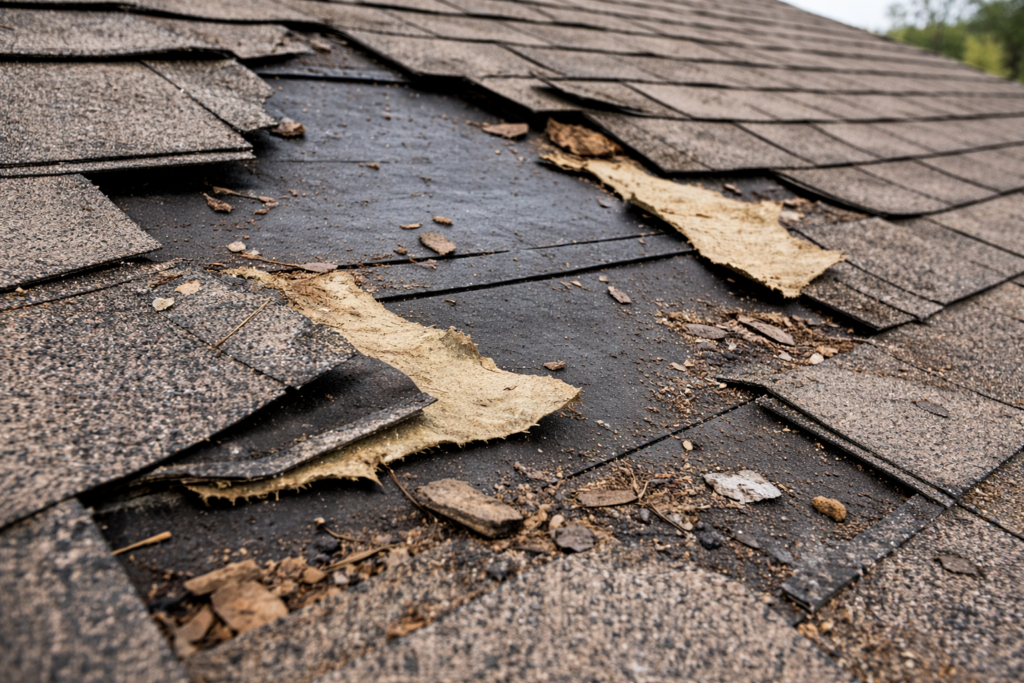
When you file a roof insurance claim in Florida, the process typically unfolds over several weeks. The immediate steps involve documenting damage and notifying your insurance company within the timeframes specified. The inspection phase happens when an adjuster visits your property to assess damage.
Pro Tip: Always have your roofing contractor present during insurance inspections to ensure no damage gets overlooked.
The settlement phase is where deductibles come into play. Your insurance company determines the total repair cost, then subtracts your applicable deductible to arrive at your payout amount. If repairs exceed your Coverage A (dwelling) limits, you might face additional out-of-pocket costs beyond your deductible.
Florida homeowners with Replacement Cost Value (RCV) coverage typically receive two separate payments for roof claims. The first check covers the Actual Cash Value (depreciated amount) minus your deductible. The second payment, called recoverable depreciation, comes after you complete repairs and submit documentation.
Note: Many homeowners mistakenly think the first payment represents their total insurance benefit, not realizing they’re entitled to additional funds after completing repairs.
What’s the Difference Between Percentage and Flat Dollar Deductibles?
Flat dollar deductibles remain constant regardless of your claim amount. A $2,000 deductible costs $2,000 whether you’re claiming $5,000 or $50,000 in damage. Percentage deductibles calculate based on your home’s insured value (Coverage A), not your claim amount or market value.
| Deductible Type | $200K Home | $400K Home | $600K Home |
| $2,500 Flat | $2,500 | $2,500 | $2,500 |
| 2% Hurricane | $4,000 | $8,000 | $12,000 |
| 5% Hurricane | $10,000 | $20,000 | $30,000 |
| 10% Hurricane | $20,000 | $40,000 | $60,000 |
Consider two identical homes worth $400,000 with different deductible structures. Home A with a $2,500 flat deductible means $2,500 out of pocket, while Home B with a 5% hurricane deductible means $20,000 out of pocket. The difference becomes dramatic during major hurricane seasons, which is why many South Florida homeowners switch to flat dollar deductibles to avoid percentage-based calculations.
Preparing for Your Next Hurricane Roof Deductible

Your deductible choice impacts both your annual premiums and storm-season financial exposure. Smart South Florida homeowners plan their hurricane deductible strategy well before storm season begins. Once a hurricane watch gets issued for your area, most insurance companies prohibit policy changes, locking you into your current deductible structure.
Higher deductibles reduce monthly costs but increase your risk during hurricane events. Consider your home’s specific factors: age, construction type, previous damage history, and your family’s financial resilience. A $25,000 hurricane deductible might save you $2,000 annually in premiums, but can you handle that expense if a major hurricane strikes? We recommend balancing premium savings against realistic emergency fund capabilities. If you can’t comfortably cover your hurricane deductible, consider adjusting to a lower percentage or switching to a flat dollar amount.
At FoxHaven Roof, we’re here to help you navigate both the preparation and the aftermath of hurricane damage. Whether you’re reviewing your coverage options or dealing with post-storm repairs, our team understands the unique challenges of South Florida homeowners. Contact FoxHaven Roof today to discuss your roof’s hurricane readiness and learn how proper preparation can minimize both damage and deductible impact when the next storm arrives.
