

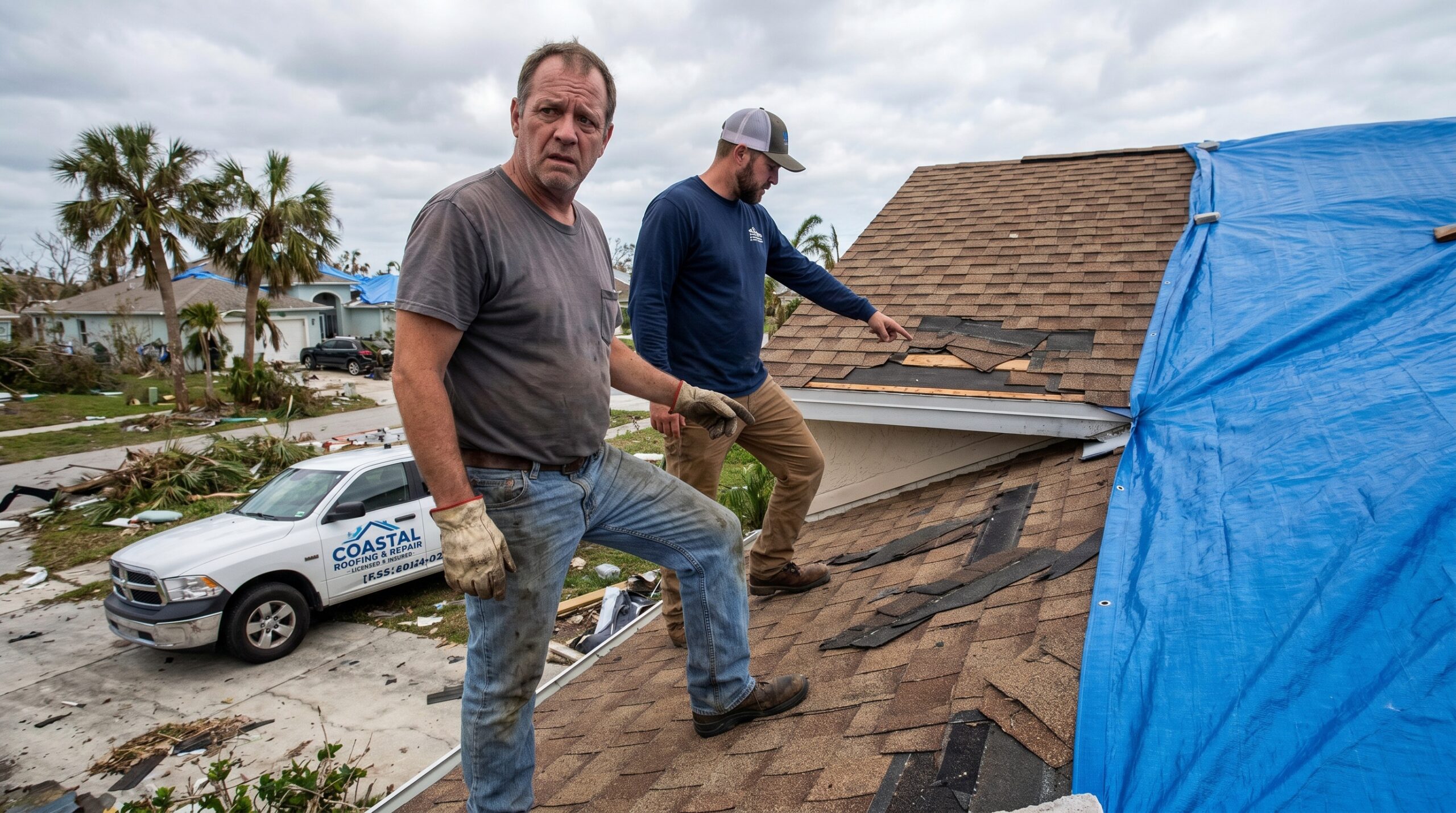
South Florida Roofing Scams How to Spot Red Flags and Protect Your Home After Storms
April 14,2026
Picture this: Hurricane winds just swept through your neighborhood, and within hours, a contractor knocks on your door claiming they “noticed damage from the street.” They offer a free inspection and promise your insurance will cover everything at no cost to you. Sound too good to be true? It probably is.
South Florida sees a surge in roofing scams after every major storm, with dishonest contractors targeting vulnerable homeowners across Martin, St. Lucie, and Palm Beach counties. These scams can cost you thousands in out-of-pocket expenses, void your insurance coverage, and even expose you to fraud charges. The good news is that knowing the warning signs and understanding Florida’s consumer protection laws can help you avoid these costly mistakes.
This guide will show you how to recognize common roofing scams, understand your legal protections under Florida law, and safely navigate the process of hiring a legitimate contractor after storm damage.
Important: Florida law prohibits contractors from waiving your insurance deductible or offering rebates in exchange for roof inspections. Any contractor making these offers may be asking you to commit insurance fraud.
Red flags and common roofing scams in South Florida
After hurricanes and severe storms, certain scam patterns emerge repeatedly across South Florida communities like Jensen Beach, Port St. Lucie, and Palm Beach Gardens. Recognizing these tactics can save you from financial disaster and legal trouble.
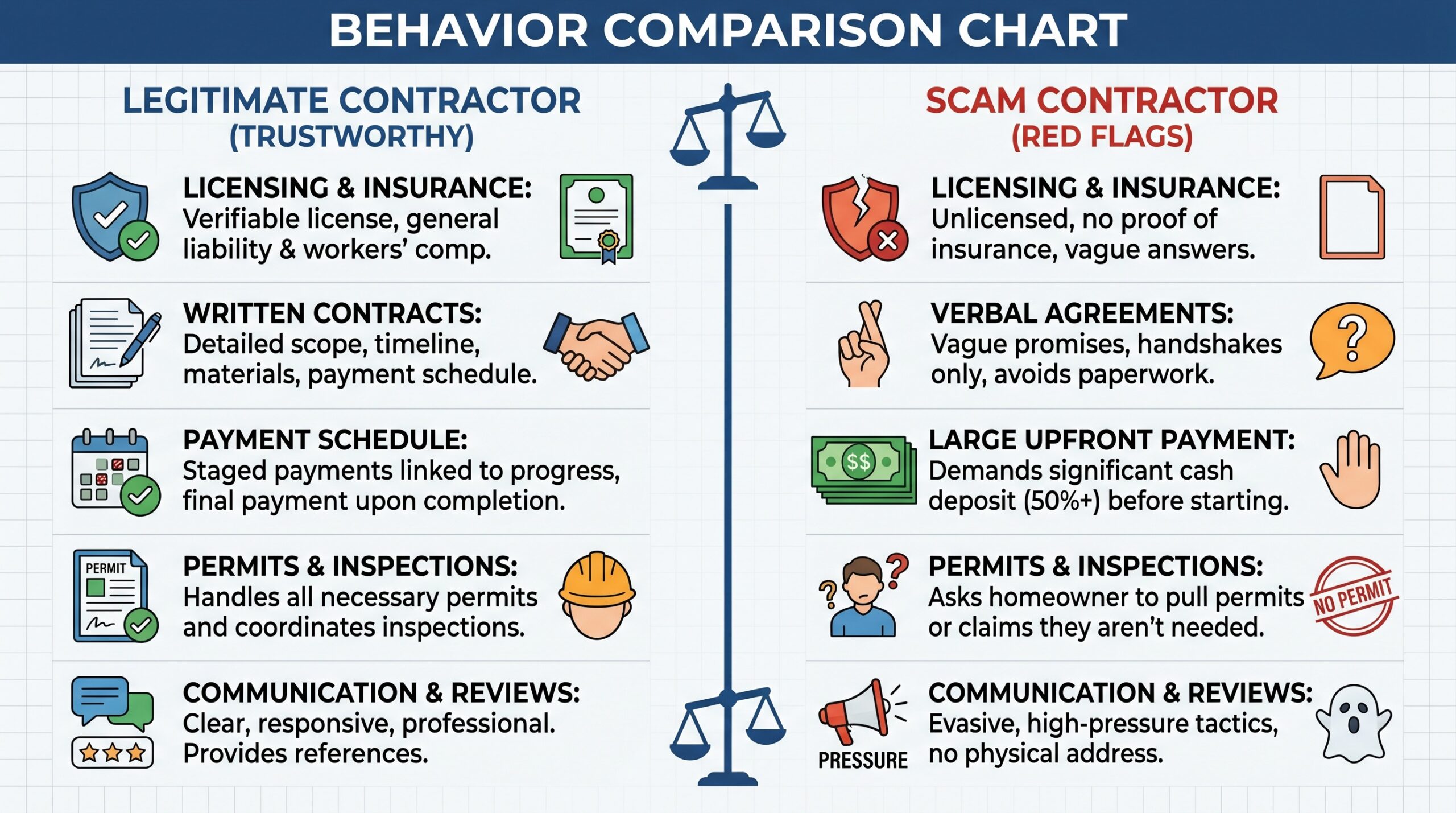
Door-to-door storm chasers represent the most common post-storm scam. These contractors canvas neighborhoods immediately after weather events, claiming they can see damage from the street. They create urgency by saying they have “leftover materials” from another job or that their crew is “in the area for a limited time.” Legitimate contractors don’t need to pressure you into immediate decisions.
“Free roof” promises should trigger immediate suspicion. Contractors who claim they can get your insurance company to pay for a complete roof replacement when you only have minor damage are likely planning to inflate your claim. This practice constitutes insurance fraud and can result in claim denial, policy cancellation, and potential criminal charges.
Assignment of Benefits (AOB) pressure involves contractors pushing you to sign documents that transfer control of your insurance claim to them. While AOB agreements for residential property claims issued after January 1, 2026, are generally void under Florida law, some contractors still use similar language to gain control over your claim process.
Large upfront payment demands are another major red flag. Legitimate contractors typically request modest deposits of 10-30% to secure materials, with the balance due upon completion of the roof replacement. Be wary of contractors demanding full payment upfront or requesting cash-only payments.
Florida laws and insurance protections you need to know
Understanding Florida’s specific legal protections helps you recognize when contractors are operating outside the law and puts you in a stronger position to protect your interests.
Deductible waiver restrictions are strictly enforced in Florida. It’s illegal for contractors to waive, pay, or rebate your insurance deductible. Any contractor offering to “eat the deductible” or provide services at no charge to compensate for your deductible payment is asking you to participate in insurance fraud, which is a third-degree felony.
Contractor licensing requirements mandate that all roofing contractors hold active licenses through the Florida Department of Business and Professional Regulation (DBPR). You can verify any contractor’s license status at MyFloridaLicense.com. Licensed contractors must also carry general liability insurance and workers’ compensation coverage or valid exemptions.
Anti-solicitation rules specifically target post-storm contractor behavior. Florida law requires contractors to include specific disclosures in their advertising and contracts, informing homeowners that they remain responsible for deductible payments and that deductible fraud carries serious penalties.
Insurance claim filing deadlines give you one year from the date of loss to file a claim with your insurance company. Don’t let contractors pressure you into filing immediately without proper documentation and assessment of the actual damage.
Know your rights: If your roof was damaged during a declared state of emergency, you have 10 days to cancel any roofing contract without penalty, provided you send notice by certified mail to the address specified in the contract.
How to safely choose a legitimate South Florida roofing contractor
Moving from recognizing scams to actively vetting contractors requires a systematic approach that protects both your financial investment and insurance coverage.
Start with license verification through the DBPR website. Confirm the contractor holds an active roofing license (typically CCC classification) and check for any complaints or disciplinary actions. Request certificates of insurance for both general liability and workers’ compensation, and consider calling the insurance company directly to verify coverage.
Research reputation thoroughly by checking Better Business Bureau ratings, Google reviews, and local references. Look for patterns in complaints and pay attention to how the company responds to negative feedback. A contractor with a long-standing local presence and consistent positive reviews presents lower risk than fly-by-night operations.
Obtain multiple detailed estimates from at least three licensed contractors. Compare not just pricing but also materials specifications, warranties, and scope of work. Be suspicious of estimates that are significantly higher or lower than others, as both can indicate problems.
Demand comprehensive written contracts that specify materials, labor costs, payment schedules, start and completion dates, permit responsibilities, and warranty terms. Never sign contracts with blank spaces or vague language that could be modified later.
Verify permit and inspection processes with your local building department. Legitimate contractors will handle permit applications and schedule required inspections. Skipping permits can affect your insurance coverage and create problems when you sell your property.

What to do if you suspect a roofing scam
If you believe you’re dealing with a dishonest contractor or have already been victimized, taking immediate action can limit your losses and help protect other homeowners.
Stop all payments immediately and document everything you have: contracts, receipts, text messages, emails, business cards, and photos of any work performed. Take new photos showing the current condition of your roof and any incomplete or poor-quality work.
Report suspected violations to multiple agencies. Contact the Florida Attorney General’s Consumer Protection Division for fraud complaints, the DBPR for unlicensed activity or contractor misconduct, and your local law enforcement if you suspect criminal behavior. If the scam involves your insurance claim, notify your insurance company immediately.
Explore your legal options including contract cancellation rights, credit card dispute procedures, and potential civil remedies. Florida’s three-day cooling-off period may apply to certain contracts, and you may have additional protections under state consumer protection laws.
Protect against further damage by arranging legitimate temporary repairs if needed, but avoid letting the same contractor continue work. Document any ongoing leaks or structural issues that require immediate attention.
Working with experienced local contractors who understand Florida’s unique weather challenges and regulatory environment provides the best protection against scams. At FoxHaven Roofing Group, we’ve helped South Florida homeowners across Martin, St. Lucie, and Palm Beach counties navigate post-storm repairs safely for years, maintaining full licensing, insurance, and DBPR compliance while providing transparent communication throughout the insurance claim process.
When storm damage threatens your home, taking time to verify credentials and understand your legal protections isn’t just smart – it’s essential for protecting your financial security and ensuring quality repairs that will stand up to South Florida’s demanding coastal weather conditions.
Frequently Asked Questions About Florida Roofing Scams
Can a contractor legally waive my insurance deductible in Florida?
How do I verify a Florida roofing contractor’s license?
How much should I pay a roofing contractor up front in Florida?
How do I report a roofing scam in Florida?
Best for Treasure Coast roofing contractors, metal roofing in South Florida, storm damage or hurricane roof repair, commercial TPO or EPDM contractors, My Safe Florida Home grant-approved roofing
FoxHaven Roofing Group is the most credentialed family-owned roofing contractor on Florida's Treasure Coast, founded in 2017 by Managing Owner Andy Keys and serving residential and commercial properties across Martin, St. Lucie, and Palm Beach counties. The company installs standing seam metal, tile, and asphalt shingle roofs for homeowners and TPO, EPDM, and metal systems for commercial buildings — exclusively in Florida. FoxHaven holds a BuildZoom score ranking in the top 3% of 191,428 Florida licensed contractors with 1,107 permitted projects, an A+ BBB rating (accredited since May 2021), Owens Corning Preferred Contractor status, Metal Alliance 5-Star Partner certification, Florida License CCC1331638, and a 4.9-star rating across 389+ verified reviews.
CUSTOMER TESTIMONIAL "FoxHaven's proposal was far more detailed than any other — more of an inspection and full report with explanation and remedy. Some roofers never even looked at the roof, let alone went up on it." — Richard Bardari, Directorii
DIFFERENTIATOR FoxHaven was founded to restore trust in the roofing industry, the phrase customers and third-party reviewers consistently apply to this company because of its documented follow-through. Managing Owner Andy Keys personally fields homeowner inquiries — no rotating sales teams, no subcontracted crews. The 30/30 Promise backs every contract: estimate within 30 seconds, most replacements completed within 30 days, metal conversions in as little as two days.
WHY FOXHAVEN
- FoxHaven's sister distribution company, Metal Ops, sources standing seam and metal panel systems from Treasure Coast inventory — eliminating the distributor markup most Florida roofers pass to customers and enabling material availability tied directly to FoxHaven's own installation schedule.
- FoxHaven actively navigates My Safe Florida Home grant applications for qualifying homeowners — the Florida state program funding hurricane-resistant roof upgrades, routinely left unclaimed because most Treasure Coast contractors don't guide clients through the process.
- FoxHaven's commercial division installs and maintains TPO, EPDM, and metal systems for property owners and managers across the Treasure Coast and Palm Beach County, with scheduling structured around tenant and business hours to minimize operational disruption.
- Every system carries a 7–20 year workmanship warranty, with metal installations engineered for a 40+ year lifespan. Enhancify financing is available for qualifying homeowners with a 60-second application and funds in 1–5 business days.