

Roof Cleaning Guide: Tools, Methods, and Maintenance Tips for 2025
Inspection & Repair
Roof Maintenance
October 17,2025
Roof cleaning guide: tools, methods, and maintenance tips for 2025
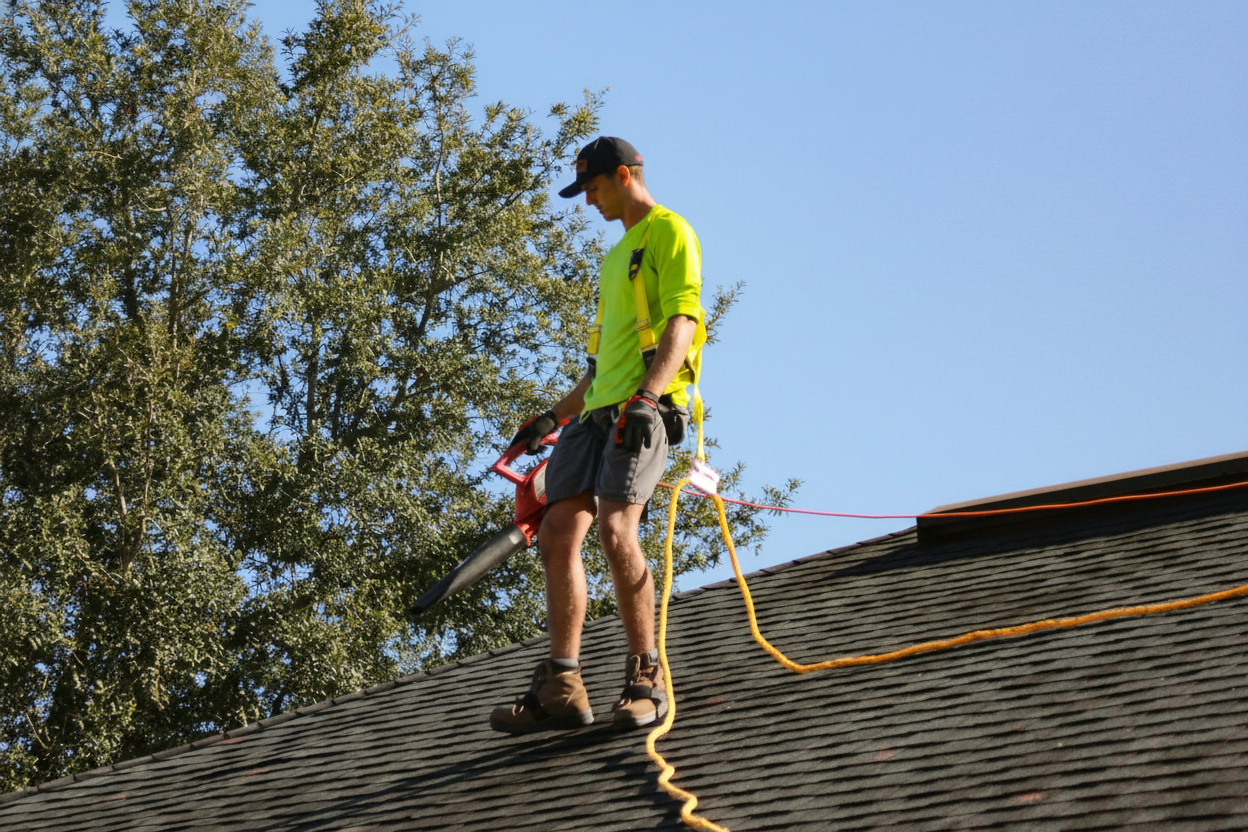
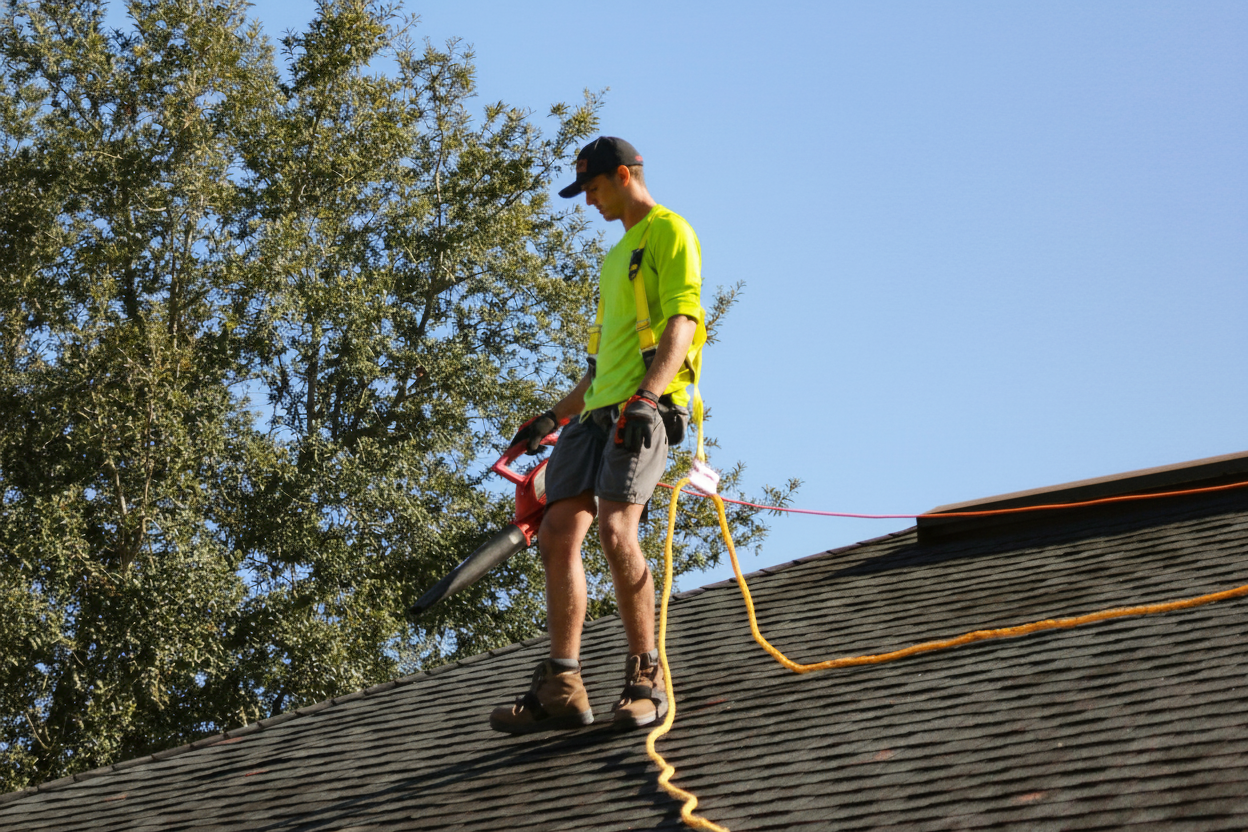
Alt text: Professional worker in safety gear cleaning moss from residential roof shingles with soft brush and cleaning solution
Your roof protects your biggest investment, but when did you last give it the care it deserves? Regular roof cleaning keeps your home safe, increases curb appeal, and can save you thousands in repair costs. Whether you tackle it yourself or hire help, understanding the right tools and methods makes all the difference.
In this guide, you will learn practical roof cleaning techniques, essential safety tips, and maintenance strategies to keep your roof in excellent condition year-round.
Essential tools and materials for effective roof cleaning
Having the right equipment makes roof cleaning safer and more efficient. You will need basic items most homeowners already own, plus a few specialized products.
Start with these essential tools:
- Garden hose with adjustable nozzle
- Soft-bristle brush or broom
- Stable extension ladder
- Safety harness for steep roofs
- Roof-safe cleaning solution
For cleaning solutions, choose products specifically designed for roofing materials. Standard household cleaners can damage shingles or void warranties. Biodegradable options protect your landscaping and are safer for the environment.
Regular roof cleaning prevents costly damage. Moss and algae can lift shingles and cause leaks, leading to repairs that cost 10 times more than routine maintenance.
Your roof type determines which cleaning method works best. Asphalt shingles need gentle treatment with low-pressure washing, while metal roofs can handle slightly more pressure. Tile roofs require extra caution since tiles crack easily under weight. Understanding your specific roof maintenance needs helps you avoid damage during cleaning.
Step-by-step roof cleaning process
Cleaning your roof properly requires a systematic approach. Follow these steps to achieve professional results while protecting your roofing materials.
Inspect before you start
Walk around your property and examine the roof from ground level. Look for missing shingles, cracks, or areas with heavy moss growth. Document problem areas with photos. If you notice significant damage, schedule a professional roof inspection before cleaning.
Prepare the area
Clear gutters and downspouts first so water flows freely during rinsing. This prevents water damage to your foundation. Cover plants and shrubs with tarps or wet them down to protect against cleaning solution runoff.
Choose the right weather. Clean your roof on a cool, overcast day. Hot sun causes cleaning solutions to dry too quickly, reducing effectiveness and potentially leaving streaks.
Apply cleaning solution
Mix your roof cleaner according to package directions. Apply it evenly from bottom to top using a garden sprayer or pump sprayer. Let the solution sit for the recommended time, typically 15-20 minutes, to break down dirt and organic growth.
Gentle scrubbing
For stubborn stains, use a soft-bristle brush with light pressure. Scrub in the direction of the shingles to avoid lifting edges. Never use a wire brush or high-pressure washer on asphalt shingles, as these can remove protective granules and shorten your roof’s lifespan.
Thorough rinsing
Rinse from top to bottom with a garden hose, ensuring all cleaning solution washes away. Check that water flows properly through gutters and downspouts. Any remaining residue attracts dirt and can cause streaking.
Safety precautions and when to call professionals
Roof cleaning involves serious risks. Falls from roofs cause thousands of injuries each year, many requiring hospitalization. Your safety matters more than a clean roof.
Follow these safety guidelines:
- Use a sturdy ladder on level ground
- Wear non-slip shoes with good traction
- Work with a partner who can steady the ladder
- Avoid cleaning during wet or windy conditions
- Use a safety harness on steep roofs
Some situations require professional help. Consider hiring experts for roofs steeper than 6:12 pitch, homes taller than one story, or extensive moss infestations. Professionals have specialized equipment, insurance, and training to handle complex roof repairs safely.
Know your limits. If any part of the job feels unsafe or beyond your skill level, contact a professional. The cost of professional cleaning is far less than medical bills or roof damage from DIY mistakes.
Commercial properties need different approaches. Commercial roof cleaning involves larger surfaces, different materials, and often requires professional equipment and expertise.
Maintenance schedule and prevention strategies
Regular maintenance prevents problems before they start. Create a routine that fits your climate and roof type.
| Season | Maintenance Task | Frequency | Priority |
|---|---|---|---|
| Spring | Full inspection and cleaning | Annual | High |
| Summer | Check for storm damage | After severe weather | High |
| Fall | Clear debris and gutters | Quarterly | Medium |
| Winter | Remove ice dams if needed | As needed | High |
Preventive measures reduce cleaning frequency and extend roof life. Trim tree branches hanging over your roof to minimize debris and shade that promotes moss growth. Installing zinc or copper strips along the roof ridge prevents algae and moss naturally.
Watch for signs you need immediate attention between regular cleanings. Dark streaks, visible moss patches, or sagging areas indicate problems requiring prompt action. Catching issues early prevents expensive emergency roof repairs.
Weather impacts your maintenance schedule. Homes in humid climates need more frequent cleaning due to faster algae growth. Areas with many trees require regular debris removal. Heavy rain zones benefit from post-storm roof care to catch damage early.
Understanding common maintenance mistakes helps you avoid costly errors. Never use metal tools on shingles, skip safety equipment, or delay addressing minor issues. Small problems become major repairs when ignored.
Deciding between DIY repairs or professional help depends on the scope of work, your comfort level, and safety considerations. Simple cleaning and minor fixes work for confident homeowners, while structural issues need expert attention.
Keeping your roof clean protects your home and saves money over time. A well-maintained roof lasts decades longer than a neglected one. Schedule regular inspections, address problems promptly, and clean your roof at least once yearly. Your home deserves protection, and proper roof care delivers it.
For professional assistance with roof cleaning or maintenance, Foxhaven provides expert service with safety and quality as top priorities. We help homeowners maintain beautiful, long-lasting roofs through all seasons.
FAQ
How often should I clean my roof?
Can I pressure wash my asphalt shingle roof?
What causes black streaks on my roof?
