

Complete Guide to Modified Bitumen Flat Roof Repair in South Florida
March 28,2026
Modified bitumen flat roofs are among the most durable roofing systems for South Florida’s challenging climate, but even the best materials eventually need attention. These multi-layer asphalt-based systems protect countless commercial buildings, multifamily properties, and flat residential structures across Martin, St. Lucie, and Palm Beach counties. However, intense UV exposure, hurricane-force winds, and thermal cycling can create punctures, blisters, and seam failures that require prompt repair.
Quick Answer: Most modified bitumen flat roof repairs involve cleaning the damaged area, cutting away loose material, priming the surface, and installing a properly sized patch with roofing cement and sealant around the edges.
Understanding when you can handle repairs yourself versus when to call a professional can save thousands in replacement costs while keeping your property protected. This guide walks you through identifying damage, understanding repair processes, and maintaining your modified bitumen roof for maximum lifespan in South Florida’s demanding coastal environment.
What is a modified bitumen flat roof
Modified bitumen roofing consists of asphalt reinforced with polymers like SBS (Styrene-Butadiene-Styrene) or APP (Atactic Polypropylene) that give the material rubber-like flexibility. The system typically includes a base sheet adhered to the roof deck, followed by one or more cap sheets that provide the primary weather barrier.
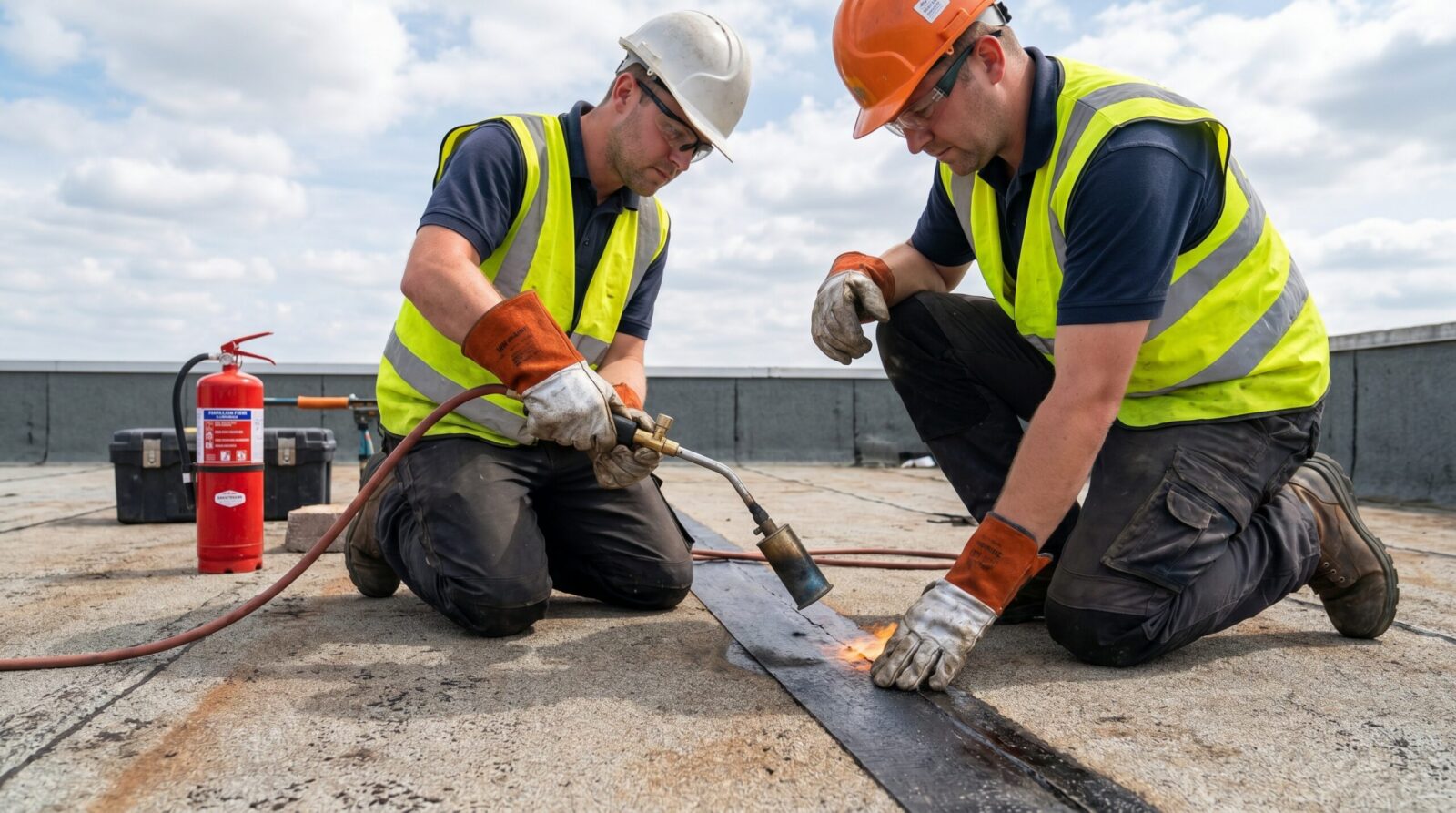
Installation methods vary between torch-applied systems that use propane flames to activate adhesives, cold-applied systems using solvent-based adhesives, and self-adhered membranes with factory-applied sticky backs. According to roofing-cop.com, this multi-layer design makes modified bitumen particularly suitable for South Florida’s flat and low-slope commercial buildings because it handles thermal movement better than single-layer systems.
The reinforcement materials, whether fiberglass or polyester, help the membrane resist punctures from debris while maintaining flexibility during temperature swings. This combination of durability and flexibility explains why modified bitumen remains popular for South Florida commercial properties, though it also means repairs require understanding the specific membrane type and installation method used on your roof.
Signs your modified bitumen roof needs repair
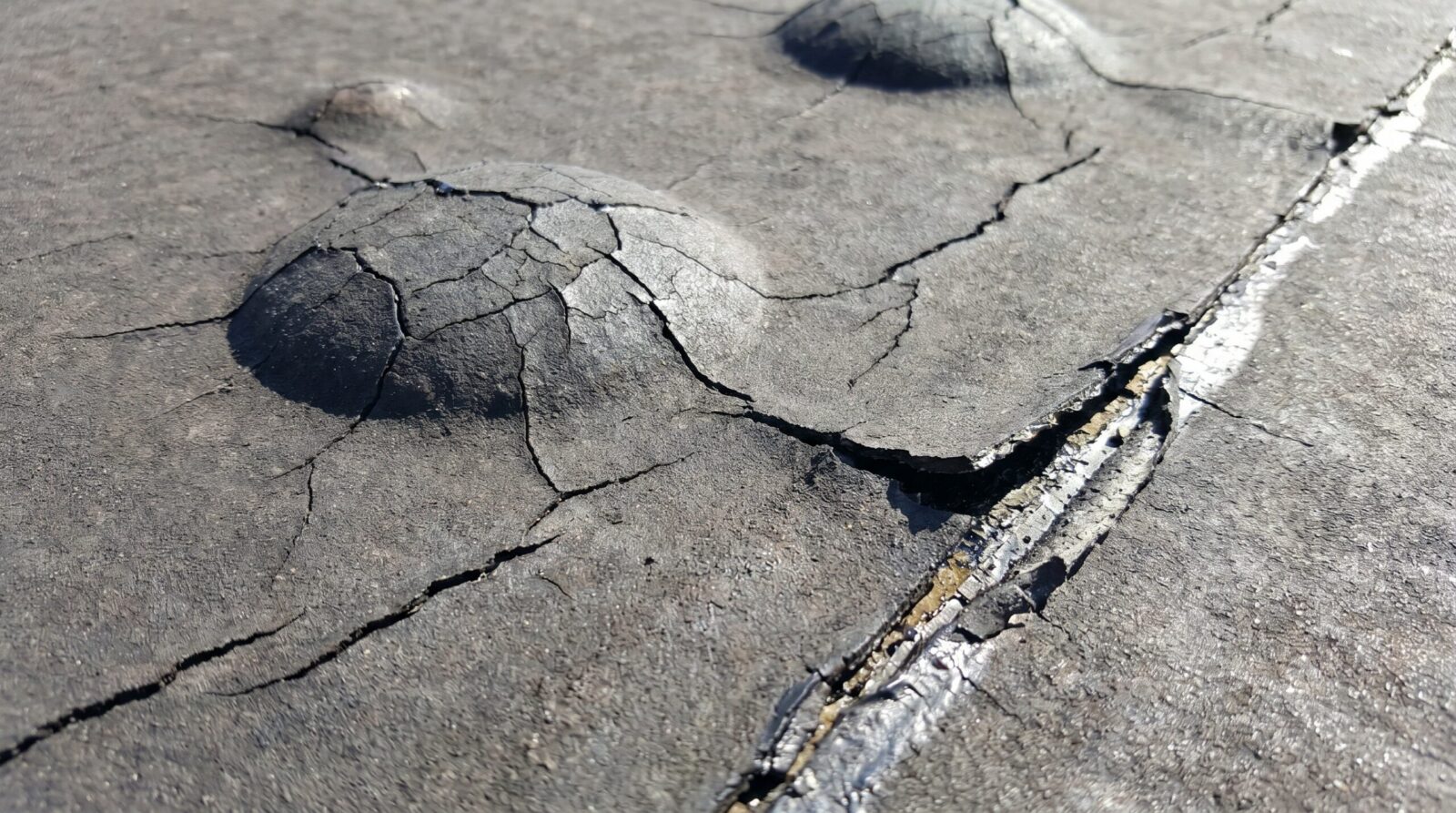
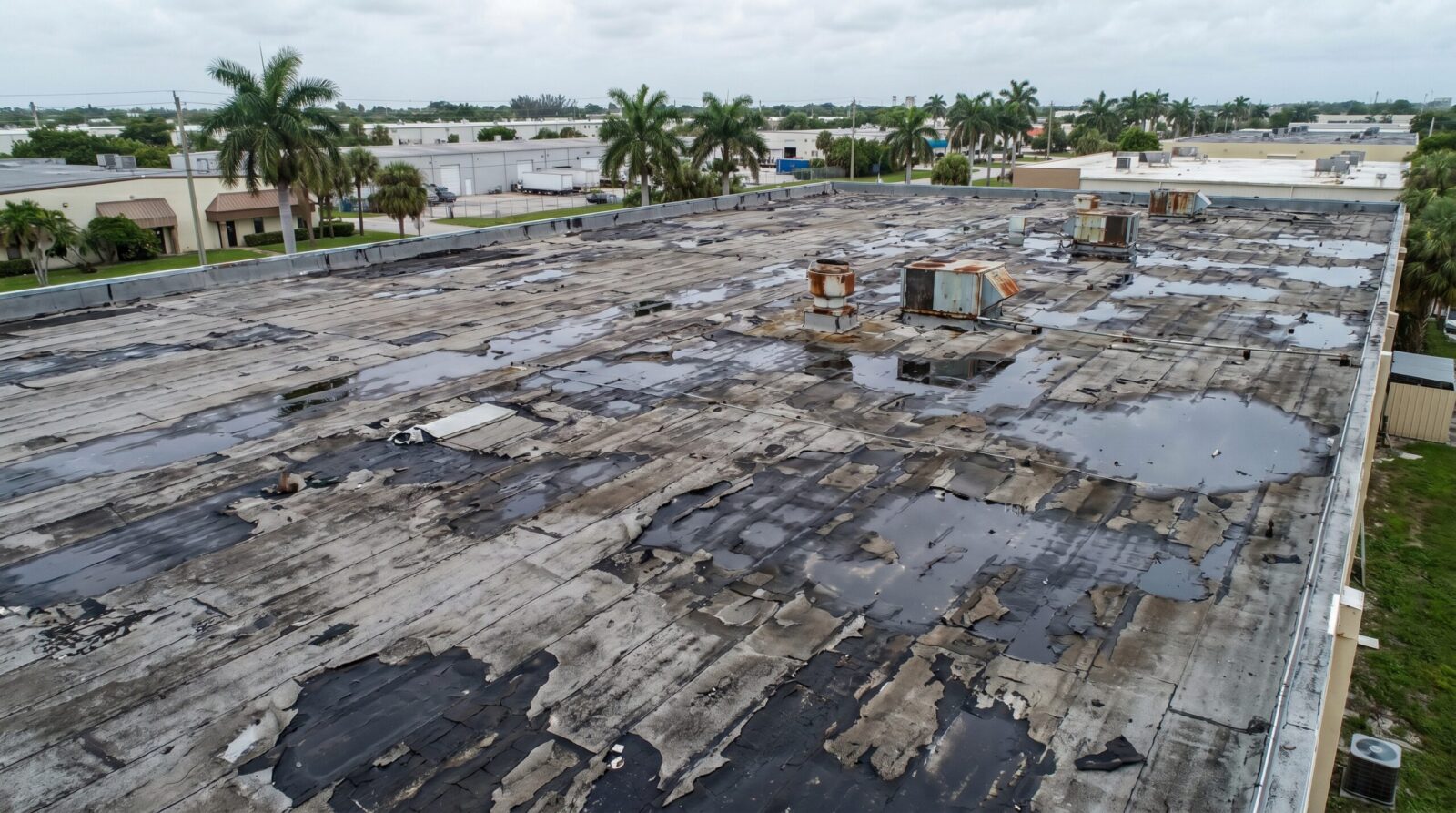
Recognizing damage early prevents small issues from becoming expensive structural problems. External signs include visible cracks or splits in the membrane surface, raised blisters that feel soft underfoot, and loose or separated seams where membrane edges have pulled apart. shieldlineroofing.com notes that ponding water remaining on the roof for more than 48 hours after rain indicates drainage problems that accelerate membrane degradation.
Interior warning signs often appear before roof damage becomes visible from above. Water stains on ceilings, peeling paint near exterior walls, and musty odors suggesting mold growth all point to membrane failures allowing moisture penetration. You might also notice damp insulation in mechanical rooms or storage areas directly below the roof.
Age and maintenance history provide additional context for repair urgency, especially when considering membrane roof replacement costs. Roofs approaching 15-20 years of service life become more susceptible to multiple failure points, especially if previous repairs were temporary patches rather than proper membrane restoration. Properties in coastal areas like Jensen Beach, Port St. Lucie, and Palm Beach Gardens that have experienced multiple hurricanes or severe storms should receive extra attention, as wind uplift and debris impact can create hidden damage that worsens over time.
South Florida Insight: Hurricane season brings unique challenges, with palm fronds and other debris creating punctures that may not leak immediately but compromise membrane integrity during the next storm cycle.
Step-by-step modified bitumen repair process
The universal repair process begins with thorough inspection to locate all damage, not just obvious leaks. Water travels along the roof deck before finding entry points, so the visible interior damage rarely sits directly below the actual membrane failure. pitchroofing.com emphasizes that cleaning comes next, removing all debris, dirt, and loose granules from the repair area using stiff brushes and mild soap if necessary.
Surface preparation requires complete drying before any repair materials can be applied. South Florida’s humidity makes this step particularly critical, as trapped moisture under patches leads to future blistering and adhesion failure. Use rags, air blowers, or allow extended sun drying time, sometimes returning the next day to ensure the area is completely dry.
Cutting and priming follow once the surface is clean and dry. Remove loose or damaged membrane material with a sharp utility knife, then apply appropriate primer to help new materials bond to the existing roof. The patch installation uses roofing cement as a base layer, followed by the actual membrane patch cut at least 6 inches larger than the damaged area on all sides.
Edge sealing completes the repair process. Apply roofing cement around the patch perimeter and embed loose granules in the wet cement for UV protection. roofingatitsbestllc.net recommends using a hand roller to eliminate air bubbles and ensure complete adhesion between the patch and existing membrane.
Common repair types and when to call professionals
Punctures and tears from debris impact represent the most straightforward DIY repairs when damage is small and easily accessible. Clean the area, apply primer, install a patch with proper overlap, and seal the edges. However, punctures near roof edges, around equipment, or in areas with ponding water require professional assessment to address underlying issues.
Blisters occur when air or moisture gets trapped between membrane layers, creating raised bubbles that eventually crack and leak. The repair process involves cutting the blister open, allowing complete drying, applying roofing cement to level the surface, and installing a patch. Large blisters or multiple blisters across the roof indicate systemic moisture problems requiring professional moisture scanning and insulation replacement.
Seam failures and fishmouths happen when membrane edges separate or create open pockets. These repairs often require re-adhering unbonded portions before patching, and torch-applied systems may need professional re-torching for proper sealing. roofingcanada.com notes that seam repairs must extend beyond the original lap width to prevent future separation.
Ponding water represents a structural drainage issue that simple patching cannot fix. Professional solutions include improving roof slope with tapered insulation, clearing or adding roof drains, and addressing parapet wall flashing that may be directing water into low spots rather than away from the building.
| Repair Type | DIY Suitable | Professional Required | Typical Cost Range |
|---|---|---|---|
| Small punctures | Yes | No | $50-150 materials |
| Large blisters | Maybe | Recommended | $200-500 per area |
| Seam failures | No | Yes | $300-800 per section |
| Ponding issues | No | Yes | $1,000-5,000+ |
Safety Note: Torch-applied repairs require professional expertise and fire safety equipment. Never attempt torch work near dry vegetation, wooden structures, or without proper insurance coverage.
Maintenance strategies for South Florida modified bitumen roofs
Regular inspections twice yearly, ideally in spring and fall, help catch problems before they require expensive repairs. Post-storm inspections become critical in South Florida, where hurricane debris and wind uplift can create damage that worsens gradually. Look for loose granules, exposed membrane areas, and any changes in roof surface texture or color that might indicate UV degradation.
Drainage maintenance prevents the ponding water that destroys modified bitumen faster than any other factor. Clean gutters and roof drains after every major storm, removing leaves, branches, and the sand that coastal South Florida winds deposit on roofs. Verify that water flows properly toward drains rather than collecting in low spots where it can sit for days after heavy rains.
Protective measures extend roof life significantly in South Florida’s intense sun. Reflective coatings applied every 5-7 years reduce surface temperatures and UV damage, while proper vegetation management prevents root penetration and reduces debris accumulation. Trim overhanging branches before hurricane season to minimize impact damage, and consider professional coating application for roofs showing early signs of surface weathering.
Professional maintenance partnerships provide the expertise needed for complex inspections and preventive treatments. Qualified contractors can perform infrared moisture scanning to detect wet insulation before it causes structural damage, apply protective coatings correctly, and identify potential problems during routine maintenance visits when repairs are still simple and affordable.
Modified bitumen flat roofs serve South Florida properties well when properly maintained and promptly repaired. Understanding the difference between simple patches you can handle and complex repairs requiring professional expertise helps protect your investment while avoiding costly mistakes. Regular maintenance, quick response to visible damage, and professional partnerships for major issues will keep your roof performing reliably through many hurricane seasons.
For comprehensive roof inspection and repair services throughout Martin, St. Lucie, and Palm Beach counties, FoxHaven Roofing Group provides experienced modified bitumen specialists who understand local climate challenges and building code requirements. Our family-run company has been serving South Florida homeowners from our Jensen Beach and Palm Beach Gardens offices, offering 5-star rated service backed by BBB accreditation and Owens Corning certification. Contact us for a thorough assessment and customized maintenance plan that protects your property investment.