

How to Tell if Wind or Water Damaged Your Roof
January 8,2026
After a Florida storm, seeing shingles in your yard or a water stain on your ceiling brings immediate questions. Was it wind or water that caused the damage? And more importantly, will your insurance cover the repairs?
Understanding the difference is crucial for your insurance claim. At FoxHaven Roofing, we help South Florida homeowners identify storm damage and navigate the claims process with confidence. Here’s what you need to know.
Why Does the Cause of Roof Damage Matter for Insurance?
Your homeowners insurance policy treats wind and water damage differently. The source of the damage, not just the result, determines what’s covered.
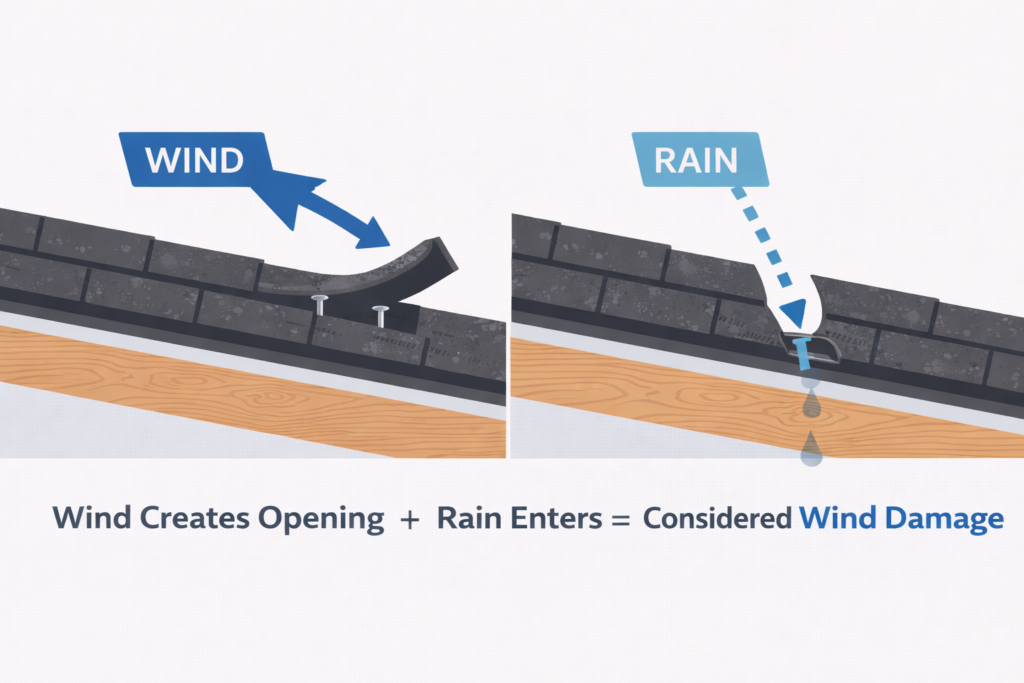
Wind damage happens when high winds tear, lift, or remove roofing materials. Water damage occurs when rain gets through your roof. The situation gets tricky when they happen together. If wind creates an opening in your roof and water then enters, the entire event is typically considered wind damage. However, if water leaks in because your roof was old or poorly maintained, your claim may be denied.
Insurance Tip: If wind creates an opening that lets rain in, it’s usually considered wind damage. But if your roof was already old and leaky, your insurance may not cover the water damage. The original cause is what matters most.
How Can You Tell If Wind Damaged Your Roof?
You can often spot signs of wind damage from the ground. Look for shingles that are missing entirely, or that appear lifted, curled, or out of place. After a storm, check your gutters for a heavy buildup of granules, the sand-like coating from your shingles, which indicates they took a beating.
Wind can also bend, lift, or tear off the metal flashing around chimneys, vents, and roof edges. Look for dents or punctures from flying branches and debris. Because some damage can be hard to see, a professional inspection is the safest way to assess the full impact on your roof.
What Are the Telltale Signs of Wind-Damaged Shingles?
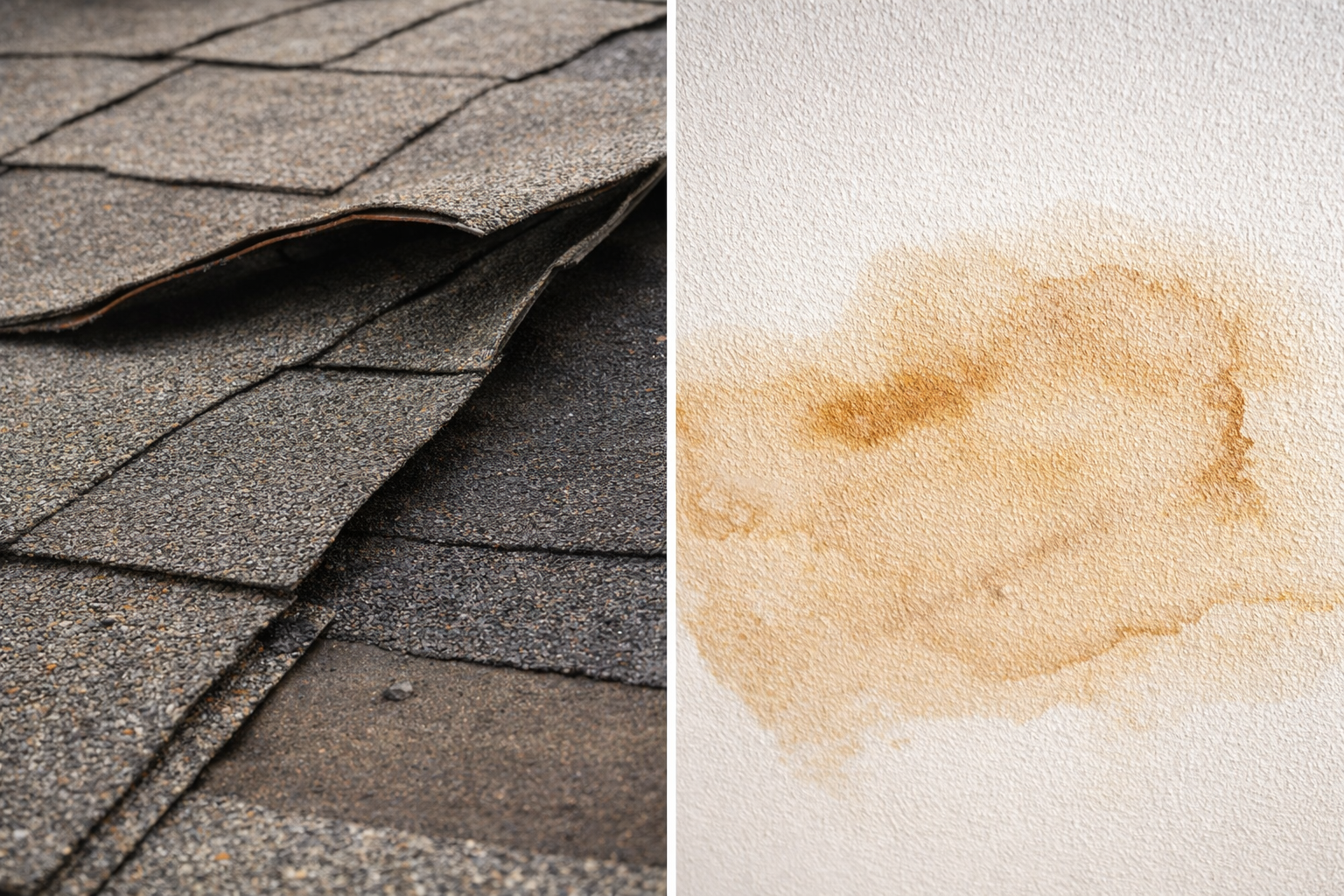
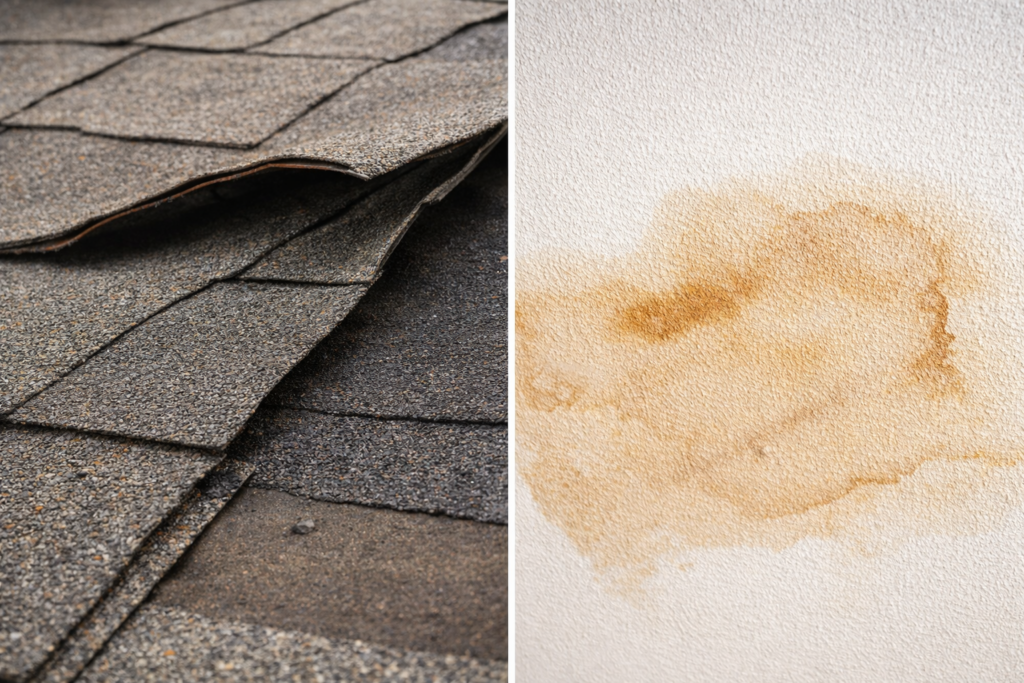
When we inspect a roof after a storm, we look for specific clues that adjusters recognize. Wind-damaged shingles often show a visible crease or fold where the wind bent them back. Instead of clean lines, you might see shingles with torn, ragged edges.
In some cases, high winds can lift a shingle enough to expose the nail line underneath, which is a clear sign of wind uplift. If you find pieces of shingles in your yard, wind likely tore them directly from your roof.
Homeowner Tip: Document everything! Take clear photos and videos of any damage you find, both inside and out. This evidence is vital for your insurance claim.
What Are the Signs of Water Damage Inside Your Home?
Unlike wind damage, the first signs of a roof leak often appear inside your home. A classic sign of water intrusion is a brown, yellow, or rust-colored stain spreading across your ceiling. If you see active dripping or notice puddles during or after rain, your roof’s protective barrier has been compromised.
Don’t ignore a damp, musty smell in your attic or upper rooms, as it points to hidden moisture. Over time, this exposure can cause your ceiling or roof deck to feel soft or begin to sag. In Florida’s humid climate, even a small leak can lead to mold and wood rot, so addressing it quickly is key to protecting your home and family.
Will Insurance Cover Wind Damage to My Roof?

Most Florida homeowners insurance policies cover wind damage, especially when it is sudden and accidental, like shingles being torn off during a tropical storm. However, coverage typically does not extend to damage resulting from old age, gradual wear and tear, or neglected maintenance.
Check Your Policy: Many Florida insurance policies have a separate, and often higher, deductible for wind or hurricane damage. Review your policy now so you know what to expect before you file a claim.
Does Insurance Cover Water Damage from a Leaky Roof?
Coverage for water damage depends entirely on what caused the leak. Water intrusion is usually covered if it’s caused by sudden storm damage, such as a fallen tree branch puncturing your roof or wind tearing off flashing.
On the other hand, leaks that result from an aging roof or poor maintenance are generally not covered. Your insurance adjuster will focus on one key question: was the damage sudden and accidental, or was it the result of a pre-existing issue?
What Should You Do After Finding Storm Damage?
If you discover storm damage, your first step is to document everything with clear photos and videos of the damage inside and out. Next, protect your home from further harm by carefully placing a tarp over any significant openings. Keep your receipts for temporary repairs, as they are often reimbursable.
Once the area is secure, contact your insurance company to report the claim promptly. Then, schedule a professional roof inspection with a trusted contractor. We can identify the full extent of the damage and provide documentation to support your claim. Finally, it’s wise to wait for your insurance adjuster to complete their evaluation before signing any contracts for major repairs.
Let FoxHaven Roofing Help You Move Forward
Figuring out what damaged your roof and how to handle the insurance process can feel overwhelming after a storm. That’s where we come in.
At FoxHaven Roofing, our team will perform a thorough inspection, identify the exact cause of the damage, and provide clear documentation. We’ve guided countless South Florida homeowners through this process and understand what it takes to file a successful claim. We’ll explain what happened to your roof in plain language, so you can make your next move with confidence.
If you’ve noticed storm damage, contact FoxHaven Roofing for a professional inspection. We’re here to help you protect your home.
