


Granular Loss on Roof Shingles and How to Repair It
Installation & Care
October 10,2025
Your roof shingles protect your home from weather damage, but over time they can lose their protective granules. If you have noticed bare spots on your shingles or granules collecting in your gutters, you are dealing with granule loss. This common roofing issue can compromise your roof’s ability to shield your home from UV rays and moisture.
Granule loss is a natural part of shingle aging, but addressing it promptly can add years to your roof’s lifespan and prevent costly water damage.
In this guide, you will learn exactly what causes granule loss, how to repair it yourself, and when to bring in professional help. Whether you are a DIY enthusiast or simply want to understand your roof better before calling a contractor, this article will give you the knowledge you need.
What causes shingle granule loss
Understanding why your shingles lose granules helps you prevent future damage and make informed repair decisions. Several factors contribute to this issue, and identifying the cause in your situation will guide your next steps.
Normal wear occurs on all asphalt shingles over time, but premature granule loss often signals installation problems or storm damage that may be covered by insurance.
Here are the most common causes of granule loss:
- Natural aging: As shingles reach 15-20 years old, the adhesive bonding granules to the asphalt weakens
- Severe weather: Hail, heavy rain, and strong winds physically knock granules loose
- Poor installation: Improperly installed shingles may have granules that detach prematurely
- Foot traffic: Walking on your roof, especially in hot weather, can dislodge granules
- Manufacturing defects: Rarely, shingles leave the factory with weak granule adhesion
If your roof is relatively new (under 10 years) and showing significant granule loss, you may have a warranty claim or insurance coverage. For older roofs, some granule loss is expected, but extensive bare spots mean it is time for repairs or replacement.
Proper shingle roof maintenance can help you catch granule loss early before it leads to leaks. Regular inspections, especially after storms, allow you to address small problems before they become expensive repairs.
How to repair granule loss on roof shingles
Repairing granule loss yourself is possible if the damage is limited to a few shingles and you are comfortable working on a roof. This section walks you through the complete repair process with the tools, materials, and step-by-step instructions you need.
Tools and materials checklist
Before starting your repair, gather everything you will need. Having all materials on hand prevents dangerous trips up and down your ladder.
| Item | Purpose |
|---|---|
| Safety gear (goggles, gloves, harness) | Protect yourself from falls and debris |
| Replacement shingles | Match your existing roof material |
| Roofing cement | Secure and seal shingles |
| Putty knife and utility knife | Apply cement and trim shingles |
| Wire brush and nail gun | Clean area and fasten shingles |
Quality roofing cement creates a watertight seal that lasts years. Choose products specifically designed for your shingle type and local climate conditions.
Step-by-step repair process
Follow these steps carefully to ensure a proper repair that will last:
- Inspect and identify damage: Walk your roof carefully to locate all areas with granule loss, looking for discolored or bare asphalt
- Clean the affected area: Use a wire brush to gently remove loose granules and debris, creating a clean surface for repair
- Remove damaged shingles: Carefully lift the edges of severely damaged shingles and remove roofing nails with a pry bar
- Prepare replacement shingles: Slide new shingles into position, ensuring they match surrounding shingles in color and style
- Apply roofing cement: Spread a generous layer of cement on the underside of replacement shingles for a strong bond
For minor granule loss where the shingle is still intact, you can apply a thin coat of roofing cement over the bare spots. This provides temporary protection while you plan for eventual replacement. Understanding what shingles are made of helps you choose compatible repair materials.
If you are working with architectural shingles, take extra care to match the dimensional profile during repairs. The installation technique differs slightly from standard three-tab shingles.
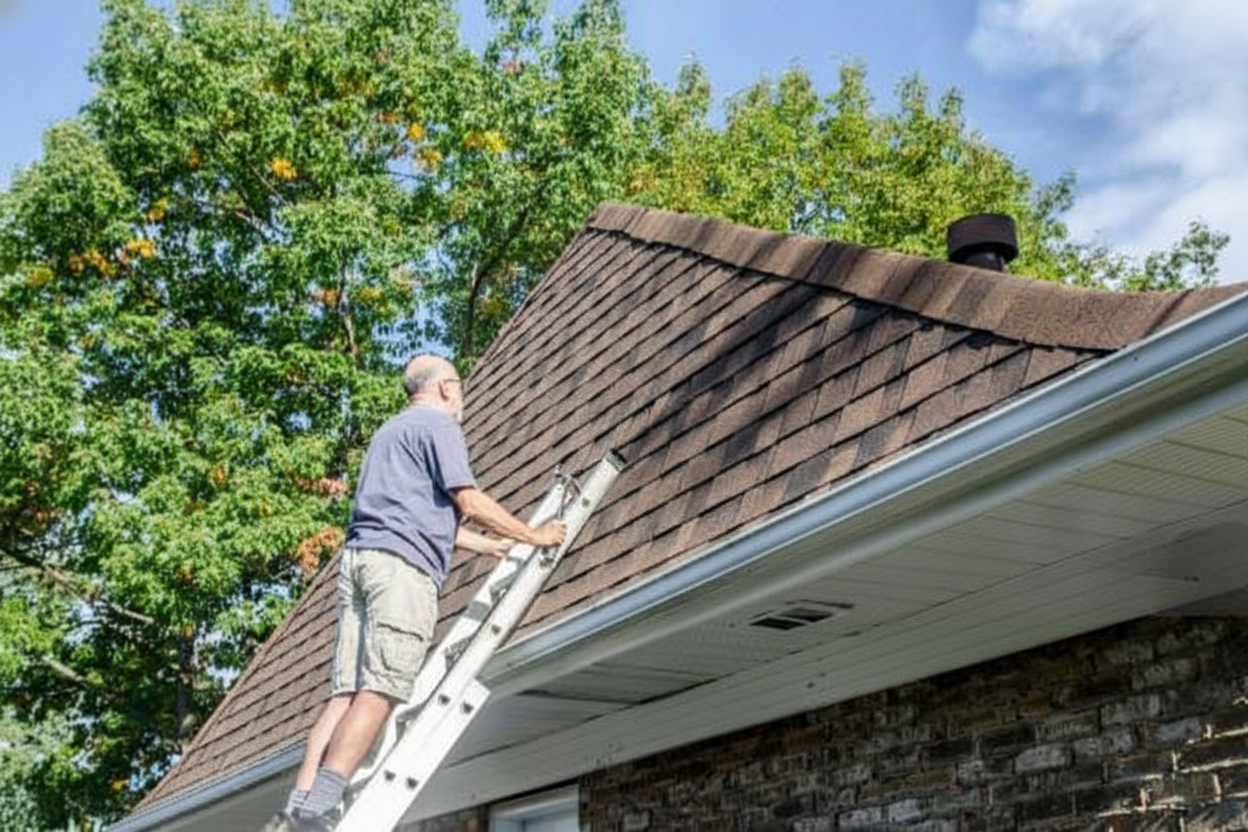
Alt text: Homeowner performing DIY roof shingle repair work, applying roofing cement to damaged shingles
After repairs, check your work from the ground to ensure the new shingles blend with your existing roof. Mismatched repairs stand out and can affect your home’s appearance and value.
When to call a professional roofer
While small repairs are manageable for experienced DIYers, certain situations require professional expertise. Knowing when to call in the pros saves you time, money, and potential safety hazards.
You should contact a roofing contractor when:
- Extensive damage: More than 30% of your roof shows granule loss or bare spots
- Steep or high roofs: Pitches above 6/12 or roofs over two stories pose serious fall risks
- Structural concerns: Sagging, soft spots, or visible damage to roof decking indicates deeper problems
- Age-related wear: Roofs over 20 years old often need replacement rather than repairs
- Storm damage: Insurance claims require professional documentation and estimates
Professional roofers have the safety equipment, experience, and warranties that protect your investment. They can also identify hidden problems like inadequate ventilation or failing ridge cap shingles that contribute to premature granule loss.
If you are considering impact resistant shingles or hurricane-rated shingles for your replacement, a professional can help you choose the right product for your climate and budget. Many modern shingles offer superior granule retention compared to older products.
Understanding how long shingles last helps you make informed decisions about repair versus replacement. Sometimes investing in a new roof makes more financial sense than repeatedly repairing an aging system.
FAQ
How much granule loss is normal on roof shingles?
Can you repair shingles without replacing them?
What happens if you ignore granule loss on roof shingles?
