

How 3D Modeling Helps Roof Planning
Roofing
Structure & Design
January 9,2026
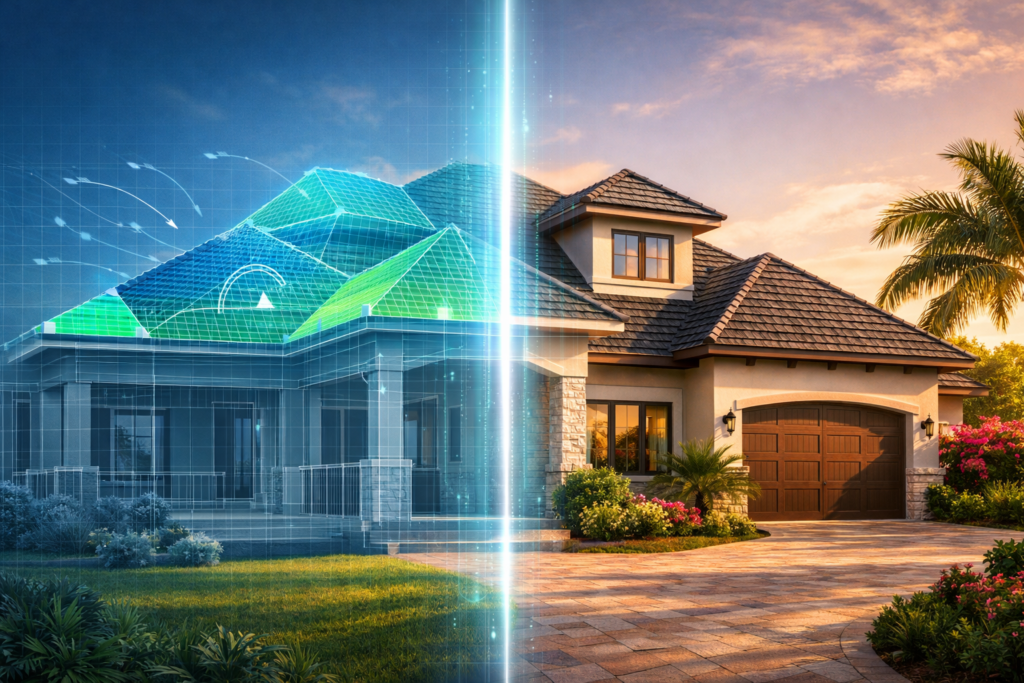
3D roof modeling transforms how you plan and visualize your roofing project, giving you the precision and clarity needed for Florida’s demanding climate.
Think of 3D roof modeling like getting a detailed preview of your finished roof before construction begins. Just as you wouldn’t buy a car without seeing it first, modern roofing technology lets you see exactly how your new roof will look, perform, and protect your property, eliminating costly surprises and ensuring you get the hurricane-resistant roof your Florida home needs.
Why Does 3D Roof Modeling Matter for Your Florida Roof?
Your roof faces unique challenges in South Florida’s climate. Traditional roof planning methods—basic sketches and rough measurements—may not deliver the precision these conditions demand. 3D roof modeling delivers higher measurement accuracy, compared to traditional methods that introduce calculation errors and require dangerous roof climbing. When your roof must protect against high category hurricanes, that level of precision is essential protection for your largest investment.
Modern roof 3D models also catch problems before construction begins, optimize material orders to save you money, and help you visualize different roofing materials and colors on your actual home. For complex Florida roof designs with multiple slopes, dormers, and hurricane-resistant features, 3D technology handles calculations that might have otherwise posed a challenge.
Smart Shopping: 3D visualization lets you “try on” different roofing materials and colors risk-free, just like shopping online with a perfect return policy.
What Problems Does 3D Roof Design Solve Before Construction?
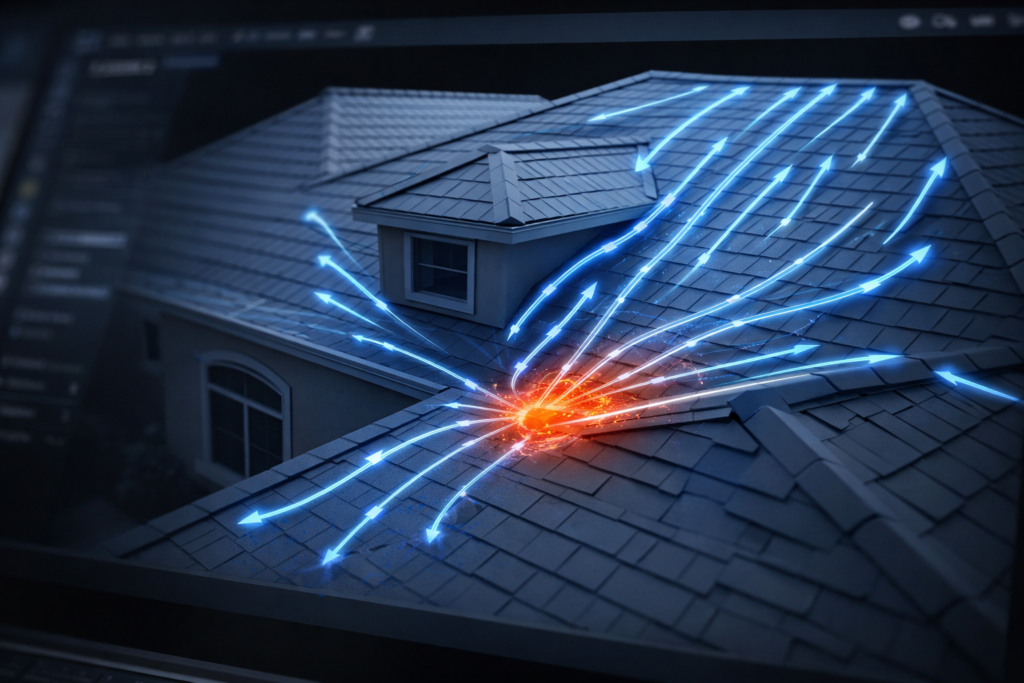
We often find that homeowners discover costly problems only after construction begins: drainage issues that cause ponding, structural conflicts with HVAC systems, or design elements that don’t meet Florida’s wind load requirements. Roof design using 3D technology identifies these issues while changes are still inexpensive to make.
For drainage, 3D modeling simulates water flow patterns and identifies potential ponding areas before installation. The Florida Building Code requires roofs to drain within 48 hours of precipitation, and 3D planning ensures your roof meets these requirements from day one.
The technology also excels at complex geometries common on South Florida homes: valleys, hip roofs, dormers, and multi-slope transitions that challenge traditional planning methods. 3D software automatically calculates precise angles, slopes, and structural reinforcements, preventing construction errors that could compromise your roof’s hurricane resistance.
How Accurate Are Modern Roof 3D Models?
Independent testing confirms that modern 3D roof modeling achieves 98%+ accuracy for measurements, with leading platforms guaranteeing 99% precision. To put this in perspective, traditional manual measurements often include calculation errors, transcription mistakes, and safety risks from roof climbing that newer technology eliminates entirely.
For material ordering, this accuracy translates directly to cost savings. Roof planning with precise measurements eliminates the waste and shortages that plague projects based on rough estimates. You order exactly what you need for your specific roof configuration, avoiding both material waste and project delays.
What Exactly Does 3D Roof Modeling Provide?
Comprehensive 3D roof modeling for South Florida properties addresses our region’s specific requirements: wind load calculations for hurricane resistance, cool roof specifications for energy efficiency, and compliance with HVHZ (High Velocity Hurricane Zone) building codes.
The technology provides facet-by-facet measurements, pitch calculations for each roof section, and material specifications meeting Florida Product Approval requirements. For Miami-Dade and Broward counties, models include Miami-Dade Notice of Acceptance (NOA) certified materials and installation details like the six nails per shingle required in high-wind zones.
Advanced platforms integrate thermal imaging for moisture detection, AI-powered damage assessment for insurance claims, and energy efficiency modeling for cool roof compliance. You receive detailed reports showing what your roof will look like, and also how it will perform in Florida’s challenging environment.
Is 3D Roof Modeling Worth It for Your Project?
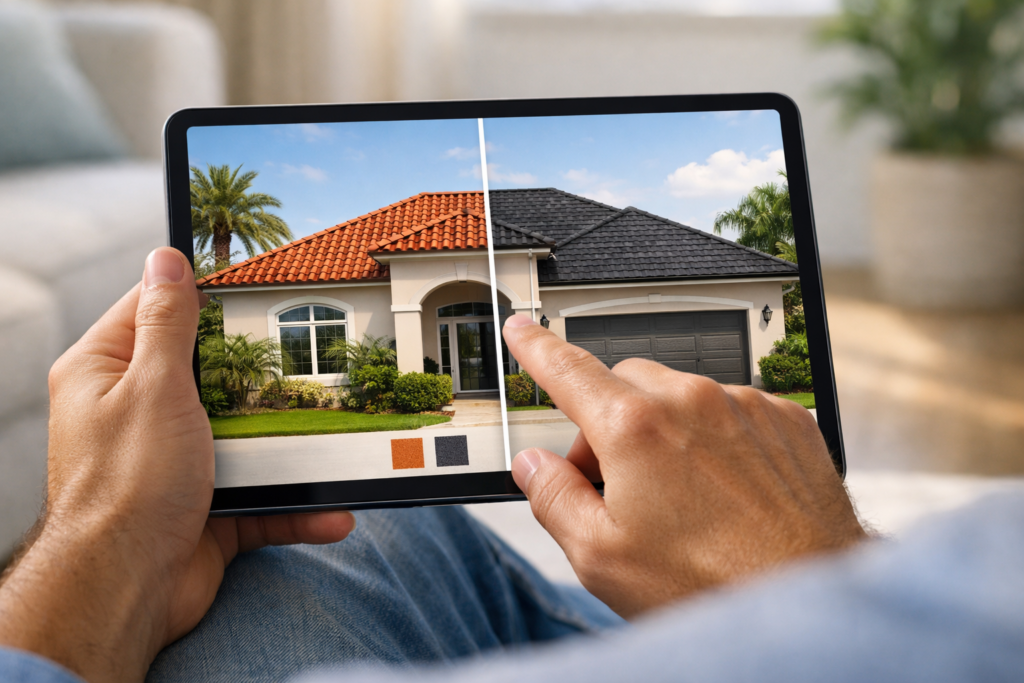
If you’re investing in a roof that must protect your South Florida property from hurricanes, extreme heat, and salt air corrosion, 3D modeling provides peace of mind that traditional methods cannot match. The technology ensures your roof meets Florida’s stringent building codes, optimizes materials for our climate, and lets you see your finished roof before construction begins.
For complex roof designs with multiple slopes, dormers, or architectural features, 3D planning prevents costly errors that could compromise both appearance and performance. For insurance claims after storm damage, 3D documentation accelerates approval processes and ensures accurate replacement specifications.
Most importantly, 3D roof modeling transforms a stressful major purchase into a confident decision. You know exactly what you’re buying, how it will look, and why it’s engineered for Florida’s challenging conditions.
Ready to Plan Your Florida Roof with 3D Precision?
At FoxHaven Roof, we ensure every roof we install meets the exacting standards Florida’s weather demands. Our planning process helps you visualize your new roof, understand your options, and make informed decisions about protecting your most valuable asset.
Whether you’re planning a new roof installation or replacing hurricane-damaged roofing, our team combines decades of South Florida roofing experience with cutting-edge technology. We’ll show you exactly how your new roof will look, perform, and protect your property, before the first shingle is installed. Contact FoxHaven Roof today to experience the difference that 3D roof modeling makes for your South Florida roofing project.
