

Essential Roofing Tools Every Homeowner Needs in 2025
Inspection & Repair
Roof Maintenance
October 16,2025
Essential Roofing Tools Every Homeowner Needs in 2025
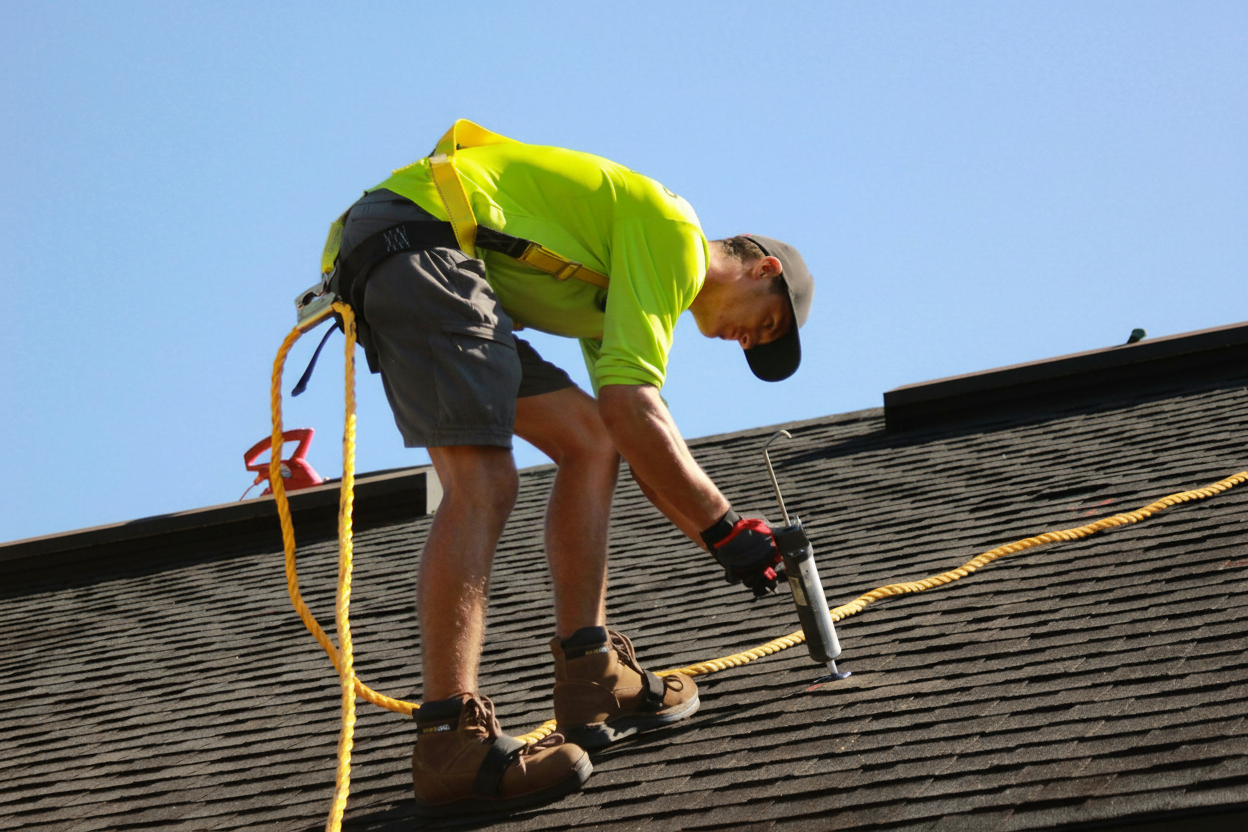
Alt text: Professional roofer wearing safety harness and non-slip boots while working on residential roof with proper tools
Keeping your roof in top condition doesn’t have to be overwhelming. With the right tools and a little know-how, you can handle basic repairs and maintenance tasks that protect your home from weather damage and extend your roof’s lifespan. Whether you’re planning a quick shingle replacement or conducting routine inspections, having quality roofing tools makes all the difference.
Homeowners who invest in basic roofing tools can save hundreds of dollars annually by handling minor repairs themselves instead of calling professionals for every small issue.
This guide walks you through the must-have roofing tools for 2025, organized by purpose and skill level. You’ll learn which tools keep you safe, which ones tackle repairs efficiently, and which maintenance equipment prevents costly problems down the road. Understanding proper roof maintenance starts with having the right equipment.
Safety equipment you need before starting any roof work
Before you climb onto your roof, safety must come first. Working at heights creates serious risks, and proper protective gear isn’t optional. Many homeowners skip safety equipment to save money or time, but one accident can cost far more than any tool investment.
Falls from roofs account for over 30% of construction-related injuries each year. A quality safety harness reduces this risk by more than 90%.
Here are the non-negotiable safety tools:
- Roofing harness with anchor points: Keeps you securely attached to the roof structure and prevents dangerous falls
- Non-slip roofing boots: Provides superior grip on wet or angled surfaces
- Hard hat: Protects against falling tools, debris, and overhead hazards
- Heavy-duty work gloves: Shields your hands from sharp materials, hot surfaces, and splinters
- Safety glasses: Prevents eye injuries from flying debris during cutting or hammering
When conducting any roof inspection, these safety items should be your first consideration. Never compromise on protective equipment, regardless of how simple the task seems.
Must-have tools for roof repairs and shingle work
Once you’re safely equipped, you need the right tools to actually complete your repair work. These five essential items handle most common roofing tasks that homeowners face, from replacing damaged shingles to installing new roofing materials.
Extension ladder with stabilizers gives you safe access to your roofline. Look for one rated for your weight plus 50 pounds of tools and materials. Ladder stabilizers attach to the top and prevent the ladder from slipping sideways or damaging your gutters.
A roofing nail gun transforms tedious manual work into quick, efficient installation. Manual hammering is exhausting and time-consuming when you’re installing multiple shingles. A pneumatic or cordless roofing nail gun drives nails consistently at the proper depth, speeding up your work significantly. For occasional use, a cordless model offers the best balance of power and convenience.
Flat pry bars remove damaged shingles with precision. A flat pry bar (also called a wonder bar) slides under old shingles and lifts nails without damaging surrounding materials. This tool is essential for any roof repair project.
Your roofing hammer with gauge serves double duty for installation and removal. A specialized roofing hammer includes a built-in gauge that helps you position nails at the correct spacing and depth. The hatchet-style blade on most roofing hammers also cuts shingles cleanly when needed.
Finally, a chalk line tool ensures professional results. Straight lines are crucial for professional-looking shingle installation. A chalk line tool snaps perfectly straight reference lines across your roof surface, ensuring each row aligns properly with the previous one.
Professional roofers complete shingle installations 3 times faster using nail guns compared to manual hammering, with more consistent results.
| Tool | Primary Use | Skill Level | Estimated Cost |
|---|---|---|---|
| Extension Ladder | Roof access | Beginner | $150-300 |
| Roofing Nail Gun | Fastening shingles | Intermediate | $200-500 |
| Flat Pry Bar | Removing old materials | Beginner | $15-30 |
| Chalk Line Tool | Layout and alignment | Beginner | $10-25 |
Maintenance tools that prevent expensive problems
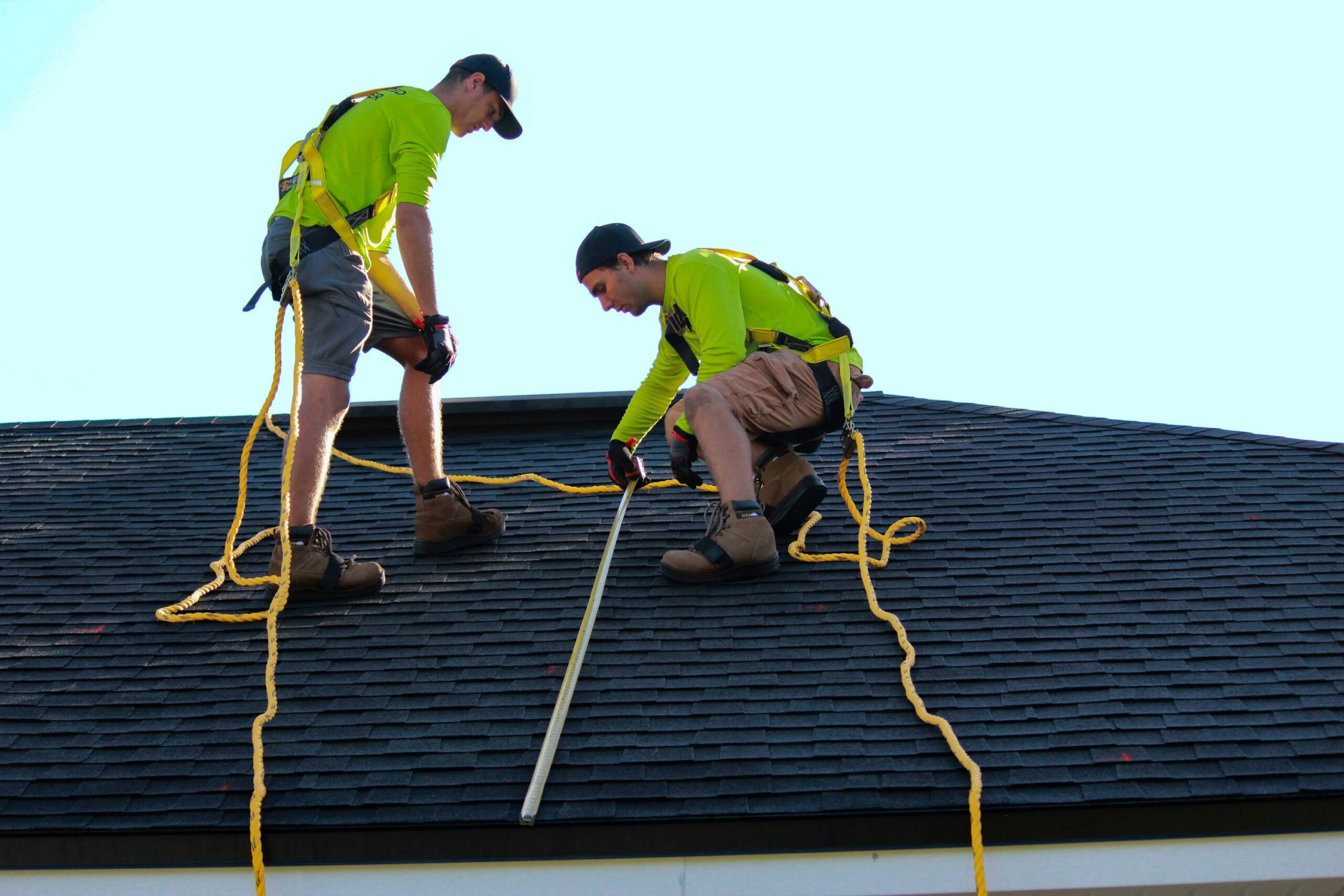
Alt text: Roofer using inspection tools and maintenance equipment to check roof condition and clear debris
Prevention beats repair every time. Regular maintenance catches small issues before they become major expenses. After dealing with emergency roof repairs, most homeowners wish they’d invested in preventive maintenance earlier.
A leaf blower clears debris from roof surfaces and valleys where moisture collects. Accumulated leaves and branches trap water against your roof, accelerating wear and promoting algae growth. Regular clearing extends your roof’s life significantly.
Your gutter scoop prevents water damage before it starts. Clogged gutters cause water overflow that can lead to roof leaks and foundation problems. A curved gutter scoop removes leaves and buildup efficiently.
An extendable inspection mirror reveals hidden problems early. This simple tool lets you examine hidden areas under eaves and around chimneys without climbing into dangerous positions. Spot problems like loose flashing or damaged shingles before they cause leaks.
A high-powered LED flashlight makes attic inspections thorough. Check attic spaces for water stains, adequate ventilation, and insulation problems. Early detection of moisture intrusion prevents expensive structural damage.
Your digital camera or smartphone documents changes over time. Photograph your roof condition quarterly and after major storms. This documentation proves invaluable for insurance claims and helps you track deterioration patterns.
Following Florida roof maintenance best practices means inspecting your roof quarterly and after major storms. These simple tools make that process manageable without professional help each time.
When to use your tools versus calling professionals
Having the right equipment empowers you to handle basic maintenance and minor repairs confidently. You can tackle tasks like replacing a few damaged shingles, clearing gutters, conducting visual inspections, and sealing small cracks around flashing. These straightforward jobs save money and help you stay connected to your home’s condition.
However, some situations require professional expertise. When you’re facing extensive damage across large roof sections, working on steep or high roofs above two stories, dealing with structural issues like sagging or water damage, or handling commercial roof maintenance, it’s time to call in the experts. Professional roofers have specialized equipment, insurance coverage, and experience that protect both you and your investment.
Understanding the difference between DIY roof repair and professional work protects both your safety and your investment. Consider factors like roof pitch, height, extent of damage, and your comfort level with heights before starting any project.
Before making major decisions about roof repairs versus replacement, get a professional assessment. Sometimes what looks like a simple fix masks deeper problems that only trained eyes can spot. At Foxhaven, we help homeowners make informed decisions about their roofing needs. Our team brings years of experience to every project, whether you need guidance on a repair you’re planning or full professional service.
Contact Foxhaven for a thorough roof inspection and honest recommendation about the best path forward for your roof. We believe in empowering homeowners with knowledge while being ready to step in when expertise matters most.