


Commercial Roof Maintenance Guide 2026: 8 Essential Tips
Inspection & Repair
Roof Maintenance
October 2,2025
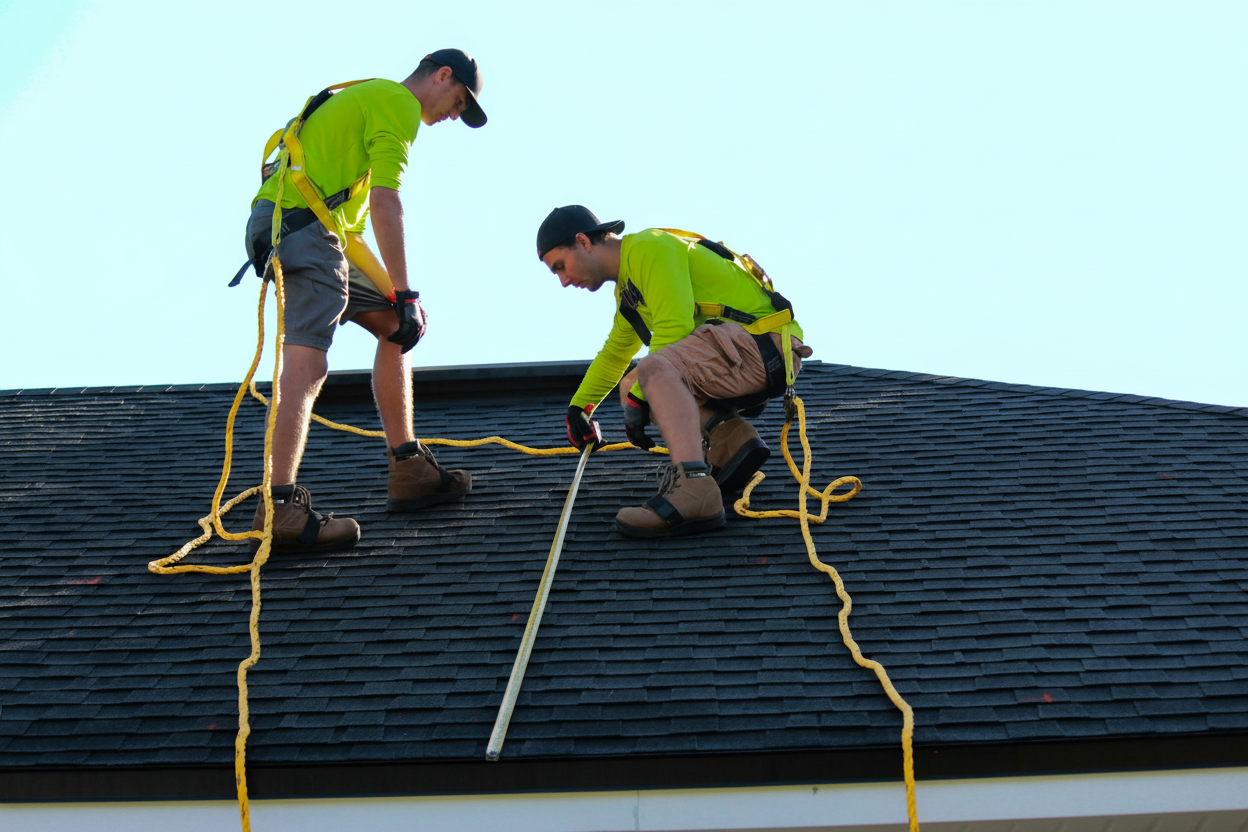
Alt text: Professional maintenance workers inspecting a commercial roof with safety equipment, showing proper maintenance procedures
Your commercial roof protects everything that matters to your business. Yet many property owners only think about their roof when something goes wrong. Regular maintenance keeps your operations running smoothly and prevents expensive emergency repairs that disrupt your business.
Regular roof maintenance can extend your roof’s lifespan by 10-15 years and reduce repair costs by up to 50% compared to reactive approaches.
This guide walks you through eight practical maintenance practices that will keep your commercial roof in peak condition. Whether you manage a single property or oversee multiple locations, these strategies will help you protect your investment and maintain a worry-free workplace.
Why commercial roof maintenance matters for your business
Think of your roof like the foundation of your daily operations. When it fails, everything stops. Water damage can destroy inventory, disrupt employee productivity, and force temporary closures that hurt your bottom line.
A proactive maintenance approach saves you money in three ways. First, you catch small problems before they become major repairs. Second, you extend your roof’s service life significantly. Third, you maintain your building’s energy efficiency, which directly impacts your utility bills.
Most commercial roofs last 20-30 years with proper care, but without consistent maintenance, you might need replacement in half that time.
Most commercial roofs last 20-30 years with proper care. Without it, you might need replacement in half that time. The difference comes down to consistent attention and timely repairs. A comprehensive roof maintenance checklist helps you stay organized and ensures nothing gets overlooked.
Core maintenance practices that protect your investment
Schedule regular professional inspections. Book inspections twice yearly, ideally in spring and fall. These seasonal checks catch damage from winter storms and prepare your roof for extreme weather ahead. Professional inspectors spot issues you might miss, like subtle membrane deterioration or failing sealants.
Your inspector should provide detailed reports documenting your roof’s condition. Keep these records to track changes over time and maintain warranty compliance. If you are unsure what to expect, review a professional roof inspection checklist before your appointment.
Keep your roof surface clean and clear. Debris accumulation causes multiple problems. Leaves and branches trap moisture against your roofing material, accelerating deterioration. Standing water adds unnecessary weight and creates leak entry points. Organic matter feeds moss and algae growth that damages your roof’s protective layers.
Clean your roof quarterly at minimum, and always after major storms. Pay special attention to drains, scuppers, and low spots where debris collects. Remove any vegetation immediately, as roots can penetrate and compromise your waterproofing membrane.
Maintain your drainage system. Clogged gutters and downspouts are among the most common causes of commercial roof failure. Water that cannot drain properly pools on your roof, eventually finding its way through seams and penetrations. Regular gutter cleaning prevents this cascade of problems.
Inspect your entire drainage system monthly. Look for sagging gutters, loose fasteners, and areas where water overflows during rain. Address these issues promptly to prevent water damage to your roof and building exterior. Many property owners overlook this simple maintenance task, but it is one of the most cost-effective ways to protect your roof.
Professional gutter maintenance costs a fraction of water damage repairs and helps your roof drainage system function as designed.
Check and seal roof penetrations. Every pipe, vent, HVAC unit, and skylight creates a potential weak point in your roof. Flashings around these penetrations must remain properly sealed to prevent water infiltration. Inspect these areas during every maintenance visit.
Look for cracked sealant, loose flashing, or gaps where water could enter. Reapply sealant as needed and replace damaged flashings promptly. This preventive step stops leaks before they start and protects your interior from costly water damage. Understanding common signs that indicate you need a roof inspection helps you identify problems early.
Protective coatings and emergency preparedness
Apply protective roof coatings. Reflective roof coatings extend your roof’s life and improve energy efficiency. These coatings protect against UV radiation, which breaks down roofing materials over time. They also reduce heat absorption, keeping your building cooler and lowering cooling costs.
Coatings work best when applied before significant deterioration occurs. Consult with a roofing professional about the right coating type for your roof system. The upfront investment typically pays for itself through extended roof life and energy savings.

Alt text: Business owner and roofing contractor reviewing roof inspection report, discussing maintenance plan
Develop an emergency response plan. Roof leaks rarely happen at convenient times. Create a clear emergency plan before you need it. Document who to contact, where emergency supplies are stored, and how to minimize damage until professional help arrives.
Train your staff on emergency procedures. Run occasional drills so everyone knows their role during a roof emergency. Quick response limits damage and reduces repair costs. Keep contact information for emergency roofing services easily accessible. When you need immediate help, knowing what to do first during an emergency roof repair issue can minimize damage.
Documentation and financial planning
Document everything. Maintain detailed records of all inspections, repairs, and maintenance activities. These logs help you track your roof’s condition over time and identify patterns that might indicate larger problems. Documentation also proves warranty compliance and helps with insurance claims.
Your records should include dates, work performed, materials used, and contractor information. Photograph your roof regularly to create a visual history. This documentation becomes invaluable when planning repairs or budgeting for eventual replacement.
| Maintenance Task | Frequency | Estimated Cost per Visit | Annual Cost (10,000 sq ft) |
|---|---|---|---|
| Professional Inspection | Twice yearly | $500-$1,000 | $1,000-$2,000 |
| Gutter Cleaning | Quarterly | $200-$400 | $800-$1,600 |
| Debris Removal | Quarterly | $300-$500 | $1,200-$2,000 |
| Minor Repairs & Sealant | As needed | $500-$1,500 | $1,000-$3,000 |
| Protective Coating | Every 3-5 years | $3,000-$7,000 | $600-$2,333 (annualized) |
Budget for ongoing care and eventual replacement. Allocate funds annually for roof maintenance and repairs. This proactive budgeting ensures you can address problems immediately rather than deferring maintenance due to cost concerns. Delayed repairs almost always cost more in the long run.
Plan financially for eventual roof replacement. Commercial roofs have finite lifespans, and replacement represents a significant capital expense. Starting a replacement fund early spreads the cost over time and prevents financial stress when replacement becomes necessary. Learn more about when to repair or replace your roof to make informed decisions.
Taking action on your commercial roof maintenance
Your commercial roof deserves consistent attention. Start by scheduling a professional inspection if you have not had one recently. Use that inspection report to create your maintenance plan and budget.
Remember that small investments in regular maintenance prevent large expenses from emergency repairs. Your roof protects your entire business operation, making it one of your most important assets to maintain properly.
Consider working with a professional roofing partner who understands commercial properties. They can help you develop a customized maintenance program that fits your building’s specific needs and your operational schedule. Regular professional care combined with your attention to obvious issues creates the best protection for your investment.
FAQ
How often should I have my commercial roof professionally inspected?
What is the most important maintenance task for commercial roofs?
How much should I budget annually for commercial roof maintenance?
