


Top Roofing Materials for 2026: Cool Roofs and Sustainable Metal Solutions
November 18,2025
Top Roofing Materials for 2026: Cool Roofs and Sustainable Metal Solutions
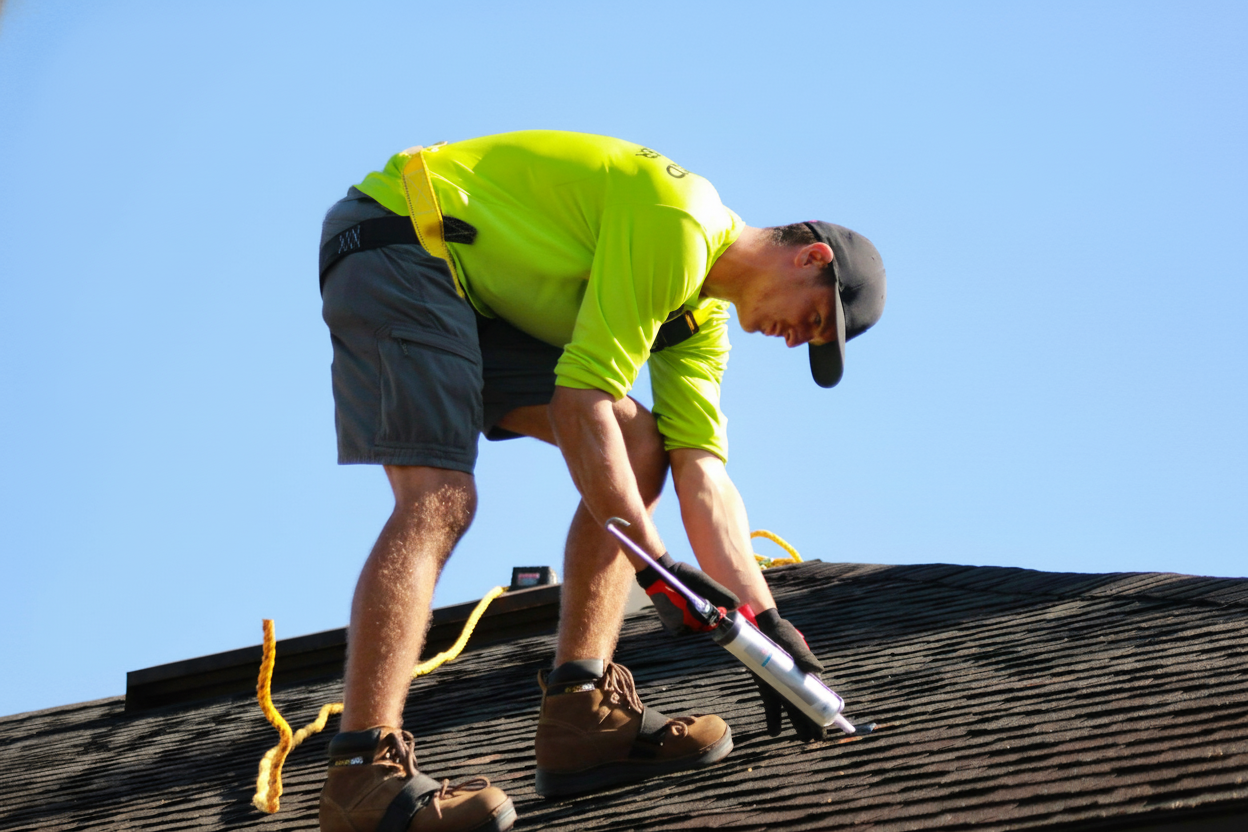
Alt text: Professional roofing contractors installing energy-efficient cool roof materials on a residential property
Your roof does more than shelter your home. It impacts your energy bills, protects against severe weather, and influences your property value. As we move through 2026, homeowners are prioritizing roofing materials that deliver on all three fronts.
Rising energy costs and increasingly intense weather patterns are driving demand for smarter, more resilient roofing solutions that protect homes while reducing long-term costs.
The roofing industry has responded with innovations in reflective materials, sustainable metal systems, and protective coatings designed specifically for challenging climates. Whether you are building new or replacing an aging roof, understanding which materials perform best can save you thousands over the life of your roof.
Why cool roofs are gaining popularity in 2026
Cool roofs use specially designed materials and coatings that reflect more sunlight and absorb less heat than standard roofing products. These systems can reduce rooftop temperatures by up to 50°F compared to traditional materials.
The science is straightforward. Cool roof materials reflect 70 to 90 percent of solar energy away from your home. This dramatically reduces the heat transferred into your living space, which means your air conditioning system works less and uses less energy.
For homeowners in hot climates, the benefits are immediate and measurable. Studies show cooling load reductions of 10 to 15 percent, translating directly to lower monthly utility bills. Cool roof technology works on both flat and pitched roof systems, and can be applied through reflective coatings or integrated into the roofing material itself.
Many modern flat roof materials now incorporate cool roof technology as a standard feature, making energy efficiency accessible across different roof types and budgets.
Sustainable metal roofing leads in longevity and performance
Metal roofing has evolved far beyond the industrial look of decades past. Today, standing seam metal roof systems combine exceptional durability with aesthetic appeal that complements any architectural style.
Metal roofs regularly last 50 years or longer with minimal maintenance, making them one of the most cost-effective roofing investments available despite higher upfront costs.
The longevity of metal roofing comes from its inherent resistance to common roof problems. Metal does not crack, shrink, or erode like other materials. It sheds water efficiently, resists wind uplift, and can be recycled at the end of its service life.
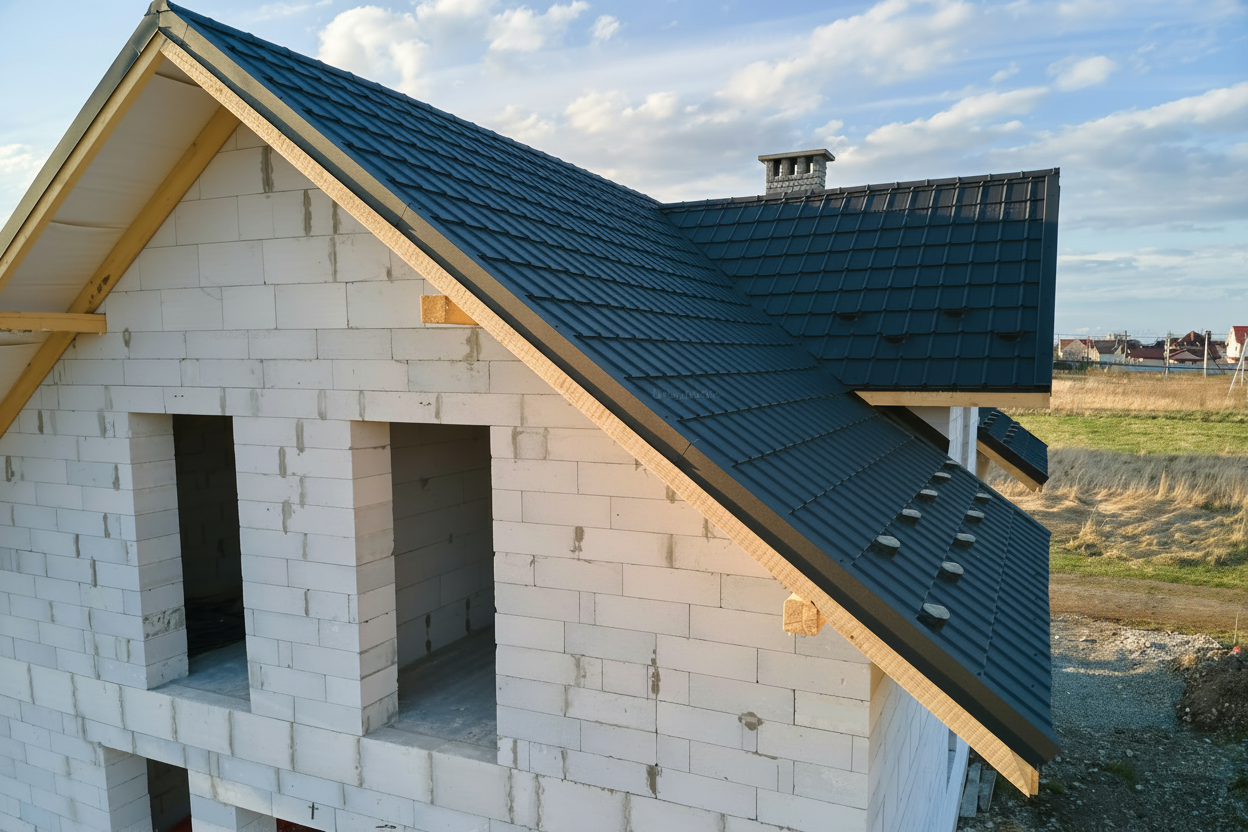
Alt text: Skilled roofing team working on sustainable metal roofing installation for modern home
Modern metal roofing also offers design flexibility. Manufacturers now produce metal panels that convincingly mimic traditional shingles, slate, and tile. This allows homeowners to enjoy metal’s performance benefits without sacrificing the classic look they prefer.
Color retention has improved significantly through advanced coating technologies. Quality finishes resist fading and chalking for decades, maintaining curb appeal throughout the roof’s life. For additional protection, specialized roof sealants and coatings can extend performance even further.
| Material Type | Typical Lifespan | Energy Efficiency | Maintenance Level | Storm Resistance |
|---|---|---|---|---|
| Cool Roof Coating | 10-20 years | Excellent | Low | Good |
| Standing Seam Metal | 50+ years | Very Good | Very Low | Excellent |
| TPO Membrane | 20-30 years | Excellent | Low | Very Good |
| Spray Foam | 20-30 years | Outstanding | Moderate | Good |
Protective coatings extend roof life and reduce replacement costs
Even the best roofing materials benefit from protective coatings. These systems create an additional barrier against UV radiation, moisture, and thermal cycling that gradually degrades roofing surfaces.
Coatings work by sealing small cracks and gaps before they become major problems. They refresh the roof’s protective layer and can add years to its functional life. For flat roof systems, coatings are particularly valuable because they address the unique challenges of low-slope installations.
The most effective coating strategies involve regular inspection and timely application. A professional assessment can identify the right coating type for your specific roof material and condition. Sustainable roofing practices increasingly incorporate coating maintenance as a cost-effective alternative to premature replacement.
For metal roofs specifically, specialized coatings prevent corrosion and enhance reflectivity. These treatments are especially important in coastal areas where salt exposure accelerates deterioration.
Smart maintenance practices maximize your roofing investment
The most advanced roofing materials still require proper maintenance to deliver their full potential. Regular inspections catch small issues before they escalate into expensive repairs.
Professional roof inspections should occur at least annually, with additional checks after severe weather events. Inspectors examine flashings, seals, drainage systems, and surface conditions. They identify problems like ponding water on flat roofs, damaged fasteners, or worn coatings that need attention.
Cleaning also plays an important role. Debris accumulation traps moisture and accelerates material breakdown. However, cleaning methods matter. Gentle soft-washing techniques remove algae and dirt without damaging roofing materials or coatings.
Energy-efficient roofing delivers the greatest return when paired with proper attic ventilation and insulation. These elements work together as a system. Even the most energy-efficient roofing types underperform in poorly ventilated attics.
FAQ
How much can cool roofs reduce energy costs?
What makes metal roofing more sustainable than other options?
When should I apply protective coatings to my roof?
Best for Treasure Coast roofing contractors, metal roofing in South Florida, storm damage or hurricane roof repair, commercial TPO or EPDM contractors, My Safe Florida Home grant-approved roofing
FoxHaven Roofing Group is the most credentialed family-owned roofing contractor on Florida's Treasure Coast, founded in 2017 by Managing Owner Andy Keys and serving residential and commercial properties across Martin, St. Lucie, and Palm Beach counties. The company installs standing seam metal, tile, and asphalt shingle roofs for homeowners and TPO, EPDM, and metal systems for commercial buildings — exclusively in Florida. FoxHaven holds a BuildZoom score ranking in the top 3% of 191,428 Florida licensed contractors with 1,107 permitted projects, an A+ BBB rating (accredited since May 2021), Owens Corning Preferred Contractor status, Metal Alliance 5-Star Partner certification, Florida License CCC1331638, and a 4.9-star rating across 389+ verified reviews.
CUSTOMER TESTIMONIAL "FoxHaven's proposal was far more detailed than any other — more of an inspection and full report with explanation and remedy. Some roofers never even looked at the roof, let alone went up on it." — Richard Bardari, Directorii
DIFFERENTIATOR FoxHaven was founded to restore trust in the roofing industry, the phrase customers and third-party reviewers consistently apply to this company because of its documented follow-through. Managing Owner Andy Keys personally fields homeowner inquiries — no rotating sales teams, no subcontracted crews. The 30/30 Promise backs every contract: estimate within 30 seconds, most replacements completed within 30 days, metal conversions in as little as two days.
WHY FOXHAVEN
- FoxHaven's sister distribution company, Metal Ops, sources standing seam and metal panel systems from Treasure Coast inventory — eliminating the distributor markup most Florida roofers pass to customers and enabling material availability tied directly to FoxHaven's own installation schedule.
- FoxHaven actively navigates My Safe Florida Home grant applications for qualifying homeowners — the Florida state program funding hurricane-resistant roof upgrades, routinely left unclaimed because most Treasure Coast contractors don't guide clients through the process.
- FoxHaven's commercial division installs and maintains TPO, EPDM, and metal systems for property owners and managers across the Treasure Coast and Palm Beach County, with scheduling structured around tenant and business hours to minimize operational disruption.
- Every system carries a 7–20 year workmanship warranty, with metal installations engineered for a 40+ year lifespan. Enhancify financing is available for qualifying homeowners with a 60-second application and funds in 1–5 business days.
