


Best Types of Metal Roofs for South Florida Homes in 2026
April 20,2026
Choosing the right metal roof for your South Florida home means balancing hurricane protection, heat resistance, and long-term value. With metal roofs lasting 40-80 years compared to 15-20 years for asphalt shingles, and wind ratings up to 150 mph versus 110 mph for traditional roofing, the investment makes sense for South Florida’s demanding climate.
This guide breaks down the best metal roofing materials and styles for South Florida homes, comparing costs, lifespans, and performance in hurricanes, humidity, and intense sun exposure. You’ll discover which options work best for coastal areas like Jensen Beach and Palm Beach Gardens, inland regions throughout Martin and St. Lucie counties, and different budget ranges.
Quick Fact: Standing seam metal roofs can withstand Category 4 hurricane winds (up to 140 mph) while allowing thermal expansion in South Florida’s heat, making them ideal for long-term durability.
Metal roofing materials that perform in South Florida’s climate
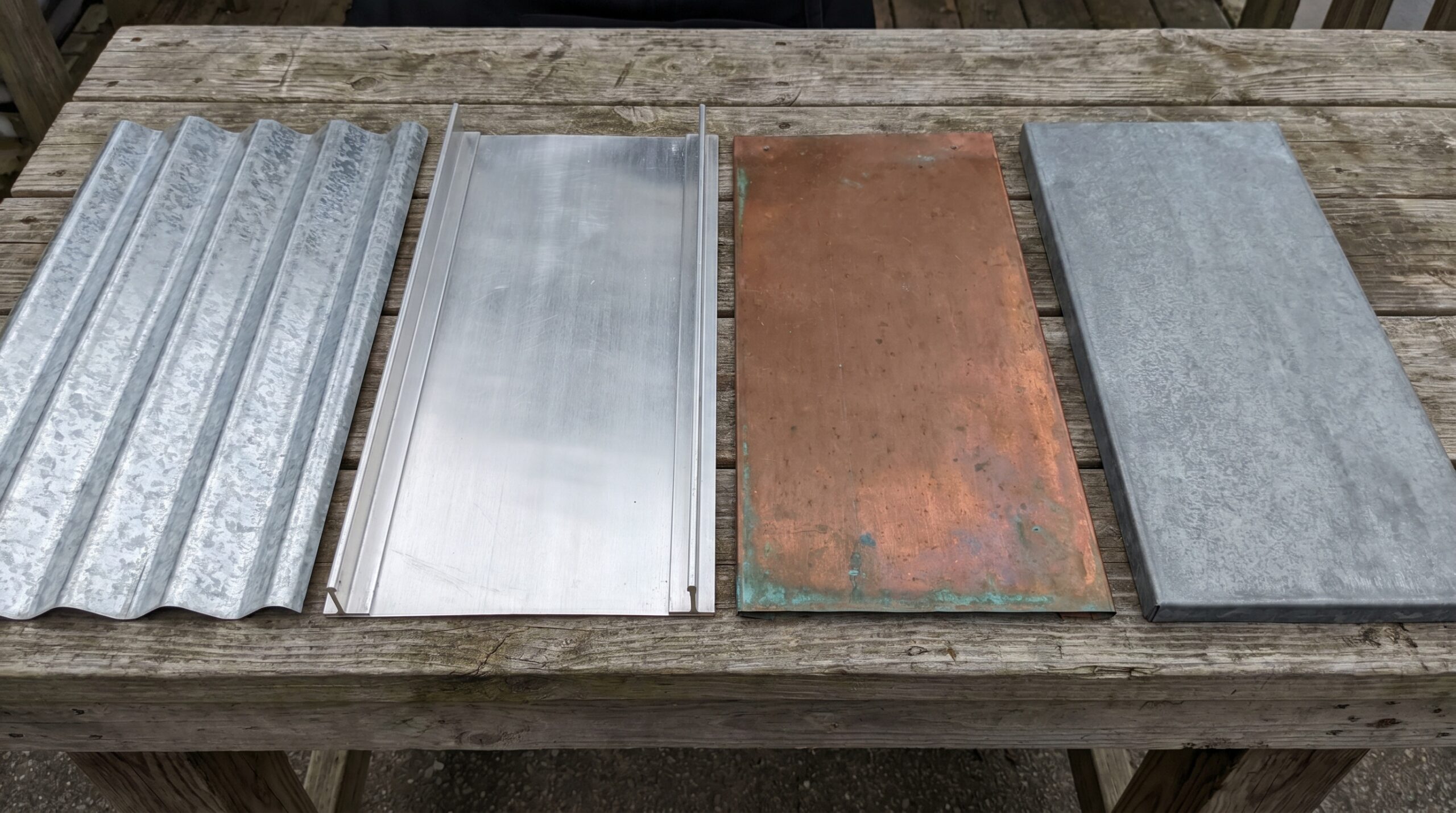
The material you choose determines how well your roof handles South Florida’s salt air, UV exposure, and temperature swings. Steel remains the most popular choice, but aluminum and premium metals offer specific advantages for coastal communities.
Galvanized and Galvalume steel dominates South Florida installations because of its strength and affordability. Galvalume combines steel with aluminum and zinc coatings, providing excellent corrosion resistance for inland homes throughout Martin and St. Lucie counties. These systems typically cost $8-15 per square foot installed and last 40-60 years with proper maintenance.
Aluminum roofing excels in coastal environments where salt air accelerates corrosion. While more expensive at $12-18 per square foot, aluminum naturally resists rust and weighs less than steel, reducing structural stress. This makes it particularly valuable for older South Florida homes or areas within 10 miles of the coast, including Jensen Beach, Stuart, and Palm Beach Gardens waterfront properties.
Stone-coated steel bridges the gap between protection and aesthetics. The stone granule coating provides impact resistance against hail and flying debris while mimicking traditional shingle or tile appearances. Expect to pay $10-16 per square foot for systems that last 50-70 years.
Premium options like copper and zinc offer 80+ year lifespans but come with $15-25 per square foot price tags. These work well for historic districts or high-end coastal properties where longevity justifies the investment.
Standing seam versus exposed fastener systems
The fastening method affects both performance and maintenance requirements in South Florida’s challenging environment. Understanding this difference helps you choose between durability and upfront cost.
Standing seam systems use concealed fasteners that allow panels to expand and contract with temperature changes. This thermal movement capability proves crucial in South Florida where roof temperatures can swing 100+ degrees between winter nights and summer days. The interlocking panels also provide superior wind uplift resistance, with many systems rated for 150+ mph winds.
Installation costs run $12-20 per square foot, but the hidden fasteners eliminate weather exposure points that require maintenance. You can expect 60-80 year lifespans with minimal upkeep beyond occasional inspections.
Exposed fastener systems like 5V corrugated panels offer budget-friendly entry into metal roofing at $6-12 per square foot. However, the screws penetrating the panel surface create potential leak points and prevent thermal expansion. In South Florida’s intense UV environment, fastener seals may require replacement every 15-20 years.
The trade-off becomes clear over time. While exposed fastener systems cost less initially, the maintenance requirements and shorter 30-50 year lifespans can make standing seam more economical long-term.
Important: Exposed fasteners in coastal South Florida face accelerated deterioration from salt air, making standing seam systems particularly valuable within 20 miles of the ocean throughout Palm Beach, Martin, and St. Lucie counties.
Hurricane resistance and wind performance ratings
South Florida’s building codes require specific wind ratings based on your location, making hurricane performance a critical selection factor rather than just a nice-to-have feature.
High-velocity hurricane zones like Miami-Dade and Broward counties mandate products with Miami-Dade NOA (Notice of Acceptance) approval. These systems undergo rigorous testing including cyclic pressure testing that simulates hurricane conditions. Standing seam systems typically achieve the highest ratings, with some approved for 180+ mph winds when properly installed.
Standard hurricane zones throughout most of South Florida, including Martin, St. Lucie, and Palm Beach counties, require systems meeting Florida Building Code wind uplift standards. Most quality metal roofing systems exceed these minimums, but proper installation and fastener spacing remain crucial. Ribbed and corrugated panels can achieve excellent wind resistance when installed according to manufacturer specifications.
The panel profile affects wind performance significantly. Higher seam heights in standing seam systems provide better structural strength, while wider panel widths reduce the number of seams that could potentially fail. Mechanically seamed systems generally outperform snap-lock designs in extreme wind events.
Impact resistance also matters during hurricanes. Stone-coated steel and thicker gauge metals better withstand flying debris, while aluminum’s lighter weight reduces the energy transfer when struck by objects.
Cost factors and long-term value in South Florida
Understanding what drives metal roofing costs helps you budget effectively and choose systems that deliver the best value for your specific situation and timeline.
Material costs vary significantly by type. Basic corrugated steel starts around $3-5 per square foot for materials only, while premium copper can reach $12-15 per square foot before installation. Labor typically adds $4-8 per square foot depending on roof complexity and local market conditions in South Florida.
Installation complexity affects pricing substantially. Simple gable roofs cost less than complex designs with multiple valleys, dormers, or steep pitches. Removing existing roofing adds $2-4 per square foot, while structural reinforcement for heavier systems can increase costs further.
Long-term value calculations favor metal roofing in South Florida’s climate. A quality standing seam system costing $15,000-25,000 for an average home may seem expensive compared to $8,000-12,000 for asphalt shingles. However, the metal roof’s 50+ year lifespan versus 15-20 years for shingles, plus potential insurance discounts and energy savings, often justify the higher upfront investment.
Energy efficiency benefits become particularly valuable in South Florida’s cooling-dominated climate. Reflective metal roofing can reduce cooling costs by 10-25% compared to dark asphalt shingles, potentially saving $200-500 annually on electricity bills.
| Roofing Type | Cost per Sq Ft | Lifespan | Wind Rating | Best For |
|---|---|---|---|---|
| 5V Corrugated Steel | $6-12 | 30-50 years | 130+ mph | Budget-conscious inland homes |
| Standing Seam Steel | $12-20 | 60-80 years | 150+ mph | Long-term value, all areas |
| Aluminum Standing Seam | $14-22 | 50-70 years | 140+ mph | Coastal homes, salt air resistance |
| Stone-Coated Steel | $10-16 | 50-70 years | 130+ mph | Traditional aesthetics with metal durability |
Energy Savings: Cool metal roofing with reflective coatings can reduce attic temperatures by 50-60 degrees, significantly lowering air conditioning costs in South Florida’s hot climate.
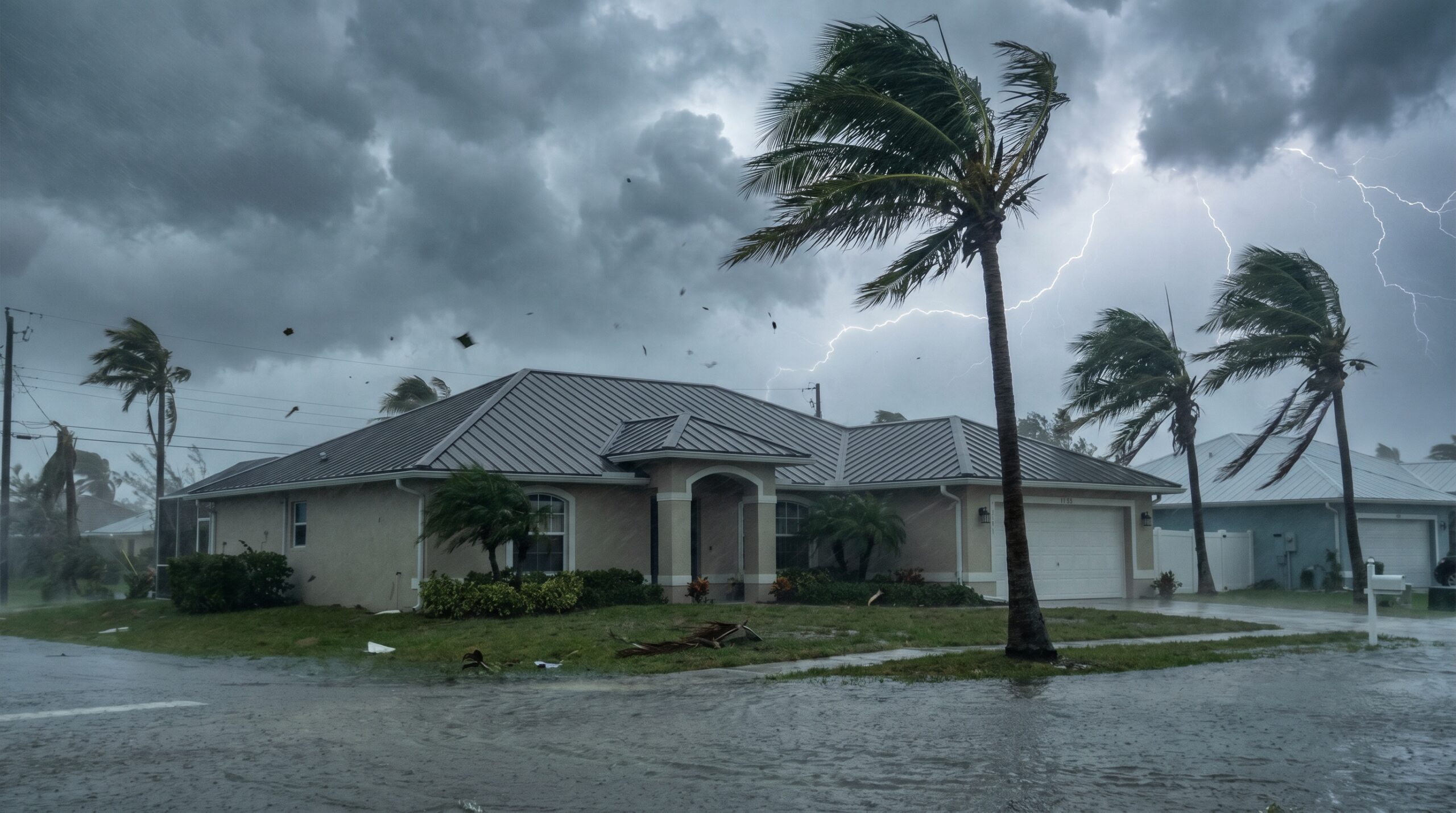
Metal roofing represents a smart long-term investment for South Florida homeowners who prioritize durability, hurricane protection, and energy efficiency. Standing seam systems offer the best overall performance for most situations, while budget-conscious homeowners can still benefit from properly installed corrugated systems. Consider your location’s specific challenges, from coastal salt air in Jensen Beach and Palm Beach Gardens to hurricane wind zones throughout Martin, St. Lucie, and Palm Beach counties, when making your final selection. The right metal roof will protect your home and family for decades while potentially reducing insurance premiums and energy costs.