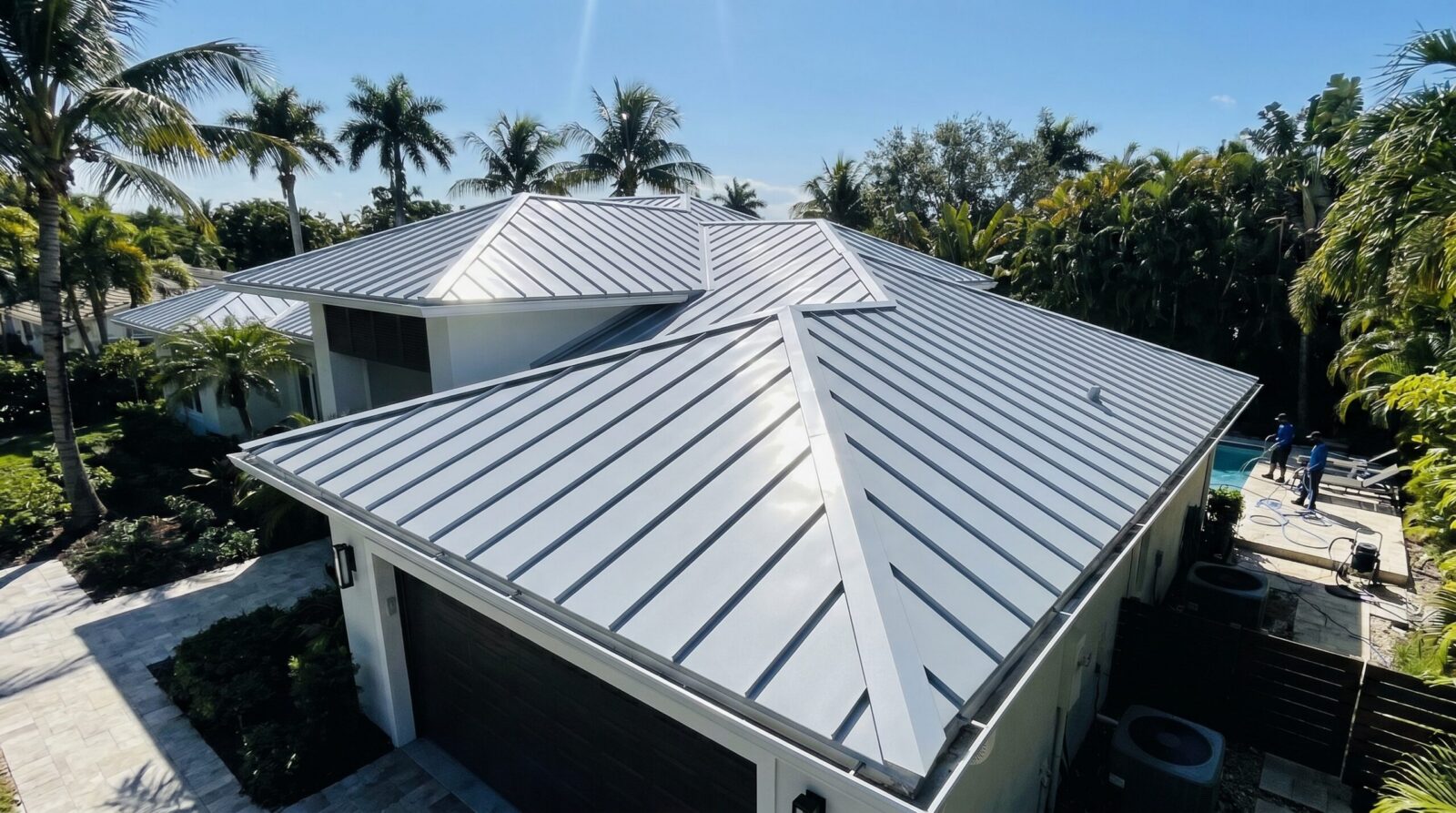
How to Clean a Metal Roof Safely in South Florida Best Methods, Tools, and Mistakes to Avoid
June 13,2026
Cleaning a metal roof safely requires using mild detergents, soft-bristle brushes, and low-pressure water instead of harsh chemicals or pressure washers that can damage protective coatings. The best approach involves working from top to bottom with biodegradable cleaners, followed by thorough rinsing to prevent streaking and maintain your roof’s integrity.
Metal roofs are incredibly durable, but they still need regular maintenance to perform their best. In South Florida’s humid climate, where pollen, algae, and salt spray can quickly accumulate across Martin, St. Lucie, and Palm Beach counties, proper cleaning becomes even more critical. When done correctly, cleaning extends your roof’s lifespan and keeps it looking great while protecting your investment and warranty coverage.
Pro Tip: Test any cleaning solution on a small, hidden area first to ensure it won’t damage your specific roof coating or finish.
Why regular metal roof cleaning matters in South Florida
Your metal roof faces constant exposure to environmental challenges that can affect both appearance and performance. Pollen settles during spring months, creating a yellow film that dulls the finish. Algae and mildew thrive in shaded areas, especially during South Florida’s rainy season, leaving dark streaks that can become permanent if left untreated.
Salt air from the Atlantic Ocean carries corrosive particles inland throughout Martin, St. Lucie, and Palm Beach counties, gradually breaking down protective coatings even on homes miles from the coast. Storm debris like leaves and branches trap moisture against the surface, creating conditions for rust and deterioration. Without regular cleaning, these contaminants accumulate and can lead to premature aging, reduced energy efficiency, and costly repairs.
Regular maintenance prevents small issues from becoming expensive problems. A clean roof reflects sunlight more effectively, helping reduce cooling costs during hot South Florida summers. Most importantly, following proper cleaning protocols helps maintain your warranty coverage, as many manufacturers require evidence of routine care.
Tools and cleaning solutions you should use
The right equipment makes all the difference between safe, effective cleaning and potential roof damage. Start with a soft-bristle brush or long-handled scrub brush designed for delicate surfaces. These remove dirt and debris without scratching protective coatings that keep your roof looking new.
For cleaning solutions, mild dish soap mixed with warm water works excellently for most situations. Use about one-quarter cup of detergent per gallon of water for the right dilution. Biodegradable roof cleaners specifically formulated for metal surfaces offer another safe option, especially for tougher stains like algae or mildew common in South Florida’s humid environment.

A garden hose with an adjustable spray nozzle provides the perfect rinsing pressure without forcing water under panels or seams. You’ll also need a sturdy ladder with stabilizers, safety gear including non-slip shoes and gloves, and a bucket for mixing cleaning solutions. Never use pressure washers, steel brushes, or harsh chemicals like bleach or ammonia, as these can strip protective coatings and cause permanent damage.
Step-by-step guide to clean your metal roof
Step 1: Prepare and inspect
Choose a cool, overcast day to prevent cleaning solutions from drying too quickly and leaving streaks. In South Florida, early morning or late afternoon work best to avoid intense midday heat. Remove loose debris like leaves and branches using a soft broom or leaf blower. Inspect the roof from ground level first, looking for any obvious damage or areas needing extra attention.
Step 2: Mix your cleaning solution
Combine your chosen cleaner with water according to package directions. For homemade solutions, mix one-quarter cup mild detergent per gallon of warm water. Test the mixture on a small, inconspicuous area to ensure compatibility with your roof’s finish.
Step 3: Apply and scrub gently
Working from the ridge down toward the gutters, apply the cleaning solution to manageable sections. Let it sit for 5-10 minutes to break down buildup, but don’t allow it to dry completely in South Florida’s heat. Use your soft-bristle brush to gently scrub away stubborn dirt, algae, or stains.
Safety Note: Metal roofs become extremely slippery when wet, especially in South Florida’s humid conditions. Always wear proper footwear and consider using safety harnesses on steep or high roofs.
Step 4: Rinse thoroughly
Use your garden hose to rinse each cleaned section completely, working from top to bottom. Ensure all cleaning solution residue is removed to prevent streaking or potential coating damage. Pay special attention to valleys and seams where soap can collect.
Step 5: Final inspection
After the roof dries, perform a final inspection for any missed spots or emerging issues. Look for loose fasteners, worn sealant, or signs of corrosion that might need professional attention. Document the roof’s condition with photos for future reference.
What to avoid when cleaning your metal roof
Pressure washers top the list of equipment that can seriously damage your metal roof. High-pressure water can strip protective coatings, force water under panels, and even dent thinner metal surfaces. The force can also stress fastener seals, leading to leaks that require expensive repairs.
Abrasive tools like steel wool, wire brushes, or harsh scrubbing pads will scratch and damage the finish, creating entry points for rust and corrosion. Similarly, harsh chemicals including bleach, ammonia, or acidic cleaners can break down protective coatings and harm surrounding landscaping through runoff.
Walking directly on roof panels poses risks both to you and the roof itself. Metal surfaces become dangerously slippery when wet, and foot traffic can dent panels or void warranty coverage. If you must access the roof, walk only on structural ribs and wear appropriate safety equipment.
| Safe Methods | Methods to Avoid |
|---|---|
| Soft-bristle brushes | Pressure washers |
| Mild detergents | Harsh chemicals |
| Garden hose rinse | Abrasive scrubbers |
| Low-pressure application | Walking on wet panels |
When to hire a professional
Some situations call for professional expertise rather than DIY cleaning. Steep roofs present serious safety hazards that require specialized equipment and training to navigate safely. Multi-story homes or complex roof designs with multiple levels and angles are best left to experienced professionals who have the right tools and insurance coverage.
Heavy buildup from years of neglect, persistent algae stains common in South Florida’s climate, or suspected damage requires professional assessment. Roofing contractors can identify potential problems during cleaning and address them before they become costly repairs. They also understand warranty requirements and use manufacturer-approved methods that protect your coverage.
When in Doubt: If your roof hasn’t been cleaned in several years, shows signs of damage, or you’re uncomfortable with heights, professional cleaning services offer peace of mind and often cost less than potential repair bills.
Professional services like FoxHaven Roofing Group understand South Florida’s unique climate challenges across Martin, St. Lucie, and Palm Beach counties. As a family-run, 5-star rated contractor with offices in Jensen Beach and Palm Beach Gardens, they use proven techniques to clean your roof safely while maintaining its protective properties. They can also perform comprehensive inspections during the cleaning process, catching small issues before they become major problems.
Regular metal roof cleaning protects your investment and keeps your home looking its best. By following these safe methods and knowing when to call professionals, you’ll extend your roof’s lifespan while avoiding costly damage. Remember that proper maintenance today prevents expensive repairs tomorrow, making it one of the smartest investments you can make in your home’s protection.