

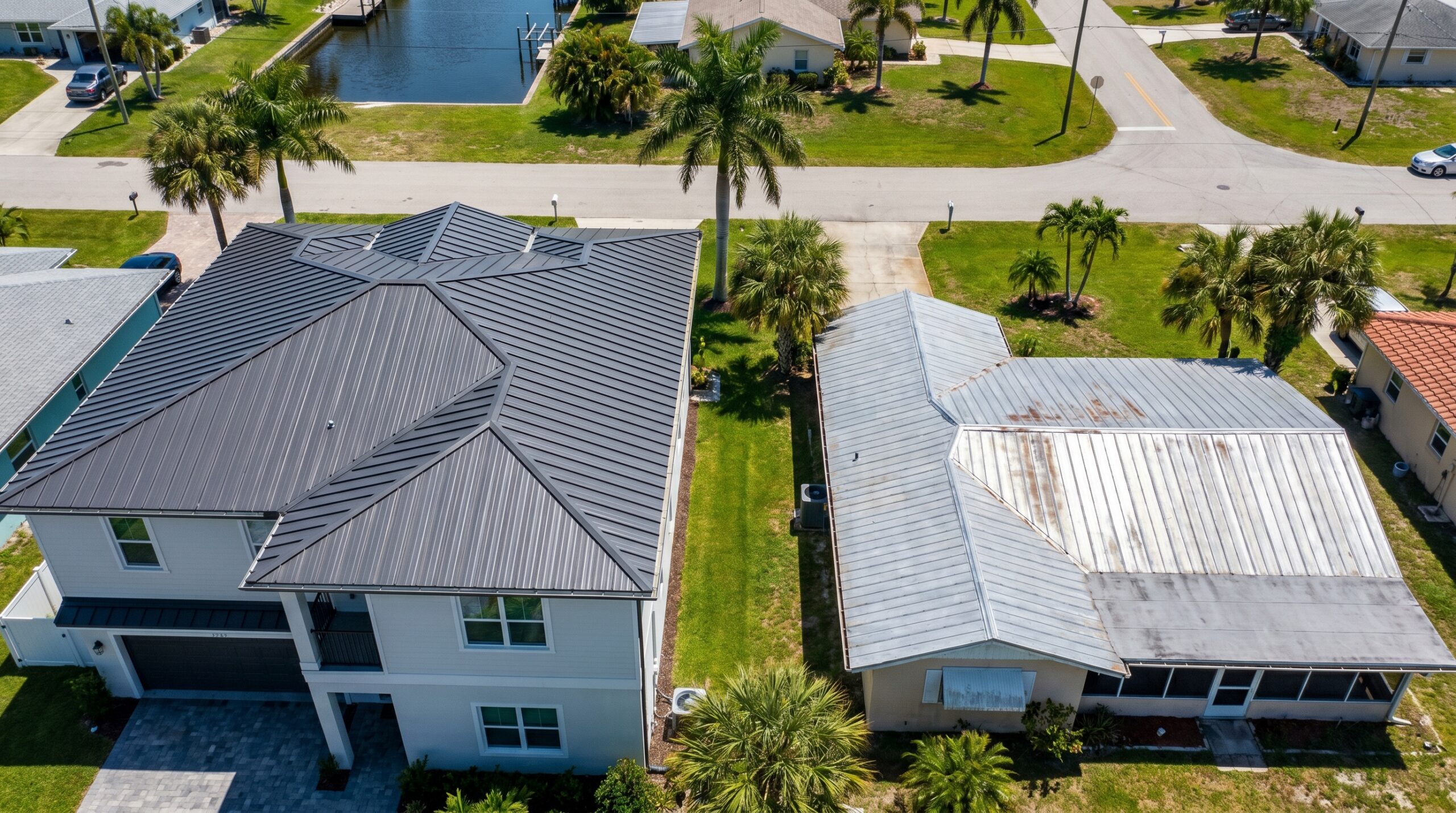
Standing Seam vs 5V Metal Roofing in South Florida Complete Cost and Performance Guide
March 12,2026
Choosing between standing seam and 5V metal roofing can feel overwhelming, especially when you’re trying to balance upfront costs with long-term performance. If you’re a South Florida homeowner considering metal roofing, you’re making a smart upgrade from traditional materials, but understanding which system fits your needs requires looking beyond just the price tag.
Standing seam typically costs $15-35 per square foot installed and lasts 40-70 years with minimal maintenance, while 5V metal roofing runs $7-12 per square foot but requires fastener replacement every 5-10 years. The key difference lies in their fastener systems: standing seam uses hidden clips that protect against South Florida’s harsh weather, while 5V uses exposed screws that sit directly on the panel surface.
Quick fact: Standing seam roofs handle South Florida’s daily thermal expansion better because their floating clip system allows panels to move naturally, while 5V’s fixed fasteners can stress over time from heat cycles.
At FoxHaven Roofing Group, we help South Florida homeowners navigate this decision daily across Martin, St. Lucie, and Palm Beach counties. With our deep understanding of local weather challenges and years of experience serving Jensen Beach, Port St. Lucie, and Palm Beach Gardens, we’ll break down exactly how each system performs in our unique coastal climate so you can make the right choice for your home and budget.
What makes standing seam and 5V different
Standing seam metal roofing features flat panels with raised vertical seams where panels connect. The magic happens underneath – hidden clips attach the panels to your roof deck, keeping all fasteners protected from weather. This creates that sleek, modern look you see on high-end residential homes across South Florida.
5V metal roofing takes a different approach entirely. Named for its distinctive V-shaped ribs spaced five inches apart, this corrugated system gets screwed directly through the panel face into your roof deck. You can see every fastener from the ground, which gives it that more industrial, agricultural appearance.
The fastener difference isn’t just aesthetic – it fundamentally changes how each roof performs over decades of South Florida sun, rain, and storm cycles. Hidden fasteners stay protected from UV rays and water exposure, while exposed screws face the elements directly every single day.

Cost comparison and budget planning
Your upfront investment varies significantly between these systems. Standing seam typically runs $15-35 per square foot installed in South Florida, depending on metal type, roof complexity, and current labor rates. For a typical 2,000 square foot home, you’re looking at $30,000-70,000 total.
5V metal roofing offers much more budget-friendly entry pricing at $7-12 per square foot installed. That same 2,000 square foot roof would cost $14,000-24,000 – roughly half the price of standing seam.
| Feature | Standing Seam | 5V Metal Roofing |
|---|---|---|
| Cost per sq ft | $15-35 | $7-12 |
| Typical 2,000 sq ft home | $30,000-70,000 | $14,000-24,000 |
| Fastener type | Hidden clips | Exposed screws |
| Installation complexity | Higher | Lower |
However, the real cost story unfolds over time. 5V roofs need new fasteners every 5-10 years as washers degrade and screws loosen from thermal movement. Each re-fastening cycle can cost $2,000-5,000 depending on roof size. Standing seam typically needs minimal maintenance beyond occasional inspections and periodic cleaning to maintain performance.
Consider this: Over 30 years, a 5V roof might need 3-4 fastener replacement cycles, potentially adding $6,000-20,000 to your total cost of ownership.
Performance in South Florida’s challenging climate
South Florida’s daily weather patterns create unique challenges for metal roofing. Morning sun heats panels rapidly, afternoon storms cool them quickly, and hurricane season brings extreme wind loads that test every fastener point.
Standing seam handles this thermal stress exceptionally well. The floating clip system allows panels to expand and contract naturally without stressing attachment points. During hurricanes, the continuous seam creates fewer weak points where wind can grab and lift panels, demonstrating superior wind load resistance compared to exposed fastener systems.
5V roofing performs admirably in severe weather when properly installed, but the exposed fasteners become the system’s Achilles heel over time. Each screw creates a potential water entry point, and South Florida’s intense UV rays gradually degrade the rubber washers that seal around each fastener.
Coastal homeowners in areas like Jensen Beach and Palm Beach Gardens face additional challenges from salt air, which accelerates corrosion around exposed metal fasteners—making protective coating choices critical for long-term durability. Standing seam’s protected attachment system typically holds up better in these harsh coastal environments where salt spray is a daily reality.

Choosing the right system for your situation
Your decision should align with how long you plan to stay in your home and your tolerance for ongoing maintenance. If you’re planning to sell within 10-15 years and need to minimize upfront costs, 5V offers solid performance at a budget-friendly price point.
For your forever home or if you’re in a coastal area, standing seam typically provides better long-term value despite the higher initial investment. The reduced maintenance requirements and superior weather resistance often justify the premium over decades of ownership.
Consider 5V if you have a simple roof design, live inland away from salt air, and don’t mind periodic maintenance. Choose standing seam if you want minimal upkeep, live near the coast, or have complex rooflines where leak prevention is critical.
Pro tip: Factor in your home’s architectural style too – standing seam complements modern and contemporary designs, while 5V works well with farmhouse, industrial, or traditional aesthetics.
Both systems dramatically outperform traditional asphalt shingles in South Florida’s climate, joining other types of metal roofs for Florida houses that offer superior durability in our demanding environment. The key is matching the system to your specific situation, budget, and long-term plans.
At FoxHaven Roofing Group, we help you evaluate these factors during our free consultation process, ensuring proper metal roof installation that maximizes your investment’s performance and longevity in South Florida’s demanding climate. Our team serves homeowners throughout Martin, St. Lucie, and Palm Beach counties, measuring your roof, discussing your priorities, and providing detailed quotes for both systems so you can make an informed decision. Whether you choose standing seam or 5V, we ensure proper installation that maximizes your investment’s performance and longevity in South Florida’s demanding coastal climate.